Theopolis Logo

Writing

Explore our collection of theological essays, biblical studies, and reflections on faith and culture.

See all
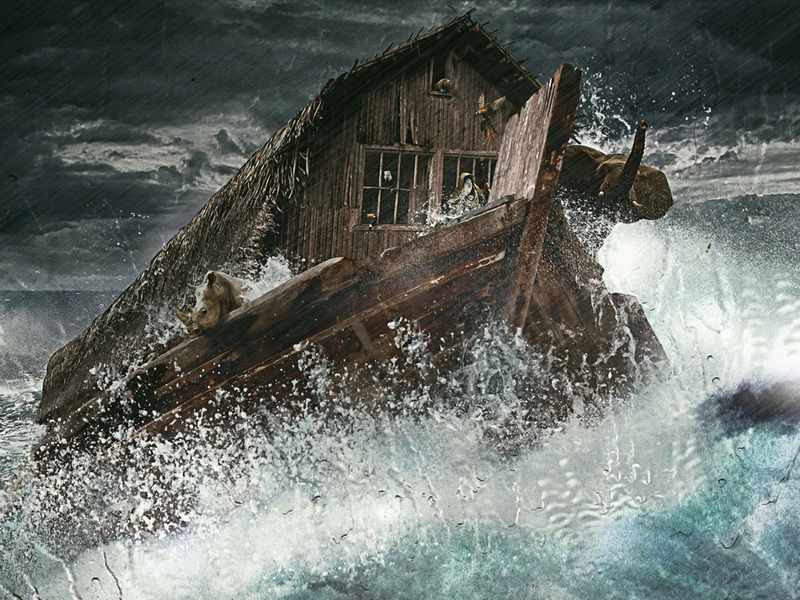
noahs-ark-genesis
Biblical Horizons

Who Rules the Land? The Meaning of the Noahic Covenant, Part 1

It is commonly held in Reformed thought that the Noahic Covenant is given to all men equally. The Noahic Covenant concerns "man," not simply "church," and establishes civil government as an institution among "mankind" — that is the theory. Sometimes the Noahic Covenant is regarded as a "covenant of common…

by James B. JordanNovember 23, 1990

tanner-mardis-xuxghzhibn4-unsplash-1-2
Daniel

The Babylonian Connection

The Fall of Jerusalem we have dated (provisionally) at 3426 Anno Mundi. In current B.C. dates this is 586 B.C. From this point forward in Biblical chronology we are required to make use of prophetic numbers rather than historical ones. Jeremiah prophesied that the captivity would last 70 years, but…

by James B. JordanNovember 16, 1990
screen-shot-2021-08-12-at-2-57-54-pm
Biblical Horizons

Taking the Situation Seriously

Evangelicals have in recent years become more interested in looking into their Bibles for wisdom to deal with modern problems. This is undoubtedly a welcome development, after many years of neglect. But there are dangers and costs as well. One of these is the tendency to fall into a modern…

by Peter LeithartOctober 19, 1990
carlo-alberto-burato-smdx3gleu_m-unsplash
Hermeneutics

The Unseen Things

Now faith is the substance of things hoped for, the evidence of things not seen (Hebrews 11:1). The famous definition of faith with which the eleventh chapter of Hebrews opens has received a number of different interpretations. The crux of the problem is the interpretation of the words translated in…

by Peter LeithartOctober 19, 1990
49980-nicolas_poussin_-_the_judgment_of_solomon_-_wga18330-800w-tn
Proverbs

Advice From a Sojourner, Part 8

15. The leech has two daughters, "Give," "Give." There are three things that will not be satisfied, Four that will not say, "Enough": 16. Sheol, And the barren womb, Earth, that is never satisfied with water, And fire that never says, "Enough." We are assuming, at least for the purposes…

by James B. JordanOctober 16, 1990
tanner-mardis-xuxghzhibn4-unsplash-1-2
Biblical Chronology

Confusion Among the Kings

As we have seen in previous installments in this series, the Old Testament is quite concerned with chronology, and carefully records chronological data for our use. For this reason, we can assume when we come to the chronology of the kings of Judah and Israel that the writers of the…

by James B. JordanOctober 2, 1990

Showing page 301 of 309

See all

Showing page 6 of 43

See all
History

Hospitality

For us, hospitality usually means entertaining. It means having our friends and neighbors and church members into the home. Sometimes, in our world, it involves jockeying for position and power by showing hospitality to the right kinds of people. That’s how the rich and famous create and sustain the aura…

March 24, 2007

Obscene dancing

The London Times fulminates: “It is quite sufficient to cast one’s eyes on the voluptuous intertwining of the limbs, and close compressure of the bodies, in this dance, to see that it is far indeed removed from the modest reserve which has hitherto been considered distinctive of English females. So…

March 22, 2007

Christ and Horrors

Marilyn McCord Adams ( Christ and Horrors , Cambridge, 2006) proposes to demonstrate the coherence of Christology not by starting with sin and explaining how Christ has dealt with sin, but by starting with “horrors” and asking, What must Christ be and do if He is going to rescue us…

March 22, 2007
History

The Alexandrian West

In her book on medieval Bible scholarship, Beryl Smalley notes that “Alexandrian exegesis penetrated to the Latin middle ages, when knowledge of Greek had declined, by two main channels: indirectly through the Latin Fathers and directly through translations of Origen’s works. Rufinus’ translations of some of his homilies were used…

March 22, 2007

Allegory and empire

Philo thought of allegory as a means for universalizing Jewish history and law, analogous to the way the Roman world had fused all peoples into a single empire. Literalists are “citizens of a petty state,” while allegorists are “on the roll of citizens of a greater country, namely, this whole…

March 21, 2007

Androgynous numbers

Why did God create the world in six days? Philo said that 6 is the perfect number, both the sum and the product of its factors, which happen to be the first three integers (1, 2, 3). But there’s more: “We may say that [6] is in its nature both…

March 21, 2007

Showing page 1703 of 2212

Browse by Category

In Medias Res

Your weekly digest for all things Theopolis.

Donate

Theopolis is nearly 100% donor-supported. Consider joining us on our mission.








