Theopolis Logo

Writing

Explore our collection of theological essays, biblical studies, and reflections on faith and culture.

See all
tanner-mardis-xuxghzhibn4-unsplash-1-2
Biblical Studies

Tweets-turned-Notes on the Bible’s Chronology

Summary In what follows, I will consider the “year-stamps” employed in Scripture, i.e., statements of the form, “Such-and-such an event took place in the Xth year of Y.” In the process, I will suggest some ways in which the Biblical narrative might relate to events in the extra-Biblical world, though…

by James BejonJuly 16, 2019
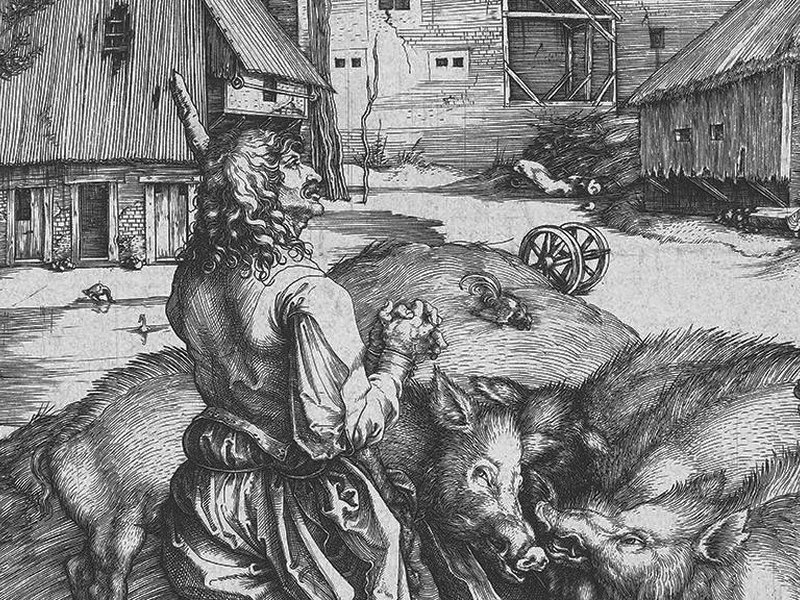
durer-prodigal-son-2
Luke

Perspectives on the Prodigal, (Part 2)

In the first essay on the parable of the Prodigal Son, I suggested that the problems commentators and others encounter in interpreting Jesus three-part parable are not accidental. These are not just problems in our ignorance of cultural background. They are intentional features of the stories —stories designed to poke…

by Ralph Allan SmithJuly 11, 2019
durer-prodigal-son-2
Luke

Perspectives on the Prodigal, (Part 1)

The story of the Prodigal Son is perhaps the most well-known story in the Bible. As others have observed, it may also be one of the most misunderstood. In two short essays, I will point out features of this story that are commonly neglected, aspects of Jesus’ parable that might…

by Ralph Allan SmithJuly 9, 2019
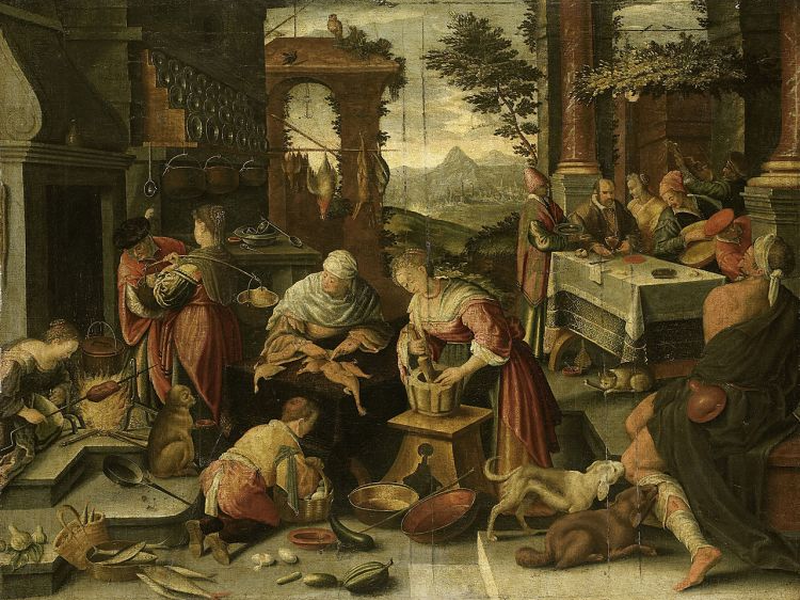
de-rijke-man-en-de-arme-lazarus-by-jacopo-da-ponte-16th-century
Luke

Lazarus and the Rich Man

The parable of Lazarus and the nameless rich man is not an independent story. It is part of a long context that begins in Luke 15:1, where Jesus is eating with tax collectors and sinners and the scribes and Pharisees grumble. In response to their hardheartedness, Jesus tells a three-part…

by Ralph Allan SmithJuly 4, 2019
aaron-burden-uynrnfdkjwg-unsplash
Luke

Everybody has Dropsy - Luke 14:1-24

The Bible is written so that even when a reader cannot pick up on what might be deeper or more detailed aspects of a text, there is virtually always a message to be heard. In the ancient world, where the “reader” of Scripture would likely be a church official facing…

by Ralph Allan SmithJuly 2, 2019
communion
Biblical Theology

Fruit Trees and Grain Plants

The distinction between garden (or vineyard) and field begins in Genesis 2. This relates to the ordering of the formless world. Plants of the field are contrasted with the garden planted by God in Genesis 2:5&8. Later on, under the Old Covenant the Israelites will be required to keep their…

by James B. JordanJune 27, 2019

Showing page 77 of 309

See all

Showing page 6 of 43

See all
History

Urban Goggles

This paper is an exploration of the modern urban situation, how it differs from the older cities, and the challenges modern urban/suburban civilization poses for Christianity. All of America, ERH claims, is urbanized by industry, which removes the barriers between city and country. The contrast of factory and suburb has…

March 1, 2007

Vapourous idols

According to our translations, the OT describes idols as “vain” (eg, Isaiah 57:13), but the word used is the same as the word in Ecclesiastes - and is better translated as “vaporous.” The point is not simply that idols are worthless, but that they are ephemeral. Idols may provide all…

March 1, 2007

Baptizing cities

In his study of Judaic Baptism, James W. Dale quotes Jewish War , 3.7, where Josephus speaks of a city being, in Dale’s translation, “overmersed” ( epibaptizo ). Dale comments, “It is intolerable to suppose that a city is figured, through the departure of an individual [in this case, Josephus…

February 28, 2007

Baptism and Citizenship, III

One final quotation: “The creation of a plural system of Churches with their separate baptisms (Catholic, Lutheran, Calvinist) implied also the emergence of a plural system of civil citizenries or communities. Therefore, in the case of States with multiple confessional communities, new systems had to be devised to test the…

February 27, 2007

Baptism and Citizenship, II

Another quotation from the aforementioned article: “The abolition of compulsory baptism at birth was the most radical kind of sacramental reform ever conceived in the 16th century. In fact, it implied not only separation from the old compulsory Church, but also secession from the State: adult baptism, based on freedom…

February 27, 2007

Baptism and citizenship

In an article in Religion and Philosophy , Elena Brambilla and Joaquim Carvalho discuss the connections between baptism and citizenship under the ancien regime. They begin by distinguishing two levels of citizenship: “It is therefore essential to consider, as a preliminary step, and also at the historical level, the distinction…

February 27, 2007

Showing page 1710 of 2212

Browse by Category

In Medias Res

Your weekly digest for all things Theopolis.

Donate

Theopolis is nearly 100% donor-supported. Consider joining us on our mission.