Theopolis Logo

Writing

Explore our collection of theological essays, biblical studies, and reflections on faith and culture.

See all
49980-nicolas_poussin_-_the_judgment_of_solomon_-_wga18330-800w-tn
Biblical Studies

Advice From a Sojourner, Part 2

In our first essay in this series ( part 1 ), we saw that Proverbs 30 opens with a puzzle, a cryptic sentence that challenges the reader to search out a matter in order to gain understanding. "It is the glory of God to conceal a matter, but the glory…

by James B. JordanOctober 26, 1989
hezekiahs-prayer-2
Isaiah

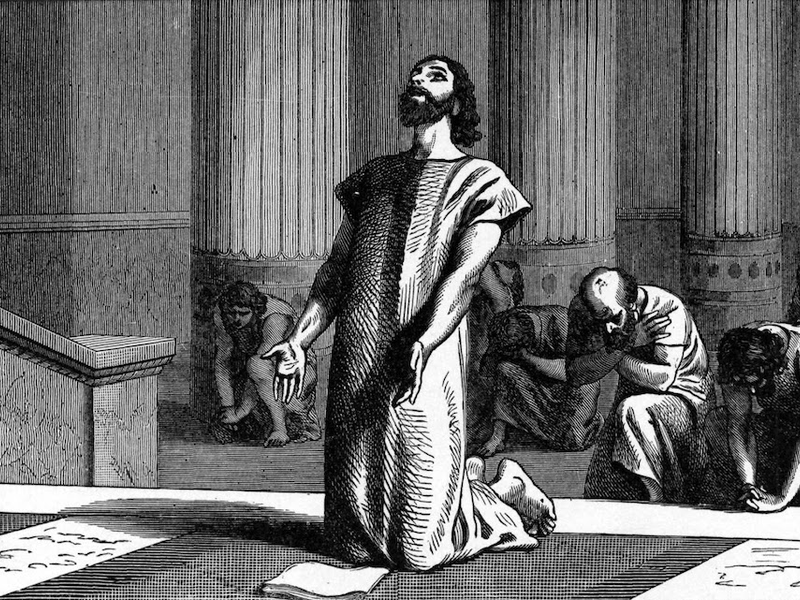
Hezekiah’s Sign

The story of Hezekiah’s illness and recovery is familiar to every child who has attended Sunday School. Informed that he would die, faithful King Hezekiah pleaded in tears for a longer life. God heard his prayers and saw his tears, and promised fifteen more years. As a sign that He…

by Peter LeithartOctober 13, 1989
screen-shot-2021-08-12-at-2-57-54-pm
Proverbs

An Antidote for Yuppie Postmillennialism

1. The Blessed Hope "Looking for the blessed hope and the appearing of the glory of our great God and Savior, Christ Jesus." Titus 2:13 I was recently asked how I as a postmillennialist would preach on "The Blessed Hope." This is often a sticky question, because postmillennialists believe that…

by James B. JordanAugust 26, 1989
screen-shot-2022-01-10-at-5-52-39-pm
American Culture

Elijah’s War with Baal

1. Jeroboam and Ahab After Solomon died, the people came to his son, King Rehoboam, and asked for tax relief. Rehoboam refused to give it, and indeed told the people that he was going to tax them even more severely than his father had. At that point, with the blessing…

by James B. JordanJuly 26, 1989
screen-shot-2020-08-31-at-10-35-03-am
Biblical Horizons

The Love Feast

One aspect of truth is unity. It was Truth Incarnate who prayed for the unity of His people in John 17, which certainly makes unity a priority for them as well. In one sense, we know by faith that the Church is always invisibly unified in Christ, but there is…

by James B. JordanJune 16, 1989
screen-shot-2022-01-07-at-6-38-22-pm
Biblical Studies

The Son of Joseph, Revisited

Mr. Paul Miller of Vancouver writes that he is not persuaded by my remarks on Luke 4 on " The Son of Joseph ." He calls attention to Mark 6:1-6, where Jesus came "to His own part of the country," taught in the synagogue, and astonished many. The people said,…

by James B. JordanMay 16, 1989
See all

Showing page 6 of 43

See all
Philosophy

Rousseau and Voltaire

Rosenstock-Huessy’s discussion of Voltaire and Rousseau depends on his prior discussion of the role of inspired literature in the formation of a nation. They are adherents to the revolutionary creed of literary inspiration, the “cult o f an inspired literature.” He compares the two to Tolstoy and Dostoevsky, for like…

January 25, 2007
History

Paris and French Nationhood

Rosenstock-Huessy deals with a number of interrelated issues in a section of Out of Revolution dealing with Paris and the French notion of nationhood: He talks about the establishment of Paris as the intellectual center of France and of Europe; about the division between Paris and Versailles as background to…

January 25, 2007

Calvin on Baptism again

A couple of thoughts on the Calvin quotations I posted yesterday, inspired by a reader’s response. 1) Calvin appeals to his doctrine of “accommodation” to explain why the sign of baptism is necessary. God does speak in ways we can grasp; if that’s all accommodation is, fine. But it often…

January 25, 2007

Father and Son

Tom Smail’s Like Father, Like Son: The Trinity Imaged in Our Humanity (Eerdmans 2005) has a lot going for it. Written for a general Christian readership, it reflects a thorough familiarity with both tradition and contemporary work on the Trinity, and applies Trinitarian patterns to human life in interesting ways.…

January 25, 2007

Timely words

Stahmer offers this useful summary of Rosenstock-Huessy’s and Rosenzweig’s attack on “objectivity”: “For J. G. Hamann, and for all those who have accepted the sacramental qualities inherent in the frailty and tentativeness of human speech, the ambiguities and relativity of history could not possibly be denied. Both Rosenstock-Huessy and Rosenzweig…

January 24, 2007

Ahead of the Curve

In their capacity as Sprachdenkern - Speech-thinkers, Rosenstock-Huessy and Rosenzweig anticipated a number of developments in philosophy, theology, and hermeneutics. Stahmer writes, “Both Rosenzweig and Rosenstock-Huessy, but most especially the latter, can now be seen to have been hermeneutical pioneers who anticipated, by many years, the work of Martin Heidegger,…

January 24, 2007

Showing page 1729 of 2212

Browse by Category

In Medias Res

Your weekly digest for all things Theopolis.

Donate

Theopolis is nearly 100% donor-supported. Consider joining us on our mission.