Theopolis Logo

Writing

Explore our collection of theological essays, biblical studies, and reflections on faith and culture.

See all
hebrew-manuscript-2
Hermeneutics

The Complexity of Biblical Allusion

There is no question about the fact that the book of Deuteronomy is full of literary allusion. But there is a serious problem, even a paradox, of understanding how that allusion works. To begin with, if we assume that Deuteronomy was written by Moses — with some editorial emendations added…

by Ralph Allan SmithJanuary 23, 2018

bladerunner
Culture

The Artificial Resurrection

Genesis and Genetics in Blade Runner 2049 The power of science fiction, and what’s positive about it, is that you’re able to experience the worst-case scenario without actually having to live it. (Actor Ryan Gosling, who plays Officer “K”) (Warning: The following analysis contains spoilers for both Blade Runner films.)…

by Mike BullJanuary 18, 2018
sixteen-miles-out-d40gdcd_-he-unsplash
Biblical Studies

The Battle of Gog and Magog

The battle of Gog and Magog is found in Ezekiel 38-39. My purpose in this brief essay is to propound an explanation for this passage that I have not encountered in any of my commentaries, but that makes more sense to me than any other. I offer it here in…

by James B. JordanJanuary 16, 2018
resurrection

Deep Hope

I. Varlam Shalamov in Kolyma Tales describes his experience of the Gulag, where he spent more than a dozen of years. In a story titled The Life of Engineer Kipreev Shalamov reflects on the theme of hope in the life of a prisoner: “Hope always shackles the convict. Hope is…

by Bogumil JarmulakJanuary 11, 2018
abraham-defeats-kings-g-jollain-2
Biblical Theology

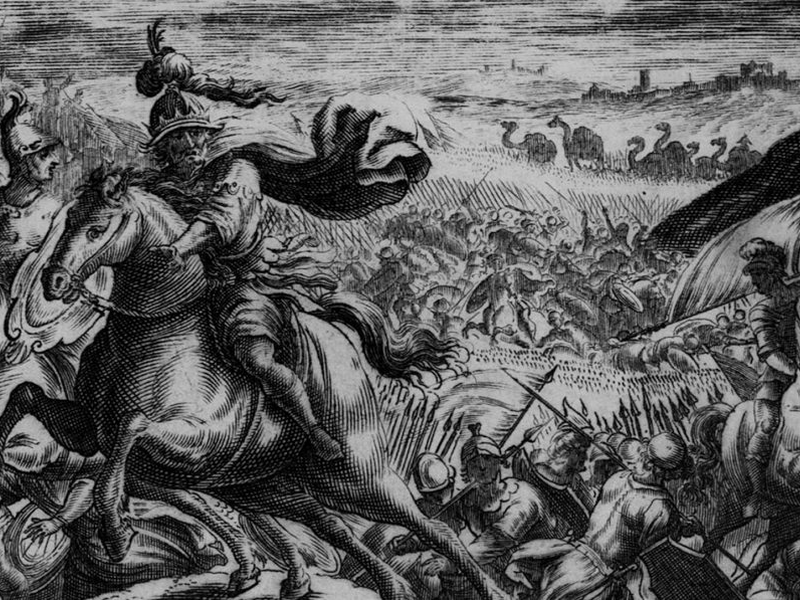
Abram’s 318 Men

Genesis 14:14 says that Abram mustered his trained men, “born in his house,” to rescue Lot, and gives their number as 318. It is clear that the precise number is provided for some reason, but what is it? S. Gevirtz notes that 318 is the sum of all the prime…

by James B. JordanJanuary 9, 2018
tanner-mardis-xuxghzhibn4-unsplash-1
Biblical Studies

The Flying Scroll

And he said to me, "What do you see?" And I answered, "I see a flying scroll; its length is twenty cubits and its width ten cubits" (Zechariah 5:2). Immediately following his vision of the outpouring of the Spirit upon the restoration community (4:1-14), Zechariah saw a flying scroll. The…

by Peter LeithartJanuary 4, 2018

Showing page 100 of 309

See all

Showing page 6 of 43

See all

Thy Word is Truth

Near the end of his prayer in 2 Samuel 7, David confesses his confidence in Yahweh’s promises concerning David’s house, saying “Thy words are truth” (v. 28). Jesus echoes this words in John 17:17. The connection seems to be a fruitful one, and perhaps there are more verbal links than…

January 5, 2007

Rigor

I and many of my friends have been criticized for our supposed lack theological rigor. It’s meant as an insult. I take it as a compliment. Rigor has its place. But it’s not the be and end all of theology. A Turretin is necessary for consolidating a Reformation. He could…

January 5, 2007

Proverbs 16:20-24

INTRODUCTION 16:20 starts a new section of the chapter, as Solomon returns again to the issue of speech. Waltke sees two sections here, verses 20-24 and 25-30. The first section focuses on the benefits of wise and winning speech, while the second section focuses negatively on destructive speech. Verse 20…

January 5, 2007
Art

Genius critics

Artists never accepted the attribution of genius as readily as theorists and bourgeois admirers applied it. Artists knew too much about the recalcitrantly physical qualities of words, paint, stone, ink, and sounds for that. Artists are as interested in technique as in inspirations. But for Kant genius was the criterion…

January 4, 2007
History

History of purity

Gadamer says, “One day someone should write the history of ‘purity.’” He cites one H. Sedlmayr, who “refers to Calvinistic purism and the deism of the Enlightenment.” Kant would play a key role: He “linked himself directly with the classical Pythagorean and Platonic doctrine of purity.” Gadamer wonders whether “Platonism…

January 4, 2007
Philosophy

Seeing as

Contrary to empiricism, perception is never pure, never merely a response to stimulus. That it is is merely a kind of “epistmological dogmatism” (Gadamer), which can only be defended if all instinct and fantasy is removed. In actual life, we never perceive without instinct or fantasy, and so “pure perception,…

January 4, 2007

Showing page 1741 of 2212

Browse by Category

In Medias Res

Your weekly digest for all things Theopolis.

Donate

Theopolis is nearly 100% donor-supported. Consider joining us on our mission.