Theopolis Logo

Writing

Explore our collection of theological essays, biblical studies, and reflections on faith and culture.

See all
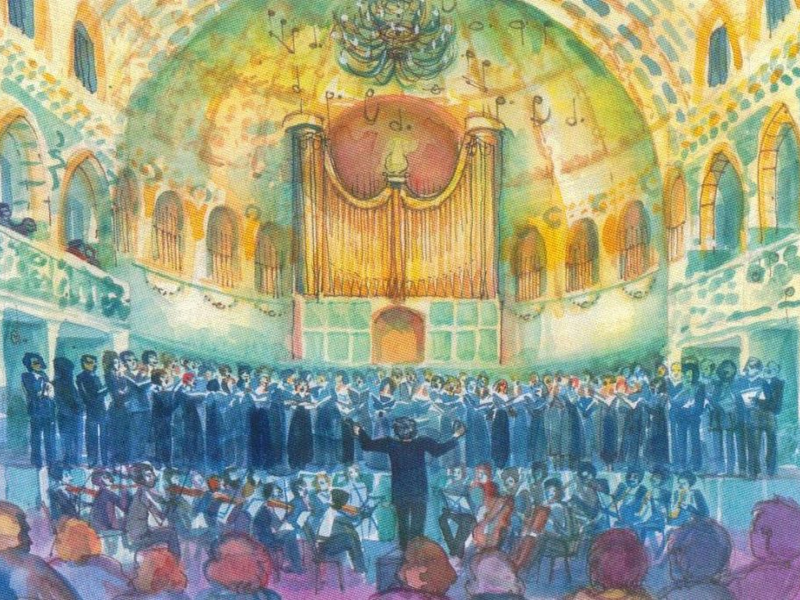
ohs-painting-concert-in-oxford-town-hall
Ephesians

Music and Drunkenness, Part 2

For Part 1, click HERE . How did Paul’s earliest commentators view his juxtaposition of music and drunkenness, and did they connect it to the ancient Greek ideas of musical ethos described in Part I? Origen, one of the earliest commentators on Paul, writes about Ephesians 5:18-19: One, however, who…

by John AhernMay 17, 2018
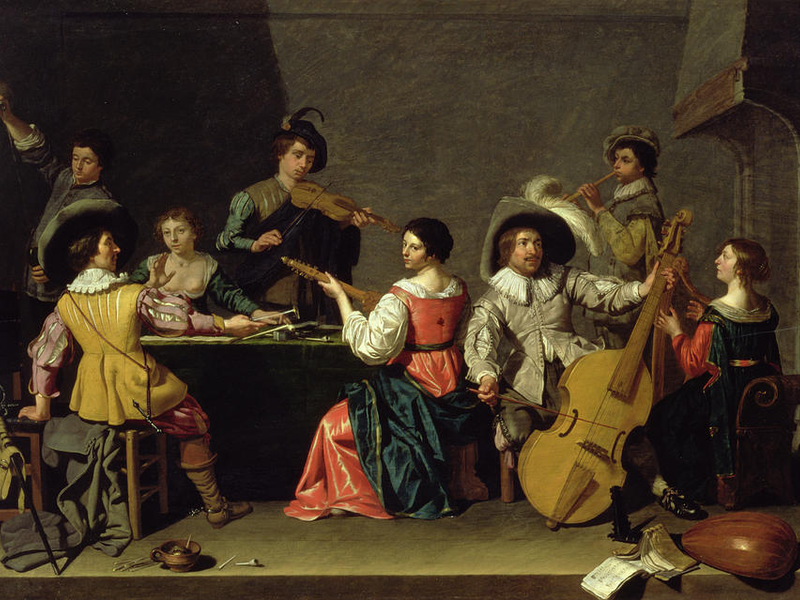
group-of-musicians-jan-van-bijlert-or-bylert
Ephesians

Music and Drunkenness, Part 1

Perhaps it is because I am a musician that I have always found Ephesians 5:18-19 so arbitrary. But isn’t it a little odd to contrast music and drunkenness? Perhaps it is not obvious that that is what Paul is doing; I know, for myself, that it is remarkably easy to…

by John AhernMay 15, 2018
infant-baptism
Baptism

Unequal Holiness

In 1 Corinthians 7:12-16 Paul deals with how the Corinthian Christians are supposed to be relating to unbelieving spouses. He essentially tells them, “Look, if your unbelieving spouse is willing to stay with you as a faithful Christian, don’t initiate a divorce. If he/she wants to leave you, let him/her…

by Bill SmithMay 10, 2018
starwarspt2
Violence

The Sword of Adam: Preterism vs. Pacifism, (Part 2)

For Part 1, click HERE . Those who focus on the supposed “pacifism” of Jesus and condemn the violence of God’s judgments throughout the Old Testament overlook the ministry of sacrificial bloodshed as an alternative to human bloodshed. The sword bearing of the sacrificial system was introduced to avoid the…

by Mike BullMay 8, 2018
obi-wan-death-edit
Violence

The Sword of Adam: Preterism vs. Pacifism, Part 1

How should a Christian respond to the objection that the Bible, like the Koran, is a book of violence and bloodshed? Numerous answers have been offered by well-meaning exegetes, but none of them gets to the heart of the matter: God desires to place a sword in the hands of…

by Mike BullMay 3, 2018
screen-shot-2018-05-02-at-12-55-14-pm
Theopolis News

Alastair Roberts Appointed As Adjunct Senior Fellow

Beginning this summer, Dr. Alastair Roberts will join the Theopolis Institute as an adjunct Senior Fellow, the Institute has announced. Dr. Roberts will be a regular on the Theopolis podcast, teach intensive courses and in the Fellows Program, and help develop new programs and outlets. Roberts earned his PhD from…

by TheopolisMay 2, 2018

Showing page 94 of 309

See all

Showing page 6 of 43

See all
History

Revolutionary timing

Are we living in a time of world-revolutionary change? Impossible to say, of course, but there might be some hints contained in the developments of the last millennium. Rosenstock-Huessy notes that Western man has been formed by periodic world-historical revolutions since the 11th century: Gregorian (11th), the Reformation (16th), Puritan…

December 29, 2006
History

One world

William Cavanaugh suggests that globalization represents a false catholicity, a unification of the human race organized around consumption and Hollywood blockbusters. That’s certainly one legitimate angle. On the other hand: The wealth of the wicked is stored up for the righteous, and Cain and Nimrod built cities long before David…

December 29, 2006
History

Fallen Soldiers

George L. Mosse’s Fallen Soldiers (Oxford 1990) is a fascinating study of the “Myth of War Experience” that developed between the French Revolution and came to a climax in World War I and its aftermath. Mosse develops a number of intertwined themes: the rise of volunteer armies after the French…

December 29, 2006

Childbirth

Rosenstock-Huessy notes the difference between animal birth and human childbirth, the main difference being that human parents remain with children after the birth: “marriage means to go from the blind act of the moment, through the whole life cycle to its most opposite point the childbirth,” and this shows “that…

December 29, 2006
History

Naming and nationalism

With nationalism at its height in the nineteenth century, the common practice of giving children biblical names was a check on nationalist idolatry, a reminder that the child was part of Christendom, not merely of France, Germany, England, etc. Rosenstock-Huessy puts the point dramatically: “When biblical names disappeared in Europe…

December 29, 2006
Science

Scientific law

In their Science & Grace (Crossway 2006), Tim Morris and Don Petcher helpfully define a law of nature as “God’s sustaining of, or man’s description of, that pattern of regularity that we observe in nature as God works out His purposes towards His own ends in HIs covenant faithfulness, through…

December 28, 2006

Showing page 1746 of 2212

Browse by Category

In Medias Res

Your weekly digest for all things Theopolis.

Donate

Theopolis is nearly 100% donor-supported. Consider joining us on our mission.