Theopolis Logo

Writing

Explore our collection of theological essays, biblical studies, and reflections on faith and culture.

See all
jon-tyson-zlf17v5scrq-unsplash
Biblical Horizons

Protestants and BMEV

For years I have read little posts by fresh new Papal converts that assert that Luther, Zwingli, Calvin, etc., believed in the perpetual virginity of Mary. So did Turretin. Setting aside the question of whether these men believed that this notion was important or not — and Calvin, at least,…

by James B. JordanNovember 27, 2009

jon-tyson-zlf17v5scrq-unsplash
Biblical Horizons

More Thoughts on BMEV

The previous discussion led to several points that I’d like to take up in like to take up in more detail. For the sake of discussion, I’ll number them for ease of consideration. 1. Typological “evidences” for Mary as perpetual virgin, queen of heaven, etc. etc. I assert here that…

by James B. JordanNovember 26, 2009
jon-tyson-zlf17v5scrq-unsplash
Biblical Horizons

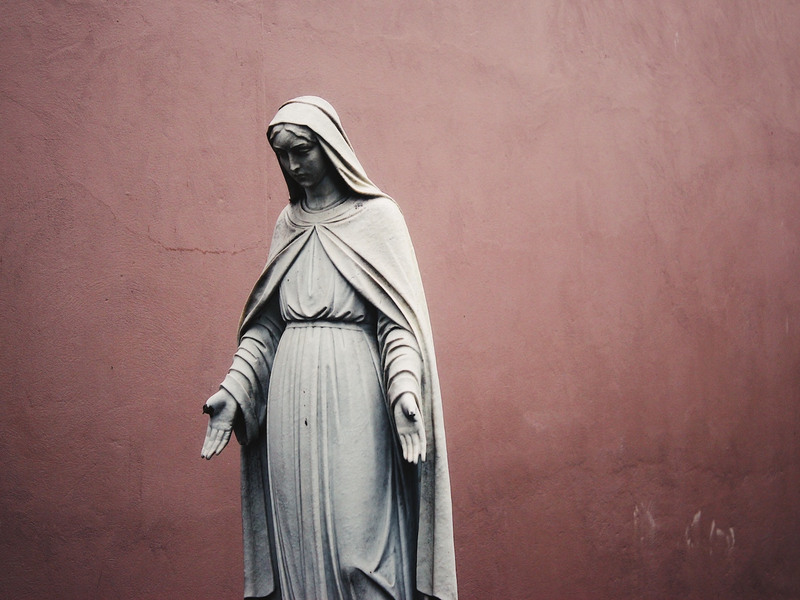
Concerning BMEV (Blessed Mary Ever-Virgin)

BMEV, or “Blessed Mary Ever-Virgin,” should not be an issue for any Protestant today, but clamor from various quarters means that we need once again to “get real” with the Biblical data here. Herewith is a reworking of a recent essay on the subject originally published in Biblical Horizons. Early…

by James B. JordanNovember 12, 2009
channel-82-urfja47nuhu-unsplash
Biblical Horizons

Rome? Why Bother?

When I hear from time to time of some young evangelical Presbyterian going into Roman Catholicism, I ask myself, “Why bother? You’re already in a church pretty much like what the Reformers rejected.” In the Medieval church, the congregation did little but watch while the priest and choir did everything.…

by James B. JordanJuly 14, 2009
greg-rakozy-ompaz-dn-9i-unsplash-2
Ephesians

A New Perspective on the Mystery of God

The “New Perspective” sheds light on what the New Testament means by the “mystery” of God. The mystery theme is quite pervasive in the apostolic writings, and shows up across genre lines, in the gospels, the epistles, and Revelation. One could even make a solid case that the revelation of…

by Mark HorneJune 5, 2009
skyler-gerald-oygna91tfis-unsplash
Biblical Horizons

Sanctus

THIS should be a link to the Sanctus I put together for use at the Biblical Horizons Conferences. Some churches have been using it also.

by James B. JordanMay 22, 2009

Showing page 208 of 309

See all

Showing page 6 of 43

See all
Philosophy

Heidegger in his woods

Latour is tired of being accused of having forgotten Being, and offers this clever brush-off of Heidegger: “If, scorning empiricism, you opt out of the exact sciences, then the human sciences,, then traditional philosophy, then the sciences of language, and you hunker down in your forest - then you will…

November 15, 2006
History

Semi-modernism

Postmoderns, Latour suggests, think they are still modern, but in fact they have greatly oversimplified the modern Constitution. Postmoderns might emphasize the separation of subject and world, and stretch that opposition to a breaking point (Latour vividly describes them as doing the splits to keep subject and world apart); but…

November 15, 2006
History

Modern temporality

In his very good section on modern temporality, Latour argues that modernity assumes that everything in the present, modern moment, is purely modern, novel. Anything that appears that is not up-to-date is a “archaism,” and moderns worry constantly that this or that event or trend might “turn back the clock.”…

November 15, 2006
History

Representation

One of the key moves made since the 17th century, Latour argues, is a distinction between modes of “representation.” In the laboratory Boyle is representing things before selected witnesses through scientific experiments, giving mute nature a voice through the scientist, while in politics Hobbes suggests that the Sovereign speaks for…

November 15, 2006
History

We Have Never Been Modern

Bruno Latour’s We Have Never Been Modern (Harvard 1993) is a rich study. He describes modernity in terms of a dual process of “purification” and “hybridization.” Purification involves the clean construction of a nature (and science) separated off from society and the self, while hybridization involves mixtures of nature and…

November 15, 2006

Tears of things

And/Or: Virgil is aware that the furor of civil war can be curbed only by an opposing, and more intense, furor. That, as Milbank says, is the way of paganism - peace established only by superior violence against violence. But in those tears Virgil expresses the the painful recognition -…

November 13, 2006

Showing page 1763 of 2212

Browse by Category

In Medias Res

Your weekly digest for all things Theopolis.

Donate

Theopolis is nearly 100% donor-supported. Consider joining us on our mission.







