Theopolis Logo

Writing

Explore our collection of theological essays, biblical studies, and reflections on faith and culture.

See all
ben-white-mo9vkbg5csg-unsplash
Masculinity

Ringing the Brothel Door

Bruce Marshall once wrote that every young man who rings the bell at a brothel is unconsciously looking for God. While it is not necessarily true that the inward desire of every man is ultimately a thirst for righteousness, it is true that every sin is the disordering of a…

by Garrett SoucyOctober 31, 2023
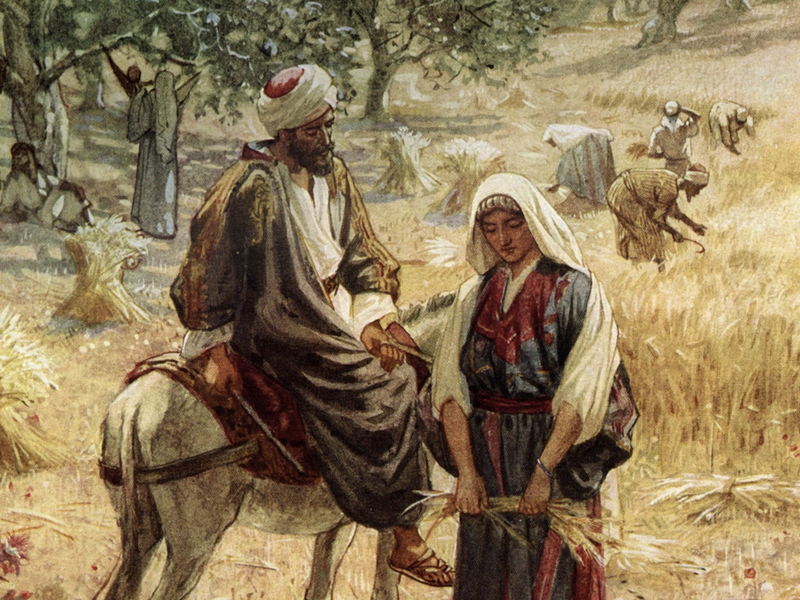
screenshot-2023-08-08-at-11-13-28-am
Ruth

Work and Gratitude in Ruth

In a previous essay , I argued that the story which begins with Lot and culminates in Ruth’s great-grandson David follows God’s five-fold pattern of creative work as laid out by Jim Jordan: taking something in hand (in this case, the Abrahamic family), restructuring it, distributing the product of labor,…

by Josh JensenOctober 27, 2023
screenshot-2023-10-17-at-11-05-18-am
Books

Men, Marriage, and the Feminine Imperative: A Review of "Men and Marriage"

Gilder, George. Men and Marriage. Moscow, ID: Canon Press, 2023. 1 By 1973, the hightide of second-wave feminism had flooded the beaches of American culture. Betty Friedan’s The Feminine Mystique eroded the shores of traditional female roles by naming and stirring up further domestic discontentment. Kate Millet wrote her dissertation-turned-book,…

by Bill SmithOctober 17, 2023
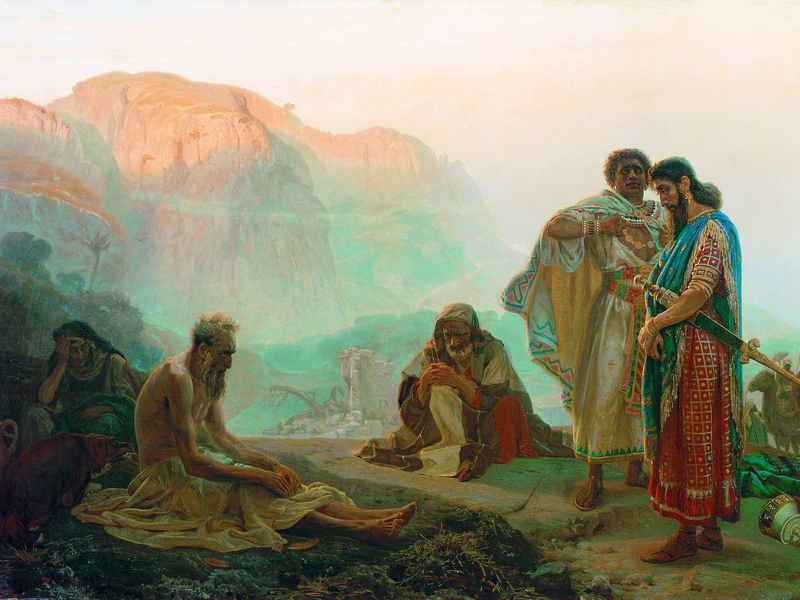
job_and_his_friends
Galatians

Get Behind Me, Eliphaz!

The Book of Job is a very tortuous book. The arguments of Job and his friends are shot through with truth and error hopelessly mixed together. Every line of contentious poetry stands locked in deadly battle with every other line. As maddening as this can be for a reader who…

by Jonathan WhiteOctober 10, 2023
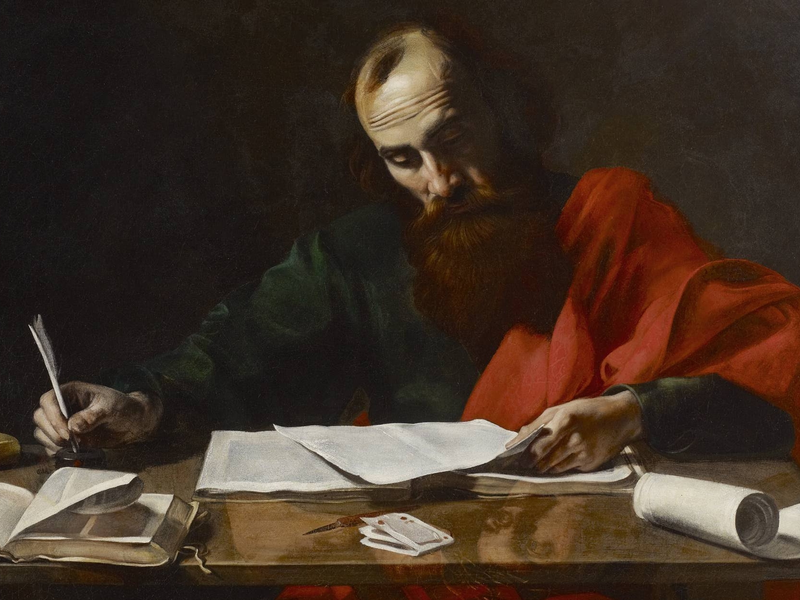
13071-probablyvalentindeboulogne-saintpaulwritinghi-1
Apostle Paul

Before His Conversion, Paul Knew Jesus

More than once in the last 50 years it has occurred to me that Paul might have known Jesus before He appeared to Paul on the Damascus road, but I had never taken up the notion in earnest until recently when I ran into a book by Stanley Porter titled…

by Ralph Allan SmithOctober 4, 2023
mathew-schwartz-s87bbfzviau-unsplash
Acts

Did Peter Found the Church in Rome?

The question in the title is genuine, not polemic. I could be perfectly happy to follow an ancient — and what is regarded as a well-attested — tradition. But I do not feel compelled to follow it simply because it is tradition. I would like to have arguments that Peter…

by Ralph Allan SmithSeptember 26, 2023

Showing page 27 of 309

See all

Showing page 6 of 43

See all
Philosophy

Heidegger in his woods

Latour is tired of being accused of having forgotten Being, and offers this clever brush-off of Heidegger: “If, scorning empiricism, you opt out of the exact sciences, then the human sciences,, then traditional philosophy, then the sciences of language, and you hunker down in your forest - then you will…

November 15, 2006
History

Semi-modernism

Postmoderns, Latour suggests, think they are still modern, but in fact they have greatly oversimplified the modern Constitution. Postmoderns might emphasize the separation of subject and world, and stretch that opposition to a breaking point (Latour vividly describes them as doing the splits to keep subject and world apart); but…

November 15, 2006
History

Modern temporality

In his very good section on modern temporality, Latour argues that modernity assumes that everything in the present, modern moment, is purely modern, novel. Anything that appears that is not up-to-date is a “archaism,” and moderns worry constantly that this or that event or trend might “turn back the clock.”…

November 15, 2006
History

Representation

One of the key moves made since the 17th century, Latour argues, is a distinction between modes of “representation.” In the laboratory Boyle is representing things before selected witnesses through scientific experiments, giving mute nature a voice through the scientist, while in politics Hobbes suggests that the Sovereign speaks for…

November 15, 2006
History

We Have Never Been Modern

Bruno Latour’s We Have Never Been Modern (Harvard 1993) is a rich study. He describes modernity in terms of a dual process of “purification” and “hybridization.” Purification involves the clean construction of a nature (and science) separated off from society and the self, while hybridization involves mixtures of nature and…

November 15, 2006

Tears of things

And/Or: Virgil is aware that the furor of civil war can be curbed only by an opposing, and more intense, furor. That, as Milbank says, is the way of paganism - peace established only by superior violence against violence. But in those tears Virgil expresses the the painful recognition -…

November 13, 2006

Showing page 1763 of 2212

Browse by Category

In Medias Res

Your weekly digest for all things Theopolis.

Donate

Theopolis is nearly 100% donor-supported. Consider joining us on our mission.