Theopolis Logo

Writing

Explore our collection of theological essays, biblical studies, and reflections on faith and culture.

See all
aaron-burson-yihqdpsk9ji-unsplash
City

The City of Cain

Not long ago, I heard these statistics about New York City: New York City is in $100 billion in debt. 20% of all NYC residents are on food stamps, which cost $250 million a month. 5% of NYC population are on disability, costing $252 million a month. Other assistance costs…

by Richard BledsoeJune 25, 2020

sebastiano-piazzi-ti_deyjwoky-unsplash
Empire

Twenty-Five Theses on Empire

1. All political power is ambivalent. Vertical violence of “the state” tends to limit horizontal and contested power between people and between tribes. “The State” brings new oppression, but also a measure of new peace and unity. 2. All political formations are ambiguous like this: a strong family conquers weaker…

by John MilbankJune 23, 2020
e99a2549
Coronavirus

Virtual Gnosticism and the Church – some disturbing thoughts about Covid19

Gnosticism by any other name would smell the same. But does the church have much of a theological sense of smell, these days, when it comes to the seductions of virtuality in our worshipping communities? Social isolation during a global pandemic makes good public health sense, but whether church should…

by Paul TysonJune 16, 2020
alex-radelich-evo4wmtrapi-unsplash
American Culture

The Priorities of Priests and Protests

It is a remarkable thing, you know, this thing called priority. Just a few weeks ago, religious leaders were boldly asserting in their high-dollar online videos that it was too dangerous to return to worship and that we needed to listen to our political and health leaders. "They are the…

by Uri BritoJune 15, 2020
roberts_siege_and_destruction_of_jerusalem-744x474-1
James

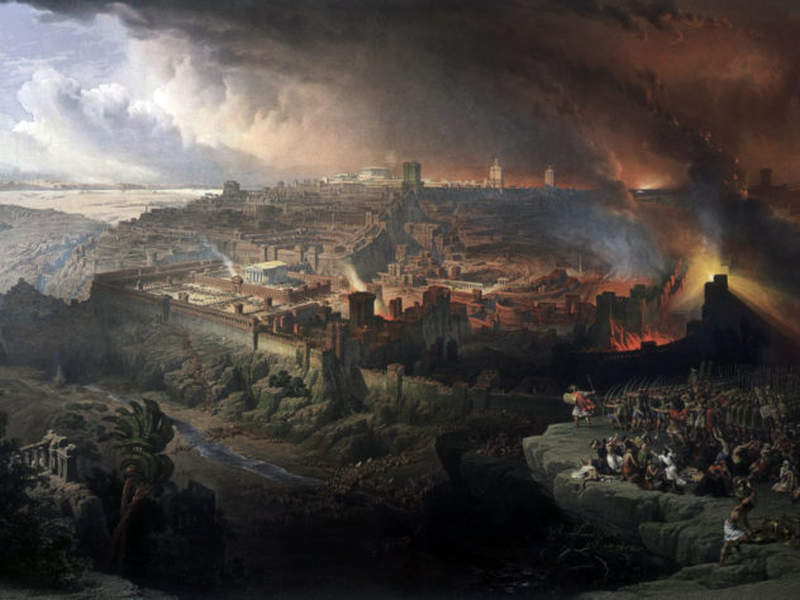
Anger, Riots, Violence, & Justice: How the Epistle of James Came to be Written

Somewhere in the city of Jerusalem on a rooftop just a few years after the ascension of Jesus and the outpouring of the Spirit on Pentecost. . . ". . . and just when are you guys going to live up to your ‘Sons of Thunder’ reputation? Huh? A lot…

by Jeff MeyersJune 9, 2020
adam-and-eve-in-the-garden-of-eden-wenzel-peter
Proverbs

Lady Wisdom Eve

In my book, Solomon Says: Directives for Young Men ( Amazon , Kindle ) I mention that Solomon portrays wisdom as a woman. But I don’t ask (or answer!) why he did so. Solomon uses the figure of Lady Wisdom without apology or explanation: Wisdom cries aloud in the street,…

by Mark HorneJune 2, 2020

Showing page 66 of 309

See all

Showing page 6 of 43

See all
Philosophy

Heidegger in his woods

Latour is tired of being accused of having forgotten Being, and offers this clever brush-off of Heidegger: “If, scorning empiricism, you opt out of the exact sciences, then the human sciences,, then traditional philosophy, then the sciences of language, and you hunker down in your forest - then you will…

November 15, 2006
History

Semi-modernism

Postmoderns, Latour suggests, think they are still modern, but in fact they have greatly oversimplified the modern Constitution. Postmoderns might emphasize the separation of subject and world, and stretch that opposition to a breaking point (Latour vividly describes them as doing the splits to keep subject and world apart); but…

November 15, 2006
History

Modern temporality

In his very good section on modern temporality, Latour argues that modernity assumes that everything in the present, modern moment, is purely modern, novel. Anything that appears that is not up-to-date is a “archaism,” and moderns worry constantly that this or that event or trend might “turn back the clock.”…

November 15, 2006
History

Representation

One of the key moves made since the 17th century, Latour argues, is a distinction between modes of “representation.” In the laboratory Boyle is representing things before selected witnesses through scientific experiments, giving mute nature a voice through the scientist, while in politics Hobbes suggests that the Sovereign speaks for…

November 15, 2006
History

We Have Never Been Modern

Bruno Latour’s We Have Never Been Modern (Harvard 1993) is a rich study. He describes modernity in terms of a dual process of “purification” and “hybridization.” Purification involves the clean construction of a nature (and science) separated off from society and the self, while hybridization involves mixtures of nature and…

November 15, 2006

Tears of things

And/Or: Virgil is aware that the furor of civil war can be curbed only by an opposing, and more intense, furor. That, as Milbank says, is the way of paganism - peace established only by superior violence against violence. But in those tears Virgil expresses the the painful recognition -…

November 13, 2006

Showing page 1763 of 2212

Browse by Category

In Medias Res

Your weekly digest for all things Theopolis.

Donate

Theopolis is nearly 100% donor-supported. Consider joining us on our mission.