Theopolis Logo

Writing

Explore our collection of theological essays, biblical studies, and reflections on faith and culture.

See all
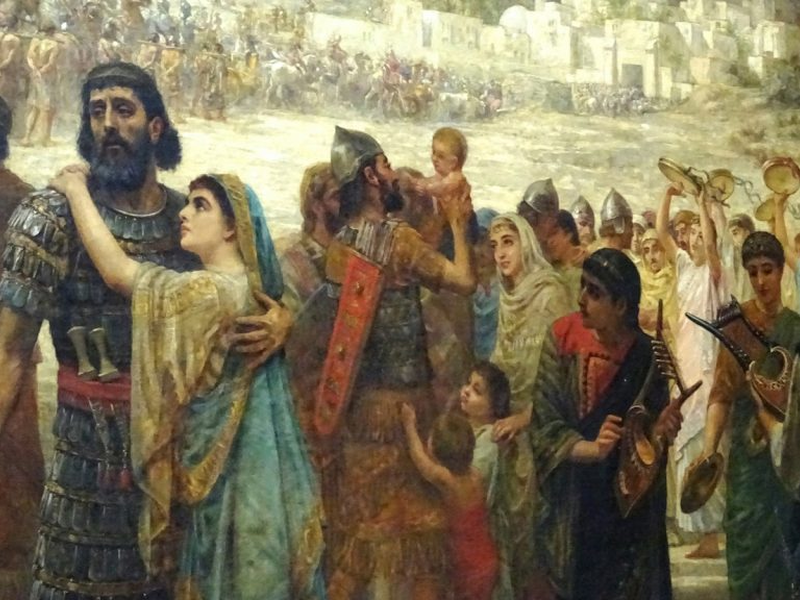
jephthahs-vow-by-edwin-long
Judges

The Jephthah-Jesus Connection

Why there is more to Jephthah than meets than eye It was not that long ago that I realized the Jephthah-story and the Jesus-story were basically the same story. Sounds crazy, I know. But here is a one-paragraph synopsis of both: The people of God have gone their own way,…

by Eric RobinsonDecember 27, 2018
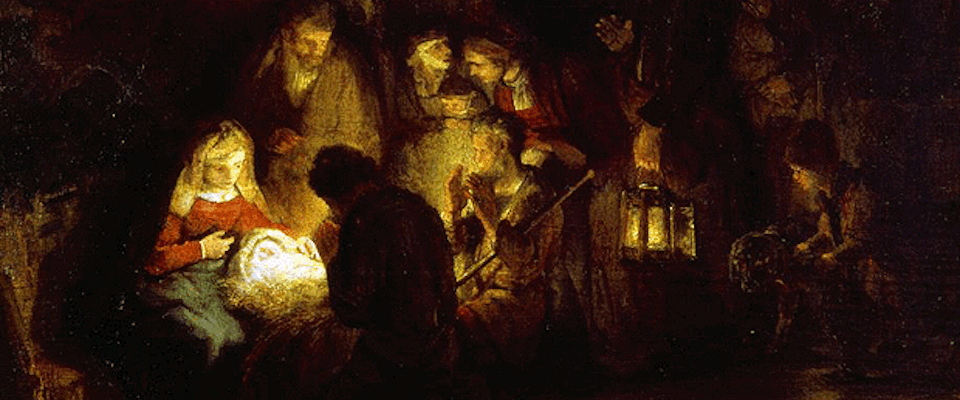
nativity-2
Advent

Jesus Rejoiced

G.K. Chesterton famously said that the Gospels don’t reveal Jesus’ mirth. It’s true we never catch Jesus laughing. But can we believe He never did? I don’t think so. Laughter is human, and Jesus was fully human. Jesus promised that those who mourned would laugh. He mourned; would He not…

by Peter LeithartDecember 25, 2018
74686
Advent

New Exodus

Matthew 2 has all the elements of an exodus story. There’s a murderous king, who slaughters Jewish babies. There’s a infant who will be Israel’s future deliverer, saved from the murderous king so He can later return to save His people and lead them to the Promised land. There’s an…

by Peter LeithartDecember 20, 2018
tpc-worship
Church Calendar

Is the Church Calendar Desirable?

The calendar of Israel was primarily theological, centered on commemorating the salvific acts of God, but also agricultural, celebrating the creation-restoring effects of those salvific acts. The feasts of the first month celebrated the reviving of the world in the Spring, and typified the cutting off of the Savior in…

by James B. JordanDecember 18, 2018
hebrew-manuscript-2
Chiasm

Chiasms and Life

The chiastic shape corresponds to the shape of human life. This should not surprise us, because we are made in the image of God, and God is manifest in Word and Spirit. If we are living epistles, our lives will look a bit like the literary shape of the books…

by James B. JordanDecember 14, 2018
sailing-shop-storm-crop
Biblical Theology

Boat Stories

Back in January, Venkatesh Rao wrote a fascinating post on the Ribbonfarm blog, discussing different forms of models of narrative. Engaging with Ursula LeGuin’s talk ‘The Carrier Bag Theory of Fiction’ , Rao explores her contrast between the (male) ‘hero narrative’ and the (female) ‘carrier-bag story’, and suggests a third…

by Alastair RobertsDecember 11, 2018

Showing page 83 of 309

See all

Showing page 6 of 43

See all
Philosophy

Heidegger in his woods

Latour is tired of being accused of having forgotten Being, and offers this clever brush-off of Heidegger: “If, scorning empiricism, you opt out of the exact sciences, then the human sciences,, then traditional philosophy, then the sciences of language, and you hunker down in your forest - then you will…

November 15, 2006
History

Semi-modernism

Postmoderns, Latour suggests, think they are still modern, but in fact they have greatly oversimplified the modern Constitution. Postmoderns might emphasize the separation of subject and world, and stretch that opposition to a breaking point (Latour vividly describes them as doing the splits to keep subject and world apart); but…

November 15, 2006
History

Modern temporality

In his very good section on modern temporality, Latour argues that modernity assumes that everything in the present, modern moment, is purely modern, novel. Anything that appears that is not up-to-date is a “archaism,” and moderns worry constantly that this or that event or trend might “turn back the clock.”…

November 15, 2006
History

Representation

One of the key moves made since the 17th century, Latour argues, is a distinction between modes of “representation.” In the laboratory Boyle is representing things before selected witnesses through scientific experiments, giving mute nature a voice through the scientist, while in politics Hobbes suggests that the Sovereign speaks for…

November 15, 2006
History

We Have Never Been Modern

Bruno Latour’s We Have Never Been Modern (Harvard 1993) is a rich study. He describes modernity in terms of a dual process of “purification” and “hybridization.” Purification involves the clean construction of a nature (and science) separated off from society and the self, while hybridization involves mixtures of nature and…

November 15, 2006

Tears of things

And/Or: Virgil is aware that the furor of civil war can be curbed only by an opposing, and more intense, furor. That, as Milbank says, is the way of paganism - peace established only by superior violence against violence. But in those tears Virgil expresses the the painful recognition -…

November 13, 2006

Showing page 1763 of 2212

Browse by Category

In Medias Res

Your weekly digest for all things Theopolis.

Donate

Theopolis is nearly 100% donor-supported. Consider joining us on our mission.