Theopolis Logo

Writing

Explore our collection of theological essays, biblical studies, and reflections on faith and culture.

See all
screen-shot-2018-11-15-at-10-04-44-am
Sex

Sex

Christians get sex wrong when we start from the wrong end. We start from human desires, passions, biological drives and “needs.” These are treated as givens, as the base-line natural reality of human sexuality. Then we come to the Bible and find, to our surprise, that God places all kinds…

by Peter LeithartNovember 15, 2018

img_4660-2
Proverbs

Wisdom, Gender, and Strength in Proverbs

Why isn't Proverbs better known as the Bible's book on "manliness"? I use quotation marks because the term almost seems archaic in our present culture, along with "manhood." Perhaps the Church is too embarrassed to admit the Bible addresses that much attention to the topic. But another reason can be…

by Mark HorneNovember 13, 2018
tpc-worship
Gnosticism

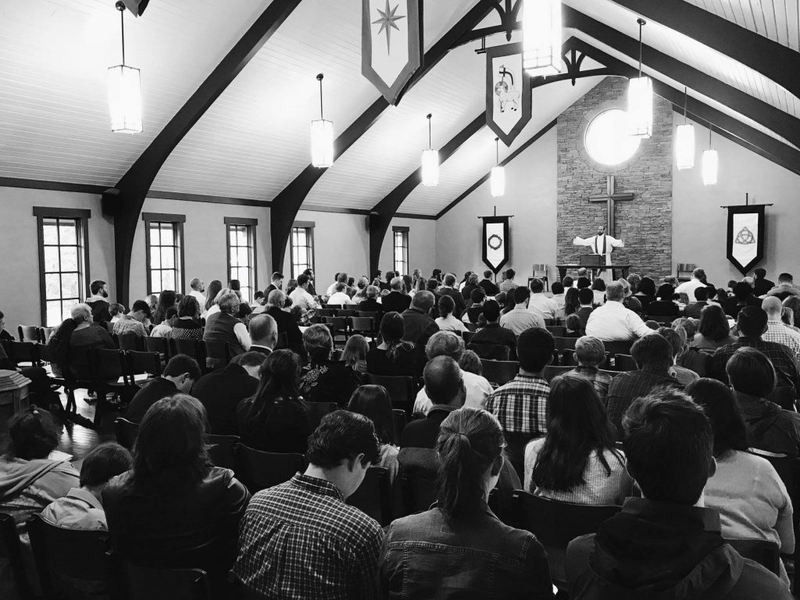
The Sacrament of Preaching

In certain evangelical Christian churches it is the tradition to exalt preaching above the sacraments of Baptism and the Lord’s Supper. Ever since the rise of Revivalist preachers pushing for conversions, the practice has cast doubt upon the possibility of Baptism or the Lord’s Supper being a “means of grace”…

by Mani MarprelateNovember 8, 2018
isaac-blessing-jacobgioachino-assereto-1640
Book Review

Yoram Hazony and the Deception of Isaac

Perhaps one of the most stimulating sections of Yoram Hazony’s The Philosophy of Hebrew Scripture addresses the question of how we are to discern the meaning of biblical narratives, especially how biblical narratives might present arguments of a more general nature. Hazony quotes John Barton’s remarks about the difficulty of…

by Alastair RobertsNovember 6, 2018
prayer-3
Book Review

Enduring Divine Absence: The Challenge of Modern Atheism – A Review

In this slender volume, Joseph Minich (Ph.D. student at the University of Dallas) attempts to answer some of the deepest questions of human existence. With his honesty, his probing questioning, his wide reading, and his ability to plunge beneath superficial answers, he provides a helpful source of reflection for fellow…

by Gregory SoderbergNovember 1, 2018
1_ejh7oql1sntvw3iw_avfma
Biblical Theology

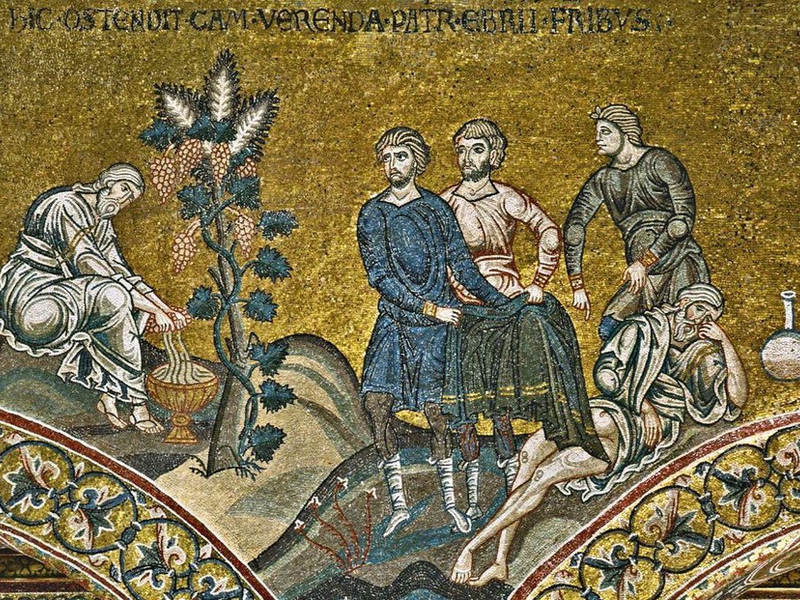
Drunk, Naked, and Accomplishing God’s Will

A Closer Look at Noah’s Post-Flood Humiliation In Genesis 9:20-27 My wife is currently leading a Bible study through Genesis for a group of insatiable Bible students. Because she is a deep thinker and has a high view of inspiration, there is no passage she is unwilling to face head…

by Eric RobinsonOctober 30, 2018

Showing page 85 of 309

See all

Showing page 6 of 43

See all
Philosophy

Heidegger in his woods

Latour is tired of being accused of having forgotten Being, and offers this clever brush-off of Heidegger: “If, scorning empiricism, you opt out of the exact sciences, then the human sciences,, then traditional philosophy, then the sciences of language, and you hunker down in your forest - then you will…

November 15, 2006
History

Semi-modernism

Postmoderns, Latour suggests, think they are still modern, but in fact they have greatly oversimplified the modern Constitution. Postmoderns might emphasize the separation of subject and world, and stretch that opposition to a breaking point (Latour vividly describes them as doing the splits to keep subject and world apart); but…

November 15, 2006
History

Modern temporality

In his very good section on modern temporality, Latour argues that modernity assumes that everything in the present, modern moment, is purely modern, novel. Anything that appears that is not up-to-date is a “archaism,” and moderns worry constantly that this or that event or trend might “turn back the clock.”…

November 15, 2006
History

Representation

One of the key moves made since the 17th century, Latour argues, is a distinction between modes of “representation.” In the laboratory Boyle is representing things before selected witnesses through scientific experiments, giving mute nature a voice through the scientist, while in politics Hobbes suggests that the Sovereign speaks for…

November 15, 2006
History

We Have Never Been Modern

Bruno Latour’s We Have Never Been Modern (Harvard 1993) is a rich study. He describes modernity in terms of a dual process of “purification” and “hybridization.” Purification involves the clean construction of a nature (and science) separated off from society and the self, while hybridization involves mixtures of nature and…

November 15, 2006

Tears of things

And/Or: Virgil is aware that the furor of civil war can be curbed only by an opposing, and more intense, furor. That, as Milbank says, is the way of paganism - peace established only by superior violence against violence. But in those tears Virgil expresses the the painful recognition -…

November 13, 2006

Showing page 1763 of 2212

Browse by Category

In Medias Res

Your weekly digest for all things Theopolis.

Donate

Theopolis is nearly 100% donor-supported. Consider joining us on our mission.