Theopolis Logo

Writing

Explore our collection of theological essays, biblical studies, and reflections on faith and culture.

See all
jelleke-vanooteghem-gnxb59lgu1m-unsplash
Baptism

Baptism and the Spirit

Pneumatology, the doctrine of the Holy Spirit, is often formulated along dispensational lines. The Holy Spirit’s work in the Old Testament, we tend to think, was earthly, concerned with political and military leadership, while in the New Testament the Spirit’s work has to do with mediating salvation achieved by Christ.…

by Peter LeithartMay 27, 1996

trnava-university-beeyeib-am8-unsplash
Biblical Horizons

Open Book 6: Views & Reviews

Homosexuality and the Love of Death Some years ago (September, 1980) Midge Decter published in Commentary one of the most illuminating pieces that I have ever seen on homosexuality. It was a very autobiographical piece dealing with her own summer vacation experiences on Fire Island off of New Jersey. When…

by Richard BledsoeApril 28, 1996
tim-wildsmith-j6jv-mkdzqs-unsplash
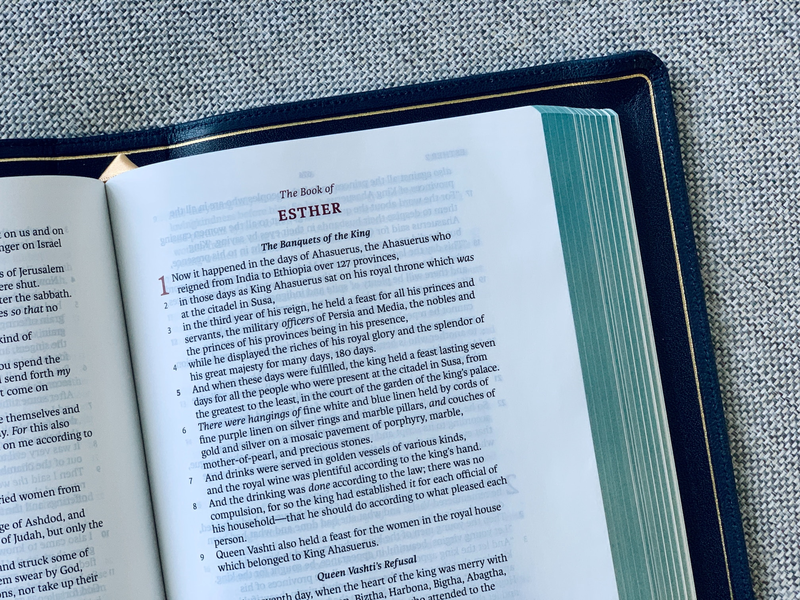
Esther

Esther: Historical & Chronological Comments (II)

C. The Battle of Gog and Magog (Ezekiel 38-39) (continued for previous issue) A final corroboration of this interpretive hypothesis comes from what we might call the "Amalek Pattern" in the Bible. Note in Genesis 12-15 that Abram moves into the land after escaping Pharaoh (ch. 12), settles down and…

by James B. JordanApril 28, 1996
image-20150409-15244-1r08rsu
Romans

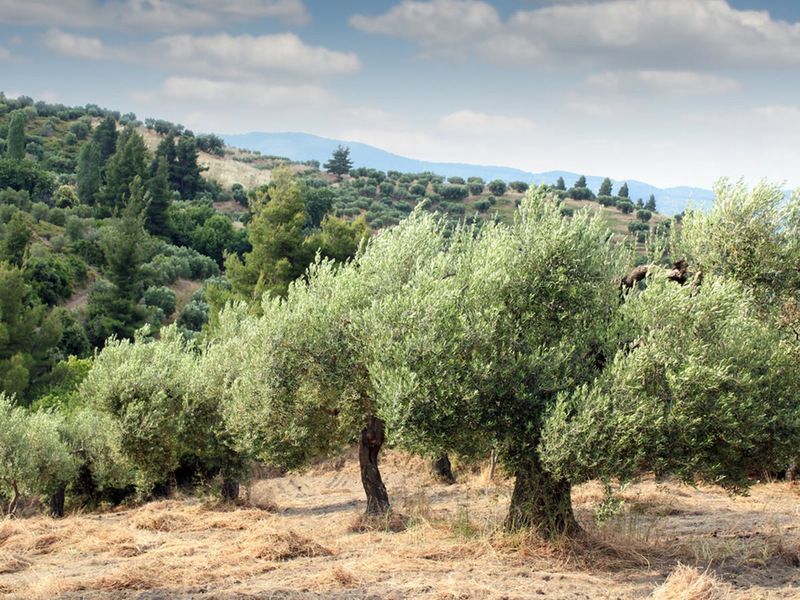
Christ in the Holy of Holies: The Meaning of the Mount of Olives

Speaking of the Church, Romans 11:16-17 says, "And if the root be holy, the branches are also. But if some of the branches were broken off, and you, being a wild olive were grafted in among them and became partaker with them of the root of the fatness of the…

by James B. JordanApril 28, 1996
aaron-burden-h8s0pf2rcqs-unsplash
Romans

Committed to the Form of Teaching

But thanks be to God that though you were slaves of sin, you became obedient from the heart to that form of teaching (tupos didaskales) to which you were committed, and having been freed from sin, you became slaves of righteousness (Romans 6:17-18). In his study of the use of…

by Peter LeithartApril 27, 1996
screenshot-2023-07-27-at-10-25-35-am
Biblical Horizons

Review: Biblical Theology, by John Owen

John Owen (1616-1683), Biblical Theology, or the Nature, Origin, Development, and Study of Theological Truth in Six Books, translated by Stephen P. Westcott (Pittsburgh: Soli Deo Gloria Publications, [1661] 1994), hardcover, 911 pages, $50.00. Here for the first time in English is one of Owen’s most important Latin works, along…

by James B. JordanMarch 28, 1996

Showing page 266 of 309

See all

Showing page 6 of 43

See all

Pride of life

Augustine describes “pride of life” in part as follows: “The temptation is to wish to be feared or loved by people for no reason other than the joy derived from such power, which is no joy at all. It is a wretched life, and vanity is repulsive . . .…

October 15, 2006

Eucharistic meditation

1 John 2:15: If anyone loves the world, the love of the Father is not in him. As we’ve seen this morning, John poses a stark either/or choice. Our lives are directed by our loves; what we love determines what path we take in life. Ultimately, there are only two…

October 15, 2006

Exhortation

John says, “Do not love the world or the things in the world,” and we immediately scurry around to find rationalizations and escape routes. Is John saying that cigarettes and beer and symphony orchestras and dancing and watching movies and art museums and playing video games are inherently sinful? Didn’t…

October 15, 2006
History

Urban pigs

Stallybrass and White again: “increasingly from the sixteenth century pigs were present and high visible in the city . They wandered through the streets, sometimes biting and even killing small children: in 1608 the young Sir Hugh Cholmley was attacked by a sow. A Jacobean starchmaker kept 200 pigs in…

October 14, 2006
History

Civilized savages

After a survey of the exotica on display in fairs in the 18th-19th centuries, Stallybrass and White conclude that the fairs do not, as Bakhtin argued, enact a grotesque inversion of civilized hierarchies, but instead reinforce those very hierarchies. Two passages are particularly important: “One could even mount the precise…

October 14, 2006
History

Smokin’ like a Christian

English fairs in earlier centuries displayed wares and displays from all over the world. At one there was an animal described as “a noble creature, which much resembled a Wild Hairy man” whose main skill was to doff his hat and show “his respects to the Company, and smoaks a…

October 14, 2006

Showing page 1776 of 2212

Browse by Category

In Medias Res

Your weekly digest for all things Theopolis.

Donate

Theopolis is nearly 100% donor-supported. Consider joining us on our mission.