Theopolis Logo

Writing

Explore our collection of theological essays, biblical studies, and reflections on faith and culture.

See all
g-_k-_chesterton_at_work
Books

Interpreting "The Man Who Was Thursday"

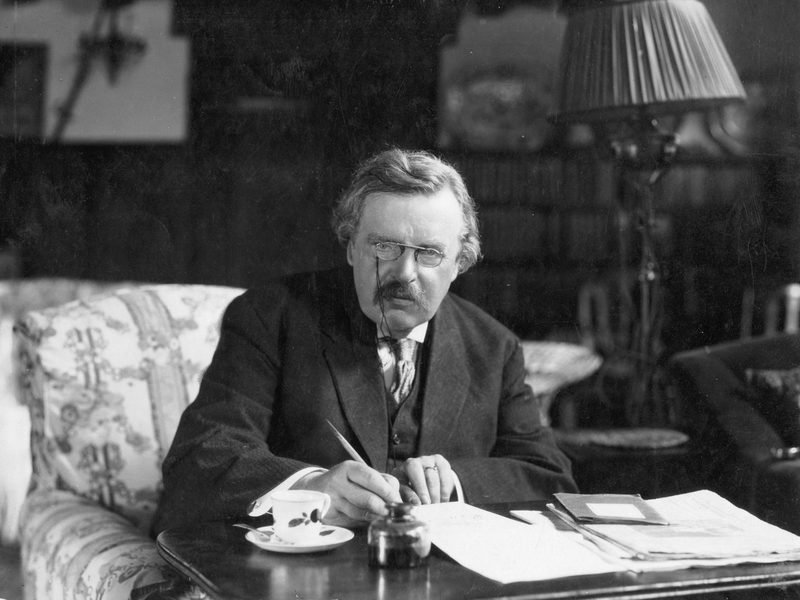
I just finished re-reading G. K. Chesterton’s The Man Who Was Thursday . I have in the past had the temerity to say that I believe it to be the best novel of the 20th century. Be that as it may, I still maintain that it is at least one…

by Richard BledsoeJanuary 7, 2022
10779-istockgetty-images-plusredletterw
Hebrews

The Universality of Mary’s Wound

And Simeon blessed them and said to Mary his mother, “Behold, this child is set for the fall and rising of many in Israel, and for a sign that is spoken against and a sword will pierce through your own soul also, that thoughts out of many hearts may be…

by Garrett SoucyJanuary 4, 2022
heartierhymnals-stockimage
Music

An Argument for Heartier Hymnals

I was inspired to write this article after reading John Ahern’s The Case for Shorter Hymnals first published on Theopolis Institute’s website on November 16, 2021. Mr. Ahern and I are writing with different audiences and emphases in mind. I am thankful we both share a mutual desire to see…

by Jarrod RicheyDecember 30, 2021
tim-marshall-k2u71wv2ei4-unsplash-1
Biblical Studies

Image of God

If you’ve spent any time in the social-media galaxy of Christian cultural commentators, you have almost definitely run across the Latin phrase Imago Dei . It means image of God . Why they usually say it in Latin, I couldn’t tell you. We saw it in the wake of the…

by Daniel HoffmanDecember 28, 2021
annunciation
Advent

He Comes to Make His Blessings Known: "Son of David" and "Son of Abraham" in Matthew 1:1

The Gospel of Matthew—indeed, the New Testament—begins with a list of names, and that list of names is introduced by this heading: “The book of the generations of Jesus Christ, the son of David, the son of Abraham.” Why start like this? Why “the son of David” and “the son…

by Josh JensenDecember 23, 2021
49980-nicolas_poussin_-_the_judgment_of_solomon_-_wga18330-800w-tn
Biblical Studies

On Not Needing to Cut the Baby in Half

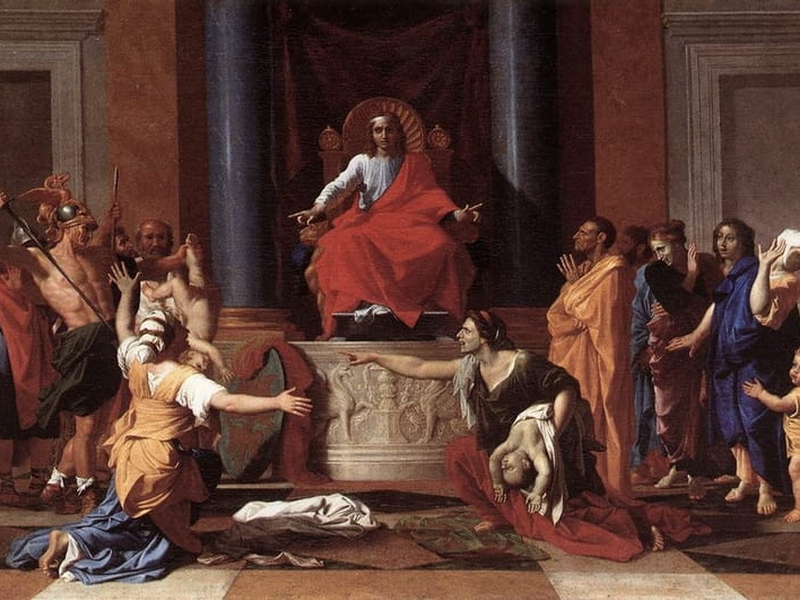
A blade is raised. A child wails. But the brow under the crown is untroubled. Solomon knows that the raising of the sword will reveal the true parent and the identity of the son. But how did he know this? Abraham’s willingness to sacrifice Isaac certainly bears some of the…

by Jonathan WhiteDecember 21, 2021

Showing page 48 of 309

See all

Showing page 6 of 43

See all

Exhortation

When John first talks about sin, he connects it to fellowship and walking in the light. He does not say, “If we walk in the light, the blood of Jesus cleanses us, and as a result we have fellowship with one another.” He says, “If we walk in the light,…

October 1, 2006
Economics

Bakhtin the capitalist

Stallybrass and White critize Bakhtin for conceptualizing the fair purely as a place of communal celebration, ignoring the commercial activities of the fair: “In developing this concept, Bakhtin succumbs to that separation of the festive and the commercial which is distinctive of capitalist rationality as it emerged in the Renaissance.…

September 29, 2006
History

Classical bodies and modernity

Stallybrass and White again: The classical form “was far more than an aesthetic standard or model.” It might be better to say that there was a classicist aesthetic at work in other areas besides art. In any case, the classical body “structured, from the inside as it were, the characteristically…

September 28, 2006
Art

Classical and other bodies

Peter Stallybrass and Allon White ( The Politics and Poetics of Transgression ) summarize a point from Bakhtin: “Bakhtin was struck by the compelling difference between the human body as represented in popular festivity and the body as represented in classical statuary in the Renaissance. He noticed how the two…

September 28, 2006

Humilation and Exaltation

Theologians normally treat the incarnation-to-burial of Jesus as the humiliation of the Son; resurrection-to-ascension exaltation. That’s correct, but there are other angles too. God hid His face behind a veil from the time of Moses to the incarnation. This is His humiliation - we might almost say, a display of…

September 28, 2006
Literature

Metaphysical Hamlet

Andre Gide wrote: “Has anyone, in explaining Hamlet’s character, made full use of the fact that he has returned from a German university? He brings back to his native country the germs of a foreign philosophy; he has plunged int a metaphysics whose remarkable fruit seems to me ‘To be…

September 28, 2006

Showing page 1784 of 2212

Browse by Category

In Medias Res

Your weekly digest for all things Theopolis.

Donate

Theopolis is nearly 100% donor-supported. Consider joining us on our mission.