Theopolis Logo

Writing

Explore our collection of theological essays, biblical studies, and reflections on faith and culture.

See all
maria-oswalt-g5zi__7mwmw-unsplash-2
Abortion

PROLIFISM: A New Humanism

There is nothing good Satan cannot pervert, and that fact extends to the Christian public witness against abortion just as it applies to everything else. As a Christian who has written, marched, and picketed against legalized abortion since 1970, I have been saddened to see the development of the anti-Christ…

by James B. JordanApril 6, 1994

aaron-burden-h8s0pf2rcqs-unsplash
Biblical Chronology

The Chronology of the Pentateuch (Part 2)

(We are discussing the meaning of the phrase "cutting off of days" in Genesis 4:3, showing that it implies the turn of the year in autumn.) Two passages use the term "cutting off of years" to refer to the lunar year, beginning in the Spring. Exodus 12:41 – at the…

by James B. JordanApril 6, 1994

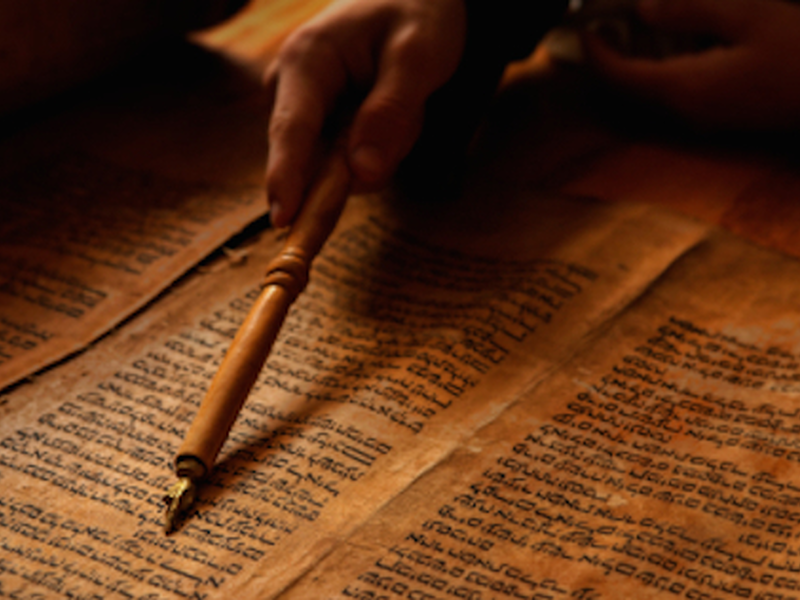
hebrew-manuscript-6
Haggai

The Wealth of Nations

In the second year of Darius, near the end of the feast of booths, the prophet Haggai encouraged the Jews of the restoration to continue their work on the temple by assuring them that “the latter glory of this house will be greater than then former” (Hag. 2:9). To this…

by Peter LeithartApril 6, 1994
sinitta-leunen-dvibhmzsy8e-unsplash
Biblical Horizons

A Theology of Ritual: Mapping the Territory

G. K. Chesterton began Orthodoxy by describing the plot of a book that he had never written. Taking a page from Chesterton, below I will briefly map out the territory of a book (or books) that need(s) to be written. Had I but world enough and time–and a small army…

by Peter LeithartApril 5, 1994
juli-kosolapova-us_dv71f1bc-unsplash
Deuteronomy

Israel and Other Gods

As long as Moses lived, Israel seldom worshipped other gods directly. She broke the First Word by breaking the Second, worshipping God through the calf. As we shall see, God always treats such Liturgical Idolatry as Covenantal Idolatry, but it is far more serious because it is committed by those…

by James B. JordanApril 5, 1994
sixteen-miles-out-ki3hr9t8t7a-unsplash
Biblical Studies

The Holy City Revisited

In response to my article, " The Holy City " (in Biblical Horizons 55) James B. Jordan has made several suggestions about how I might expand on the ideas presented there. Several other readers have also contributed their insights. Below, I trace a few sketchy lines of thought. 1. The…

by Peter LeithartMarch 23, 1994

Showing page 280 of 309

See all

Showing page 6 of 43

See all
Literature

The Politics of Playing

Plays might be promoted as a kind of opiate of the masses: Mass entertainment that keeps them from more violent entertainments like rioting and pillaging. This could be problematic, if the entertainments were too heady for most people to follow. Thomas Heywood (1612) suggested that playwrights should “ayme . .…

September 28, 2006
Literature

Shakespeare regulated

How regulated was Shakespeare’s own theater? And for what reasons? Patterson highlights various reasons for closing or permitting theaters: audience composition, including the fear that a large collection of workers might be distruptive; public health; economic concerns; religious and moral concerns, especially Sabbatarian; and “a shifting and elusive imperative to…

September 28, 2006
Literature

American Shakespeare

Shakespeare’s fortunes in the US were, understandably, different from in England. Initially, Shakespeare was America’s most popular playwright, appealing to a wide sector of the American populace. Patterson notes that “by the end of the nineteenth century ‘Shakespeare’ had become a cultural icon, the property only of the ‘legitimate theater,’…

September 28, 2006
Literature

Popular Shakespeare

Annabel Patterson notes ( Shakespeare and the Popular Voice ) that contemporary critics, whatever their own political outlook, assume that Shakespeare was an advocate of Elizabethan hierarchy. This view, however, is a product of the 19th century. Dryden, Johnson, and others criticize Shakespeare for violating the conventions of his genre,…

September 28, 2006
Literature

Courtly Shakespeare, IV

By the 18th century, acting styles also invested Shakespeare with “courtly” virtues of control, dignity, stateliness. Dobson writes, “Shakespearian acting . . . in the decades following Betterton’s death in 1710, seems to have settled into a grandiloquent vein of static declamation, best exemplified by the stout James Quin (1693-1766)…

September 28, 2006
Literature

Courtly Shakespeare, III

Dobson again: “after Charles II’s death in 1685 England would never again have another monarch with such an informed interest in the drama (or, mercifully, such a lascivious one), and deprived of royal patronage and protection the playhouses came under renewed attack from the moralists (led by the redoubtable clergyman…

September 28, 2006

Showing page 1785 of 2212

Browse by Category

In Medias Res

Your weekly digest for all things Theopolis.

Donate

Theopolis is nearly 100% donor-supported. Consider joining us on our mission.