Theopolis Logo

Writing

Explore our collection of theological essays, biblical studies, and reflections on faith and culture.

See all
diego-gonzalez-i8ldurtfao-unsplash
Architecture

Arts and Play, Part 3

Let us now switch gears and move to a discussion of art, literature, architecture, and music. In English, we speak of "playing" games and also of "playing" musical instruments. There is a connection between the two, in that both involve some degree of pleasure and recreation. At the same time,…

by James B. JordanJanuary 23, 1992
venice-la-distruzione-del-tempio-di-gerusalemme-francesco-hayez-gallerie-accademia-venice
Daniel

The Abomination of Desolation, Part 4b: Abominable and Detestable

Leviticus 20:22-26 22. And you shall guard all My decrees and all My laws and do them, so that the land will not vomit you out, where I am bringing you thither to live in it. 23. And you shall not walk in the decrees of the nation that I…

by James B. JordanDecember 23, 1991
v4mkpbd70x7bkvc7mqvu
American Politics

The Original Low-Down Filthy Male Chauvinist Pig-Dog

For a year or so we have been reading about date rape. It amazes me how many "conservative" commentators have taken the attitude that "boys will be boys," and that it is somehow the girl’s fault if she lets the boy go too far. I have to agree that we…

by James B. JordanDecember 23, 1991
screen-shot-2023-04-04-at-5-01-54-pm
Biblical Chronology

Chronologies and Kings, Part 6: The Formation of the Remnant

According to 1 Kings 16:29, Ahab came to the throne of Israel in the 38th year of Asa of Judah, which was the year A.M. 3087. He reigned 22 years, dying in the year 3108. Ahab married a princess of Tyre named Jezebel (Jeze-baal). Under Jezebel’s influence, Ahab turned away…

by James B. JordanDecember 23, 1991
venice-la-distruzione-del-tempio-di-gerusalemme-francesco-hayez-gallerie-accademia-venice
Luke

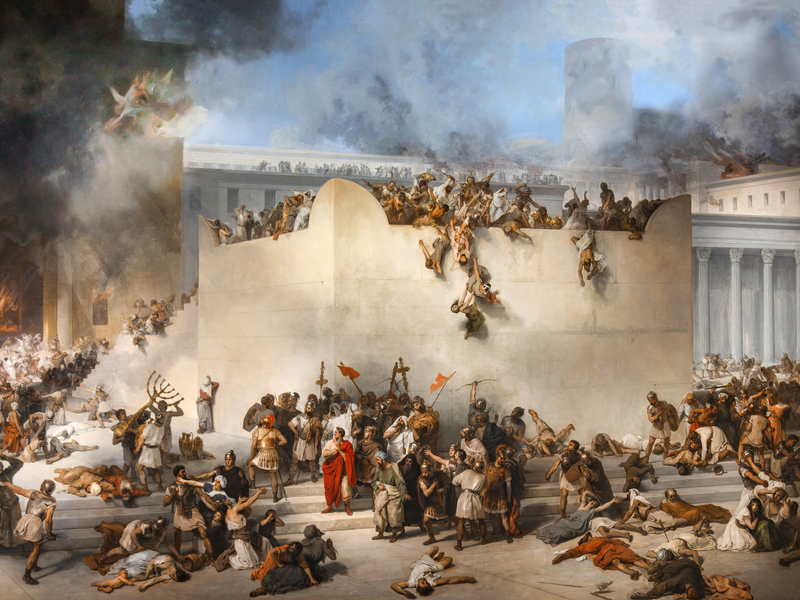
The Abomination of Desolation: Part 4, Abominable and Detestable

Part 1 Part 2 Part 3 Most Christians today, when they hear the phrase "abomination of desolation," think of some political figure who is to arrive on the scene some time in the future, and who will oppress God’s people. More careful exegetes have seen that the prophecies concerning "abomination…

by James B. JordanNovember 22, 1991
skyler-gerald-akljfvj5ym4-unsplash
Deuteronomy

Chronologies and Kings, Part 5: Testimonies of Two Witnesses

Deuteronomy 17:6 tells us that a matter is to be regarded as established if it is testified by two or three witnesses. One of the most important characteristics of Biblical chronology is that it is very often supported by more than one witness. A case in point is the fact…

by James B. JordanNovember 22, 1991

Showing page 293 of 309

See all

Showing page 6 of 43

See all
Literature

The Politics of Playing

Plays might be promoted as a kind of opiate of the masses: Mass entertainment that keeps them from more violent entertainments like rioting and pillaging. This could be problematic, if the entertainments were too heady for most people to follow. Thomas Heywood (1612) suggested that playwrights should “ayme . .…

September 28, 2006
Literature

Shakespeare regulated

How regulated was Shakespeare’s own theater? And for what reasons? Patterson highlights various reasons for closing or permitting theaters: audience composition, including the fear that a large collection of workers might be distruptive; public health; economic concerns; religious and moral concerns, especially Sabbatarian; and “a shifting and elusive imperative to…

September 28, 2006
Literature

American Shakespeare

Shakespeare’s fortunes in the US were, understandably, different from in England. Initially, Shakespeare was America’s most popular playwright, appealing to a wide sector of the American populace. Patterson notes that “by the end of the nineteenth century ‘Shakespeare’ had become a cultural icon, the property only of the ‘legitimate theater,’…

September 28, 2006
Literature

Popular Shakespeare

Annabel Patterson notes ( Shakespeare and the Popular Voice ) that contemporary critics, whatever their own political outlook, assume that Shakespeare was an advocate of Elizabethan hierarchy. This view, however, is a product of the 19th century. Dryden, Johnson, and others criticize Shakespeare for violating the conventions of his genre,…

September 28, 2006
Literature

Courtly Shakespeare, IV

By the 18th century, acting styles also invested Shakespeare with “courtly” virtues of control, dignity, stateliness. Dobson writes, “Shakespearian acting . . . in the decades following Betterton’s death in 1710, seems to have settled into a grandiloquent vein of static declamation, best exemplified by the stout James Quin (1693-1766)…

September 28, 2006
Literature

Courtly Shakespeare, III

Dobson again: “after Charles II’s death in 1685 England would never again have another monarch with such an informed interest in the drama (or, mercifully, such a lascivious one), and deprived of royal patronage and protection the playhouses came under renewed attack from the moralists (led by the redoubtable clergyman…

September 28, 2006

Showing page 1785 of 2212

Browse by Category

In Medias Res

Your weekly digest for all things Theopolis.

Donate

Theopolis is nearly 100% donor-supported. Consider joining us on our mission.