Theopolis Logo

Writing

Explore our collection of theological essays, biblical studies, and reflections on faith and culture.

See all
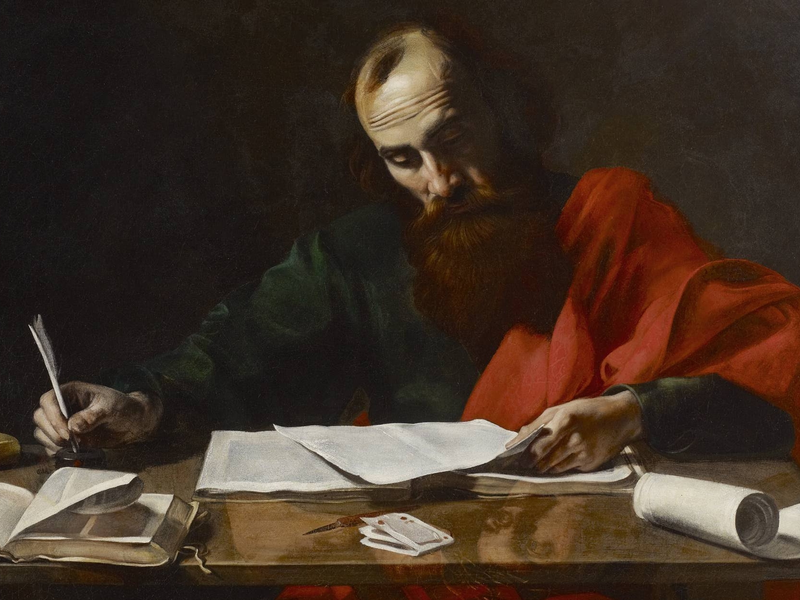
13071-probablyvalentindeboulogne-saintpaulwritinghi-1
1 Corinthians

The Great Exchange: Understanding Second Corinthians 5.21

He made Him who knew no sin to be sin on our behalf, that we might become the righteousness of God in Him. My argument is simple: What Paul means in writing the quotation above in context is the same as what he was telling the Ephesians when he wrote,…

by Mark HorneJune 7, 2004

ben-white-w8qqn1pmqh0-unsplash
Biblical Theology

What is Biblical Theology (Part 3) : The Art of Biblical Theology

THE ART OF BIBLICAL THEOLOGY IN PRACTICE: INTERTEXTUALITY AND TWO PAULINE CASE STUDIES The Art of Biblical Theology: Intertextuality Biblical Theology is really an art. Like other skills of this sort, it is not a matter of following rules (though there are certainly guidelines and techniques). Rather, it’s matter of…

by Rich LuskJune 6, 2004
malcolm-lightbody-tc2f02iq8le-unsplash
Biblical Theology

What is Biblical Theology: (Part 2) The Christotelic Spiral

Click HERE for Part 1 Reading Christotelically Jesus Christ is the heart of God’s plan for creation and history. There is no “hidden plan” or “hidden God” lurking behind Christ; rather, in and through Christ God has revealed himself and his intentions towards the world. In Christ, the Father has…

by Rich LuskJune 6, 2004
aaron-burden-qjdzyt_k8xg-unsplash
Biblical Studies

What is Biblical Theology? (Part 1)

STORY THEOLOGY AND A THEOLOGY OF STORY Defining Biblical Theology What is Biblical Theology? How does it compare to other ways of doing theology, such as Systematic Theology? Geerhardus Vos suggested that whereas Biblical Theology draws a line, Systematic Theology draws a circle. That is to say, Biblical Theology is…

by Rich LuskJune 6, 2004
screenshot-2023-09-21-at-3-59-23-pm
Hebrews

Living by His Faith: Some Rough Thoughts on the Faithfulness of Christ

The gospels strongly imply Jesus lived by faith in the promise of his heavenly Father. How else can his prayer life understood? How else could he have wrestled through the Gethsemane experience? How else could he have committed himself into his Father’s care at death? How could Jesus have presented…

by Rich LuskJune 6, 2004
sixteen-miles-out-al48tflf4e8-unsplash
John

John 3:16

John 3:16 is probably best-known, or at least, best-liked Bible passage in North America: “For God so loved the world, that he gave his only Son, that whoever believes in him should not perish but have eternal life.” This declaration of God’s love of the whole world is greatly comforting…

by Mark HorneJune 6, 2004

Showing page 223 of 309

See all

Showing page 6 of 43

See all
History

Bacon’s Induction

Stanley Fish, in a renowned essay on Bacon’s Essays , concludes that the essays are “unfinished with a purposefulness that makes the bestowing of the adjective less a criticism than a compliment.” He insists on the provisionality of knowledge, and “communicates that provisionality [in the Essays ] by letting the…

September 5, 2006
Science

Lamarck Redux?

In a fascinating review of a recent book on evolution (TNR, Sept 4), Oren Harman suggests that reports of the death of Lamarck, proclaimed in every middle school science classroom for well over a century, may be somewhat exaggerated: Lamarckism “is and isn’t” dead. Insofar as Lamarckism meant “direct adaptive…

September 5, 2006

Trinity and Self-Gift

One of Barth’s main contentions that only a Triune God can give Himself. A monadic God might give, but would give something less than Himself. Only if God is both Himself and another, and only if that other is fully God, can God give Himself .

September 5, 2006

Complex reprobation

Bavinck writes: “It is wrong to conceive the decree as if it determined only a person’s end and coerced him or her in that direction regardless of what they did. The decree is as inconceivably rich as reality itself. It is, in fact, the fountainhead of all reality. It encompasses…

September 5, 2006
History

Epistemology of ingratitude

Blumenberg writes ( Legitimacy of the Modern Age ) that with Bacon, Kepler, and particularly Leibniz, the Augustinian suspicion of curiosity is overcome, and knowledge thereafter “justifies itself; it does not owe thanks for itself to God; it no longer has any tinge of illumination or graciously permitted participation but…

September 4, 2006
History

Physics and Metaphysics

Blumenberg says that Bacon drew a distinction between metaphysics and physics in terms of human control: “The former has as its object the unalterable law beyond man’s influence; the latter comprises all knowledge of the operative and material causes that man can transpose in order to influence given states of…

September 4, 2006

Showing page 1799 of 2212

Browse by Category

In Medias Res

Your weekly digest for all things Theopolis.

Donate

Theopolis is nearly 100% donor-supported. Consider joining us on our mission.