Theopolis Logo

Writing

Explore our collection of theological essays, biblical studies, and reflections on faith and culture.

See all
img_7543
Nevin Lectures

Fourth Annual Nevin Lectures: Robert Kolb

Why Do Siblings Feud? Presuppositions, Principles, and Practice in Reformed-Lutheran Relationships Robert Kolb, International Research Emeritus Professor for Institute for Mission Studies, Concordia Seminary, St Louis, Missouri. Lecture Topics 1) Law and Gospel: Answering the Question Posed 2) The Lord's Supper: Christ's Presence and Promise 3) Worship and Created Things:…

by Brian MoatsDecember 30, 2016

e99a2994
Advent

Exodus to Eden

From Genesis 3, West-to-East movement is always movement away from God’s presence and His house (cf. Genesis 3:24). Adam and Eve were cast out of the Garden to the east, and when Cain was later cast out he was sent to the land east of Eden. The men of Babel,…

by Peter LeithartDecember 30, 2016
holy-family
Advent

Immanuel's Table

In his account of Jesus' birth, Matthew cites a prophecy assuring Judah of her victory over Israel and Aram. Immanuel is also a sign of the Lord’s judgment. When God comes near, He comes to bless and to curse, to save and to condemn, for deliverance and for judgment. The…

by Peter LeithartDecember 29, 2016
massacre2
Abortion

Holy Innocents

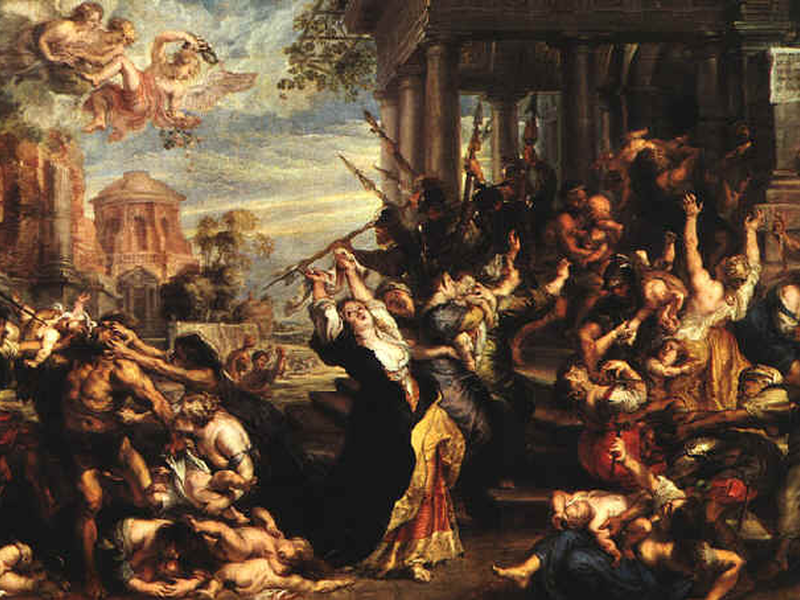
For many in the modern era, Christianity has been seen as an apolitical religion. Christianity is a private, spiritual religion. It's a convenient myth for modern people. After the Reformation, Europe entered a period of protracted and often vicious conflict that left large portions of Western Europe devastated. Many concluded…

by Peter LeithartDecember 28, 2016
sixteen-miles-out-d40gdcd_-he-unsplash
Advent

Christmas Light, Christmas Love

The Christmas gospel announces the coming of day. Those in darkness see a great light, as the Sun rises with healing in His wings. The light has come into the world that lightens every man, to give light to those who sit in darkness and in the shadow of death.…

by Peter LeithartDecember 27, 2016
screen-shot-2022-05-12-at-12-07-23-pm
Advent

Word Made Food

How do we know God loved the world? John tells us that He demonstrates His love in sending His Son. To paraphrase Paul, God has demonstrated His love for us in that while we were still sinners Christ was born for us. He sent His Son to take on human…

by Peter LeithartDecember 26, 2016

Showing page 119 of 309

See all

Showing page 6 of 43

See all
Philosophy

Hermeneutics v. Semiology

According to Michel Foucault, what Marx, Nietzsche, and Freud introduce is an age of interpretation. He develops one of the implications of this by suggesting there is a “fierce war” between semiology and hermeneutics, between treating words as signs and treating them as interpretations. Nietzsche in particular, Foucault claims, develops…

August 26, 2006
Literature

Shakespeare and Bible

Steven Marx’s Shakespeare and the Bible (Oxford, 2000), purports to be the “first book to explore the pattern and significance” of Shakespeare’s biblical allusions. Perhaps. The results are mixed. Each chapter of Marx’s book attempts to show structural, plot, and thematic parallels between a section of Scripture and a play…

August 26, 2006
Literature

Ubiquitous Shakespeare

Exploring Lake Superior in 1840, one Charles W Penny wrote, “We read the Bible I dare say much more than we would have done had we been in Detroit. Shakespeare was duly honoured, as he is every day when we travel. When on the water, some one of the party…

August 26, 2006

Divine Love

The Persons of the Trinity live out an eternal round of self-sacrificing love. If a proof text is needed, John 15 supplies it. 1) Jesus says, “as the Father loved Me, I have also loved you” (v. 9). Jesus’ love for the disciples is modeled on the Father’s for Him.…

August 26, 2006

Queen of the Sciences

John Stuart Mill declared at the beginning of his book on logic that “Logic is the common judge and arbiter of all particulars investigations. It does not undertake to find evidence, but to determine whether it has been found. Logic neither observes, nor invents, nor discovers; it judges.”

August 24, 2006
History

New

Hans Jonas writes in an essay on technological and scientific advance that one of the key cultural shifts in the sixteenth and seventeenth centuries was a, well, new understanding of “new,” and a corresponding revision of traditional ways of thinking about history: “A sign of this spreading mood is the…

August 24, 2006

Showing page 1804 of 2212

Browse by Category

In Medias Res

Your weekly digest for all things Theopolis.

Donate

Theopolis is nearly 100% donor-supported. Consider joining us on our mission.