Theopolis Logo

Writing

Explore our collection of theological essays, biblical studies, and reflections on faith and culture.

See all
screen-shot-2020-07-28-at-7-12-05-am
John

A Conversation at the Sheep Pool (John 5)

One evening at dusk two men met under a portico near the North wall in Jerusalem. They greeted one another cordially and sat down on a stone bench. They were both Pharisees. One of the men appeared to be uncomfortable and kept looking around nervously. The other said, “Don’t worry,…

by Jeff MeyersJuly 28, 2020
screen-shot-2020-07-21-at-10-29-59-am
Christology

Real Union or Legal Fiction? | Nevin’s Controversy With Charles Hodge Over the Imputation of Adam’s Sin

John Williamson Nevin’s Controversy With Charles Hodge Over the Imputation of Adam’s Sin (with a Comparison to Robert L. Dabney) If one is blessed to discover George P. Hutchinsons’s monograph on Original Sin in nineteenth-century Reformed thought, 1 no student of American presbyterianism can fail to be fascinated. What once…

by Mark HorneJuly 21, 2020
thijs-van-diessen-ihhert2uh5y-unsplash-2
Biblical Theology

Fire on the Mountain

If you stop people on the street and ask them, “Where is God?” you’ll get a range of responses from a vague sense that He’s “up there somewhere” to a generic omnipresence (and it goes downhill from there!) What God does in Acts 2 challenges us to develop and apply…

by Tim NicholsJuly 14, 2020
jonah
Matthew

The Sign of Jonah

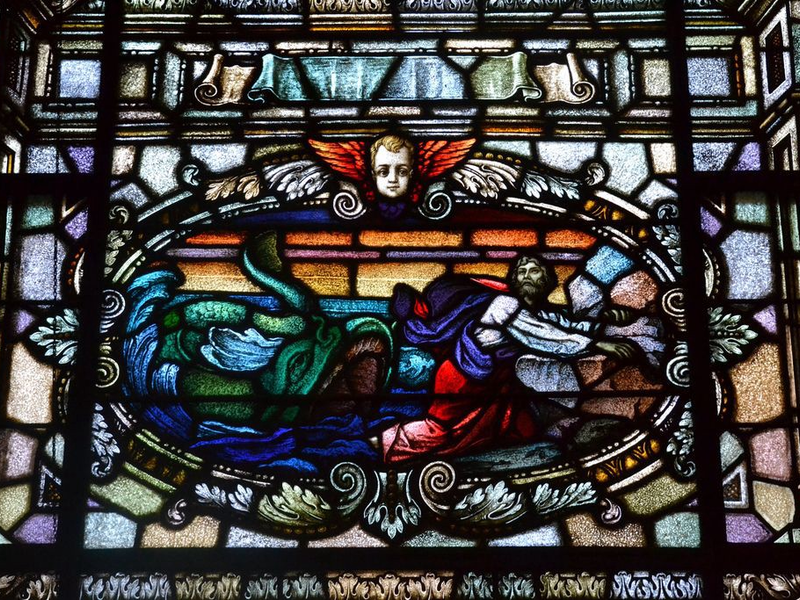
Then some of the scribes and Pharisees answered him, saying, “Teacher, we wish to see a sign from you.” But he answered them, “An evil and adulterous generation seeks for a sign, but no sign will be given to it except the sign of the prophet Jonah. For just as…

by Ken HicksJuly 7, 2020
tanner-mardis-xuxghzhibn4-unsplash-2
Genesis

Lost Worlds?

John Walton believes that modern Christians have lost multiple worlds: The Lost World of Genesis One; The Lost World of Adam and Eve; The Lost World of Scripture; The Lost World of the Israelite Conquest; The Lost World of the Flood; The Lost World of the Torah. I believe this…

by Ralph Allan SmithJuly 2, 2020
stephanie-leblanc-z4lxu7niii4-unsplash
Interview

N.T. Wright on How the Church Should Respond to the Pandemic

How should the church respond to the pandemic? N.T. Wright has written a book which searches the depths of Scripture to answer this question. Our challenge is that we do not yet understand the pandemic, at least not with any degree of consensus. We don't know whose fault it is,…

by Jerry Bowyer & N.T. WrightJune 30, 2020

Showing page 65 of 309

See all

Showing page 6 of 43

See all
Philosophy

Hermeneutics v. Semiology

According to Michel Foucault, what Marx, Nietzsche, and Freud introduce is an age of interpretation. He develops one of the implications of this by suggesting there is a “fierce war” between semiology and hermeneutics, between treating words as signs and treating them as interpretations. Nietzsche in particular, Foucault claims, develops…

August 26, 2006
Literature

Shakespeare and Bible

Steven Marx’s Shakespeare and the Bible (Oxford, 2000), purports to be the “first book to explore the pattern and significance” of Shakespeare’s biblical allusions. Perhaps. The results are mixed. Each chapter of Marx’s book attempts to show structural, plot, and thematic parallels between a section of Scripture and a play…

August 26, 2006
Literature

Ubiquitous Shakespeare

Exploring Lake Superior in 1840, one Charles W Penny wrote, “We read the Bible I dare say much more than we would have done had we been in Detroit. Shakespeare was duly honoured, as he is every day when we travel. When on the water, some one of the party…

August 26, 2006

Divine Love

The Persons of the Trinity live out an eternal round of self-sacrificing love. If a proof text is needed, John 15 supplies it. 1) Jesus says, “as the Father loved Me, I have also loved you” (v. 9). Jesus’ love for the disciples is modeled on the Father’s for Him.…

August 26, 2006

Queen of the Sciences

John Stuart Mill declared at the beginning of his book on logic that “Logic is the common judge and arbiter of all particulars investigations. It does not undertake to find evidence, but to determine whether it has been found. Logic neither observes, nor invents, nor discovers; it judges.”

August 24, 2006
History

New

Hans Jonas writes in an essay on technological and scientific advance that one of the key cultural shifts in the sixteenth and seventeenth centuries was a, well, new understanding of “new,” and a corresponding revision of traditional ways of thinking about history: “A sign of this spreading mood is the…

August 24, 2006

Showing page 1804 of 2212

Browse by Category

In Medias Res

Your weekly digest for all things Theopolis.

Donate

Theopolis is nearly 100% donor-supported. Consider joining us on our mission.