Theopolis Logo

Writing

Explore our collection of theological essays, biblical studies, and reflections on faith and culture.

See all
tanner-mardis-xuxghzhibn4-unsplash-1-2
Biblical Studies

Tweets-turned-Notes on the Bible’s Chronology

Summary In what follows, I will consider the “year-stamps” employed in Scripture, i.e., statements of the form, “Such-and-such an event took place in the Xth year of Y.” In the process, I will suggest some ways in which the Biblical narrative might relate to events in the extra-Biblical world, though…

by James BejonJuly 16, 2019
durer-prodigal-son-2
Luke

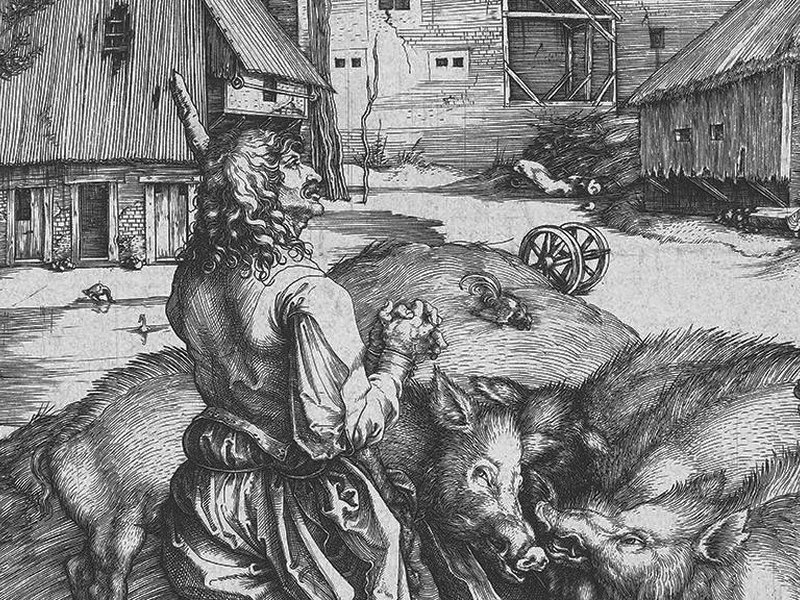
Perspectives on the Prodigal, (Part 2)

In the first essay on the parable of the Prodigal Son, I suggested that the problems commentators and others encounter in interpreting Jesus three-part parable are not accidental. These are not just problems in our ignorance of cultural background. They are intentional features of the stories —stories designed to poke…

by Ralph Allan SmithJuly 11, 2019
durer-prodigal-son-2
Luke

Perspectives on the Prodigal, (Part 1)

The story of the Prodigal Son is perhaps the most well-known story in the Bible. As others have observed, it may also be one of the most misunderstood. In two short essays, I will point out features of this story that are commonly neglected, aspects of Jesus’ parable that might…

by Ralph Allan SmithJuly 9, 2019
de-rijke-man-en-de-arme-lazarus-by-jacopo-da-ponte-16th-century
Luke

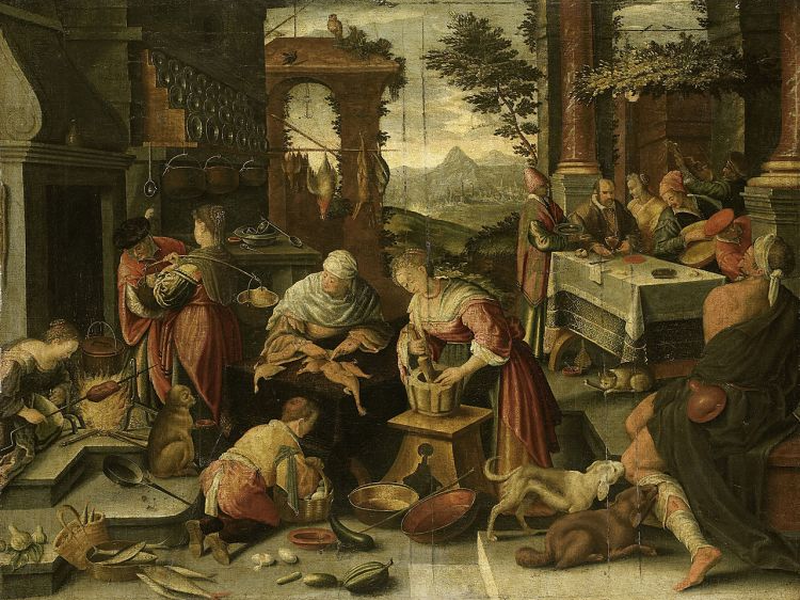
Lazarus and the Rich Man

The parable of Lazarus and the nameless rich man is not an independent story. It is part of a long context that begins in Luke 15:1, where Jesus is eating with tax collectors and sinners and the scribes and Pharisees grumble. In response to their hardheartedness, Jesus tells a three-part…

by Ralph Allan SmithJuly 4, 2019
aaron-burden-uynrnfdkjwg-unsplash
Luke

Everybody has Dropsy - Luke 14:1-24

The Bible is written so that even when a reader cannot pick up on what might be deeper or more detailed aspects of a text, there is virtually always a message to be heard. In the ancient world, where the “reader” of Scripture would likely be a church official facing…

by Ralph Allan SmithJuly 2, 2019
communion
Biblical Theology

Fruit Trees and Grain Plants

The distinction between garden (or vineyard) and field begins in Genesis 2. This relates to the ordering of the formless world. Plants of the field are contrasted with the garden planted by God in Genesis 2:5&8. Later on, under the Old Covenant the Israelites will be required to keep their…

by James B. JordanJune 27, 2019

Showing page 77 of 309

See all

Showing page 6 of 43

See all

Moses and the ass

Allison notes the frequent ancient association of Moses with asses. According to Diodorus Siculus, “When Antiochus . . . made war against the Jews he entered the sacred shrine of the god, where only the priest is allowed to go. In it he found a stone image of a thick…

July 6, 2006

Imputation of Righteousness

Waters also says, “Leithart also forthrightly rejects the Reformed doctrine of the imputation of Christ’s righteousness to the believer.” I don’t do that either. What I have questioned, however, is whether we have exegetical grounds for distinguishing “imputation” as an act of reckoning from “justification” as a distinct declarative act.…

July 6, 2006

Imputation: A Narrative Perspective

In his new book on the Federal Vision, Guy Waters claims, “It appears, then, that Leithart has called into question the historic Reformed doctrine of the imputation of Adam’s sin to his posterity.” I don’t. But Waters is right to sense that I’m interested in ways of formulating the doctrine…

July 5, 2006

Creation and Exodus

Allison offers a series of interesting connections between the early chapters of Gen and the early chapters of Ex: 1) Israel is “multiplying” (Ex 2:2) in the way that God commanded the human race to multiply (Gen 1:26-28), concluding, with some help from Samaritan texts, that MOses is another Adam.…

July 5, 2006
Biblical Studies

Immanentized Eschaton

In his book on Mosaic typology in Matthew, commenting on Matt 5:1-2 in particular, Allison reviews some of the Jewish literature that suggests that Moses sat enthroned on Sinai. The idea was based on Deut 9:9, where Moses says “I remained (YASHAB) on the mountain forty days and forty nights,”…

July 5, 2006

Interpretation and the Unstated

Interpretation is, we’re often told, a matter of explaining what’s in the text. Only eisegetes talk about what’s not already there. Discussing Matthew 1:1, Dale Allison offers this, much more accurate, alternative: “The interpretation of this line can be nothing other than the unfolding of what it not stated.” More…

July 5, 2006

Showing page 1829 of 2212

Browse by Category

In Medias Res

Your weekly digest for all things Theopolis.

Donate

Theopolis is nearly 100% donor-supported. Consider joining us on our mission.