Theopolis Logo

Writing

Explore our collection of theological essays, biblical studies, and reflections on faith and culture.

See all
screen-shot-2020-03-05-at-9-05-54-am
Family

Childbearing as Liminal Space

Notwithstanding she shall be saved in childbearing, if they continue in faith and charity and holiness with sobriety. (1 Timothy 2:15) Years ago, the wife of a prominent American theologian recognized that even in Christian circles mothers were under a kind of social pressure to justify the worthwhileness of their…

by Garrett SoucyMarch 24, 2020

pablo-merchan-montes-wyopqmtdd0w-unsplash
Motherhood

Parenting through Coronavirus

I caught my five year old washing his hands again. He had already washed them several times that hour, so I asked him if he was okay. He told me he didn’t want to get “the virus”. That was before I had told him anything about coronavirus, but we did…

by Lindsey TollefsonMarch 20, 2020
arturo-castaneyra-tpe60ik97qw-unsplash
Discipleship

Take a Walk

Very early in life, I developed the habit of walking and thinking and meditating. I came from a rather strict home, and the only way I could get out of the house at night was to walk the dog. So, I did. I would walk the dog for miles and…

by Richard BledsoeMarch 17, 2020
litany-1669-1
Coronavirus

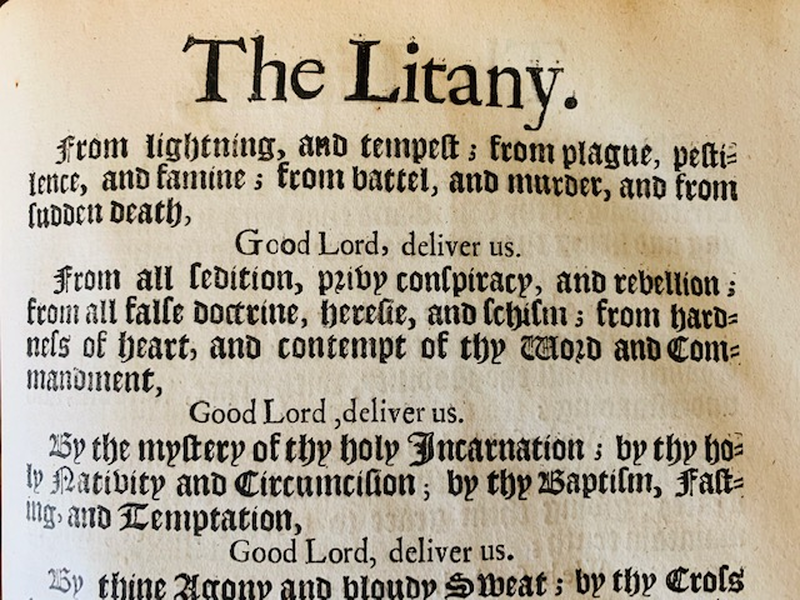
Disease, Deprecations, and Deliverance in an Age of Safe Spaces | Reflections from a University President

From lightning and tempest; from plague, pestilence, and famine; from battle and murder, and from sudden death, Good Lord, deliver us. The Fourth Deprecation from Thomas Cranmer's 1544 Litany 1 A deprecation, such as that above, is a prayer to be spared from disaster, its Latin root deprecari meaning to…

by Alexander WhitakerMarch 16, 2020
lukasz-lada-q7z-aulhpaw-unsplash
Biblical Studies

The Son of Man in the Clouds | Part 2

In the previous essay in this series, we saw that Jesus’ words about coming on the clouds were spoken on more than one occasion, first to the disciples on the Mount of Olives (Matthew 24:30; Mark 11:36; Luke 21:27), then, a few days later, to the high priest and Jewish…

by Ralph Allan SmithMarch 10, 2020
screen-shot-2020-03-05-at-9-05-54-am
Epistemology

Voice and God’s Relational Biology

The following is excerpted from an essay first published at Church Life Journal . We are grateful to the editors for permission to repost here. The word “science” at its root means “to know” and the word “theology” at its root means “to think about God.” Can we know anything…

by Kristin M. Collier MDMarch 5, 2020

Showing page 69 of 309

See all

Showing page 6 of 43

See all

Objective/Subjective

McGrath notes that Augustine interpreted the genitive in the phrase “righteousness of God” in Rom 1 objectively, so that it was understood as the righteousness that God gives in saving sinners (in “making” them righteous). Ambrosiaster, as I pointed out in an earliet post, interpreted the genitive subjectively - the…

April 20, 2006

Old Perspective on Paul

Ambrosiaster writes, “Iustitia est Dei, quia quod promisit dedit, ideo credens hoc esse se consecutum quod promiserat Deus per prophetas suos, iustum Deum probat et testis est iustitiae eius” (PL, 17.56b). McGrath explains: “God, having promised to give salvation, subsequently gives it, and as a result is deemed to be…

April 20, 2006
History

Unfinished Reformation

Nevin wrote: “There is more a great deal in Christianity, I firmly believe, more in the idea of hte Holy Catholic Church, than has yet been attained, either in the way of knowledge or in the way of life, by the Protestant Reformation.”

April 20, 2006

Factitive Justification

There was a consensus among the theologians of Trent, McGrath argues, that justification was “factitive,” a view that excluded that “a sinner may be justified solely as a matter of reputation or imputation, while remaining a sinner in fact.” But of course that raises the question, What exactly is a…

April 20, 2006

True Lutherans

McGrath traces the odd development in Lutheran Orthodoxy of the notion that regeneration and faith precede justification in such a way that “where Luther had understood justification to concern the unbelieving sinner, orthodoxy revised this view, referring justification to the believing sinner.” This takes Lutheran Orthodoxy back in the direction…

April 20, 2006

Ontological change

McGrath notes, “While justification was universally understood to involve the regeneration of humanity, the opinion that an ontological change is thereby effected within humans is particularly associated with the period of High Scholasticism and the development of the concept of created grace. The earlier medieval theologians expressed the change effected…

April 20, 2006

Showing page 1854 of 2212

Browse by Category

In Medias Res

Your weekly digest for all things Theopolis.

Donate

Theopolis is nearly 100% donor-supported. Consider joining us on our mission.