Theopolis Logo

Writing

Explore our collection of theological essays, biblical studies, and reflections on faith and culture.

See all
screen-shot-2018-11-15-at-10-04-44-am
Sex

Sex

Christians get sex wrong when we start from the wrong end. We start from human desires, passions, biological drives and “needs.” These are treated as givens, as the base-line natural reality of human sexuality. Then we come to the Bible and find, to our surprise, that God places all kinds…

by Peter LeithartNovember 15, 2018

img_4660-2
Proverbs

Wisdom, Gender, and Strength in Proverbs

Why isn't Proverbs better known as the Bible's book on "manliness"? I use quotation marks because the term almost seems archaic in our present culture, along with "manhood." Perhaps the Church is too embarrassed to admit the Bible addresses that much attention to the topic. But another reason can be…

by Mark HorneNovember 13, 2018
tpc-worship
Gnosticism

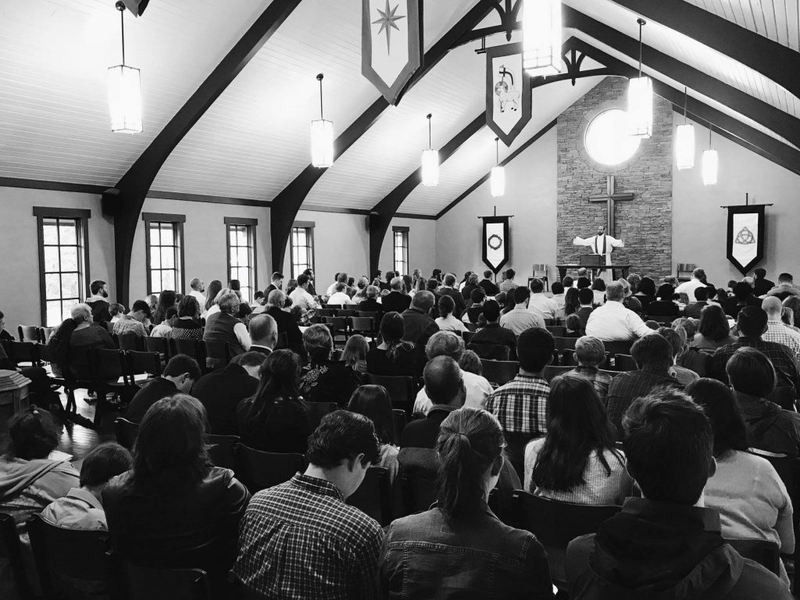
The Sacrament of Preaching

In certain evangelical Christian churches it is the tradition to exalt preaching above the sacraments of Baptism and the Lord’s Supper. Ever since the rise of Revivalist preachers pushing for conversions, the practice has cast doubt upon the possibility of Baptism or the Lord’s Supper being a “means of grace”…

by Mani MarprelateNovember 8, 2018
isaac-blessing-jacobgioachino-assereto-1640
Book Review

Yoram Hazony and the Deception of Isaac

Perhaps one of the most stimulating sections of Yoram Hazony’s The Philosophy of Hebrew Scripture addresses the question of how we are to discern the meaning of biblical narratives, especially how biblical narratives might present arguments of a more general nature. Hazony quotes John Barton’s remarks about the difficulty of…

by Alastair RobertsNovember 6, 2018
prayer-3
Book Review

Enduring Divine Absence: The Challenge of Modern Atheism – A Review

In this slender volume, Joseph Minich (Ph.D. student at the University of Dallas) attempts to answer some of the deepest questions of human existence. With his honesty, his probing questioning, his wide reading, and his ability to plunge beneath superficial answers, he provides a helpful source of reflection for fellow…

by Gregory SoderbergNovember 1, 2018
1_ejh7oql1sntvw3iw_avfma
Biblical Theology

Drunk, Naked, and Accomplishing God’s Will

A Closer Look at Noah’s Post-Flood Humiliation In Genesis 9:20-27 My wife is currently leading a Bible study through Genesis for a group of insatiable Bible students. Because she is a deep thinker and has a high view of inspiration, there is no passage she is unwilling to face head…

by Eric RobinsonOctober 30, 2018

Showing page 85 of 309

See all

Showing page 6 of 43

See all

Objective/Subjective

McGrath notes that Augustine interpreted the genitive in the phrase “righteousness of God” in Rom 1 objectively, so that it was understood as the righteousness that God gives in saving sinners (in “making” them righteous). Ambrosiaster, as I pointed out in an earliet post, interpreted the genitive subjectively - the…

April 20, 2006

Old Perspective on Paul

Ambrosiaster writes, “Iustitia est Dei, quia quod promisit dedit, ideo credens hoc esse se consecutum quod promiserat Deus per prophetas suos, iustum Deum probat et testis est iustitiae eius” (PL, 17.56b). McGrath explains: “God, having promised to give salvation, subsequently gives it, and as a result is deemed to be…

April 20, 2006
History

Unfinished Reformation

Nevin wrote: “There is more a great deal in Christianity, I firmly believe, more in the idea of hte Holy Catholic Church, than has yet been attained, either in the way of knowledge or in the way of life, by the Protestant Reformation.”

April 20, 2006

Factitive Justification

There was a consensus among the theologians of Trent, McGrath argues, that justification was “factitive,” a view that excluded that “a sinner may be justified solely as a matter of reputation or imputation, while remaining a sinner in fact.” But of course that raises the question, What exactly is a…

April 20, 2006

True Lutherans

McGrath traces the odd development in Lutheran Orthodoxy of the notion that regeneration and faith precede justification in such a way that “where Luther had understood justification to concern the unbelieving sinner, orthodoxy revised this view, referring justification to the believing sinner.” This takes Lutheran Orthodoxy back in the direction…

April 20, 2006

Ontological change

McGrath notes, “While justification was universally understood to involve the regeneration of humanity, the opinion that an ontological change is thereby effected within humans is particularly associated with the period of High Scholasticism and the development of the concept of created grace. The earlier medieval theologians expressed the change effected…

April 20, 2006

Showing page 1854 of 2212

Browse by Category

In Medias Res

Your weekly digest for all things Theopolis.

Donate

Theopolis is nearly 100% donor-supported. Consider joining us on our mission.