
Theopolis Logo

Writing

Explore our collection of theological essays, biblical studies, and reflections on faith and culture.

See all
giammarco-zeh-ljawhtg-unsplash
Biblical Horizons

OPEN BOOK: Views and Reviews

Isaac E. Mozeson, The Word: The Dictionary that Reveals the Hebrew Sources of English (Northvale, NJ: Jacob Aaronson Inc., 1995), 310 pp. Reviewed by James B. Jordan. Once there was only one language in the world, the language God spoke to Adam. At the Tower of Babel, there came to…

by James B. JordanJune 28, 1996
tim-wildsmith-j6jv-mkdzqs-unsplash
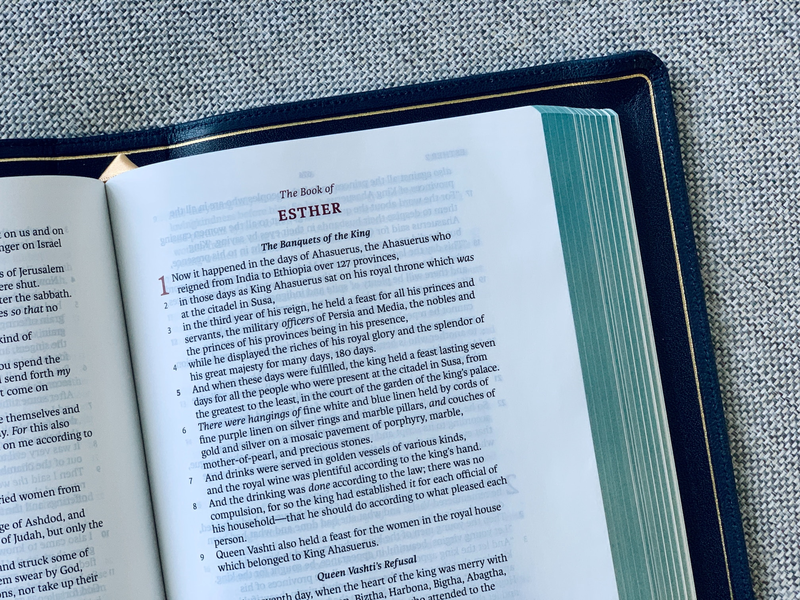
Esther

Esther: Historical & Chronological Comments (IV)

2. The Setting of the Book of Esther A. Xerxes (continued from previous issue) Ezra 6:14 says that the Jews finished building "according to the command of the God of Israel and the decree of Cyrus and Darius and Artaxerxes king of Persia." The problem with this verse is that…

by James B. JordanJune 28, 1996

ales-krivec-4mibe6zg5r0-unsplash
Acts

Jesus and Amalek

This essay goes with our previous study of the Amalek pattern back in Biblical Horizons No. 2. Since many do not have this essay, entitled "The Battle of Gog and Magog," let me cite the relevant paragraphs: Note in Genesis 12-15 that Abram moves into the land after escaping Pharaoh…

by James B. JordanJune 28, 1996

aaron-burden-1ebsmyrau-s-unsplash
Proverbs

The Strange Woman

Proverbs 7:6-23 is one of several passages early in the Proverbs in which Solomon warns his son about the wiles and dangers of the "strange woman." It is certainly quite proper to take these as straightforward warnings against sexual sins, and these are certainly warnings that need to be impressed…

by Peter LeithartJune 27, 1996
jan-kahanek-g3o5ztrk2e4-unsplash
Biblical Studies

Some Observations

1. In Luke 4:20 we read that after Jesus finished reading from Isaiah, "the eyes of all in the synagogue were fixed upon Him." This is usually taken in a psychological sense: They were amazed at Jesus somehow. I suggest that, as always, a merely psychological reading is a modern…

by James B. JordanMay 28, 1996
tim-wildsmith-j6jv-mkdzqs-unsplash
Esther

Esther: Historical & Chronological Comments (III)

2. The Setting of the Book of Esther Up to now we have assumed what we must prove, that the king in Esther is Darius the Great. While Biblical chronologists have usually taken this position, commentators on the book of Esther have often taken others as the king. One view,…

by James B. JordanMay 28, 1996

Showing page 265 of 309

See all

Showing page 6 of 43

See all

Putting right

At least since the Reformation, the choices on the meaning of justification have been two: Either justification is a declaration of right standing or it’s a making-righteous (as in Bonaventure’s claim that the grace of justification purifies, illuminates, and perfects the soul). But are these the only alternatives? McGrath says…

April 20, 2006

Entry language

NT Wright’s denial that justification is “entry language” is usually taken as a criticism of evangelical Protestant treatments of justification. But his denial cuts deeper: From the high middle ages, Roman Catholic theologians taught that justification was a motus from sin to grace. From Wright’s viewpoint, the Reformers agreed with…

April 20, 2006
Philosophy

Notes on Derrida, Gift of Death

Some of the summaries below were previously posted on my site, and are reproduced to help my students. 1) Derrida begins the book with a discussion of Jan Patocka’s treatment of the distinction between “enthusiasm” or the “demonic” and “responsibility.” The former “confuses the limits among the animal, the human,…

April 19, 2006

Divine Energies and Orthodox Soteriology

In his new Being with God , Aristotle Papanikolaou points to differences between Vladimir Lossky and John Zizioulas on the issue of divine energies. For Lossky, the doctrine of divine energies is designed to “protect the real character of communion with God” in theosis while also insisting that union with…

April 19, 2006

Schmemann on Eucharist

Thanks to my student Brent McLean for the following quotation from Schmemann’s Journals: “I reflect, while writing my Eucharist, about Communion, on the strange, mysterious alienation from it in the Church (on Mt. Athos - they didn’t regularly take Communion; in our churches, those who seek frequent Communion are held…

April 19, 2006
History

Passion

Stephen Jaeger’s wonderful Ennobling Love (1999) sets up some bizarre juxtapositions. On the one hand, here is Anselm of Bec writing to two novices about the join the monastic community: “My eyes eagerly long to see your face, most beloved; my arms stretch out to your embraces. My lips long…

April 18, 2006

Showing page 1855 of 2212

Browse by Category

In Medias Res

Your weekly digest for all things Theopolis.

Donate

Theopolis is nearly 100% donor-supported. Consider joining us on our mission.