Theopolis Logo

Writing

Explore our collection of theological essays, biblical studies, and reflections on faith and culture.

See all
screen-shot-2023-02-24-at-1-48-41-pm
Biblical Chronology

Chronologies and Kings: Part 3

The chronology of the Kings of Judah and Israel can be divided into three periods with clearly defined boundaries. The first period begins with the death of Solomon and the accessions of Rehoboam in the south (Judah) and Jeroboam in the north (Israel). It ends with the deaths of Ahaziah…

by James B. JordanSeptember 22, 1991

johann-walter-bantz-clv9dfjlwac-unsplash-1-5
Art

Arts & Play, Part 1

Most modern people regard the arts as essentially decorative. They are hardly very important, as compared to business, politics, or religion. Yet, from a Biblical point of view, the arts lie close to the heart of human life. The universe that God created is itself an artistic masterpiece by the…

by James B. JordanSeptember 22, 1991
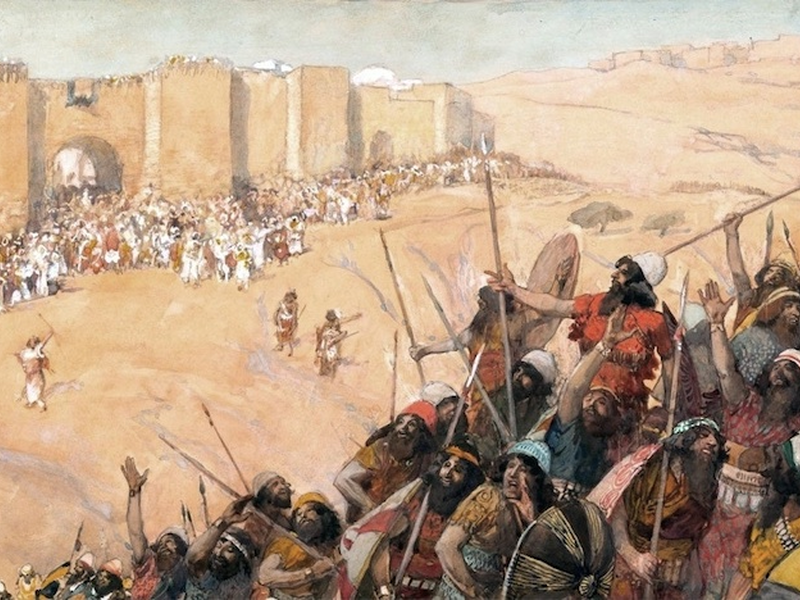
6273e95e0f5ac766258d8cf3_joshuasconquestoftheland-2
Exodus

Chronologies and Kings, Part 2

Before we move into a detailed survey of the history and chronology of the kings of Israel and Judah, let us review the chronological information that leads from creation to the kingdom. This will be helpful both to new readers of these essays, and a reminder for those who have…

by James B. JordanAugust 22, 1991
screen-shot-2023-02-24-at-1-48-41-pm
Biblical Chronology

Chronologies and Kings, Part 1

We have completed our overall survey of Biblical chronology, and now turn to a detailed examination of the Biblical information regarding the chronology of Israel’s kings. The first piece of chronological information we have regarding Israel’s kings is very cryptic, and it serves as an guide to the interpretation of…

by James B. JordanJuly 22, 1991
screenshot-2023-08-09-at-2-13-32-pm
Biblical Horizons

Book Review - To Take Place: Toward Theory in Ritual

Jonathan Z. Smith, To Take Place: Toward Theory in Ritual (Chicago: University of Chicago Press, 1987). Reviewed by Peter J. Leithart. The philosophes of the 18th century often attacked Christendom using the tools of anthropology and comparative religion. Rousseau contrasted the idyllic equality of primitive, natural peoples with the bondage…

by Peter LeithartJuly 6, 1991
screenshot-2023-08-09-at-1-47-41-pm
Biblical Horizons

Book Review: The Rise of Magic in Early Medieval Europe

Valerie I. J. Flint, The Rise of Magic in Early Medieval Europe (Princeton University Press, 1991). Reviewed by Peter J. Leithart. Valerie I. J. Flint, Professor of History at the University of Auckland, New Zealand, is refreshingly candid about her reasons for undertaking a study of The Rise of Magic…

by Peter LeithartJuly 6, 1991

Showing page 295 of 309

See all

Showing page 6 of 43

See all

Baptismal meditation, Easter Sunday

Genesis 29:10b-11: Jacob went up, and rolled the stone from the mouth of the well, and watered the flock of Laban his mother’s brother. Then Jacob kissed Rachel, and lifted his voice and wept. Caesarius, bishop of Arles in Southern France in the fifth century, said that the patriarchs of…

April 16, 2006

Eucharistic meditation, Easter Sunday

1 Timothy 3:16: By common confession great is the mystery of godliness: He who was revealed in the flesh, was vindicated in the Spirit, beheld by angels, proclaimed among the nations, believed on in the world, taken up in glory. As Pastor Wilson has emphasized this morning, pagan civilizations are…

April 16, 2006

Exhortation, Easter Sunday

What is the cross? For John, the cross is not the humiliation of the Son. The cross is His glorification. Jesus told Nicodemus that the Son of Man would be lifted up like the serpent in the wilderness. Jesus was referring to the event recorded in Numbers when Moses put…

April 16, 2006

Grace and gratitude in Hebrews

In a couple of books, David deSilva interprets the letter to the Hebrews in terms of Greco-Roman clientage and patronage systems. I have my suspicions about social-science interpretations of the NT, but deSilva’s work is illuminating. In a brief study of honor and shame in Hebrews, he writes that “The…

April 16, 2006
History

Moral luck

Far from destroying ancient notions of moral luck (the notion that we must have good fortune to be ethically good), or following Stoicism in pulling back the moral into the inner soul, Christianity, in Milbank’s view, “embraces moral luck to such an extreme degree that it transforms all received ideas…

April 15, 2006
History

Postmodernism and Christianity

In an essay in Being Reconciled , Milbank describes postmodernity as “dissolving of fixed limits” in several respects: “(1) the blurring of the nature/culture divide; (2) the merging of public and private; (3) the mode of the information economy; and (4) economic and political globalization.” He argues that “postmodernity, like…

April 15, 2006

Showing page 1857 of 2212

Browse by Category

In Medias Res

Your weekly digest for all things Theopolis.

Donate

Theopolis is nearly 100% donor-supported. Consider joining us on our mission.