Theopolis Logo

Writing

Explore our collection of theological essays, biblical studies, and reflections on faith and culture.

See all
tanner-mardis-xuxghzhibn4-unsplash-1-2
Biblical Studies

Tweets-turned-Notes on the Bible’s Chronology

Summary In what follows, I will consider the “year-stamps” employed in Scripture, i.e., statements of the form, “Such-and-such an event took place in the Xth year of Y.” In the process, I will suggest some ways in which the Biblical narrative might relate to events in the extra-Biblical world, though…

by James BejonJuly 16, 2019
durer-prodigal-son-2
Luke

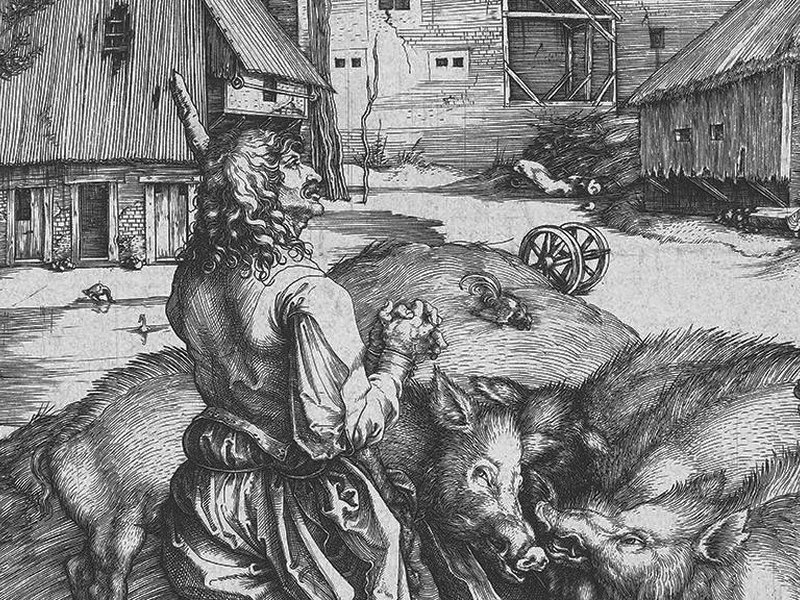
Perspectives on the Prodigal, (Part 2)

In the first essay on the parable of the Prodigal Son, I suggested that the problems commentators and others encounter in interpreting Jesus three-part parable are not accidental. These are not just problems in our ignorance of cultural background. They are intentional features of the stories —stories designed to poke…

by Ralph Allan SmithJuly 11, 2019
durer-prodigal-son-2
Luke

Perspectives on the Prodigal, (Part 1)

The story of the Prodigal Son is perhaps the most well-known story in the Bible. As others have observed, it may also be one of the most misunderstood. In two short essays, I will point out features of this story that are commonly neglected, aspects of Jesus’ parable that might…

by Ralph Allan SmithJuly 9, 2019
de-rijke-man-en-de-arme-lazarus-by-jacopo-da-ponte-16th-century
Luke

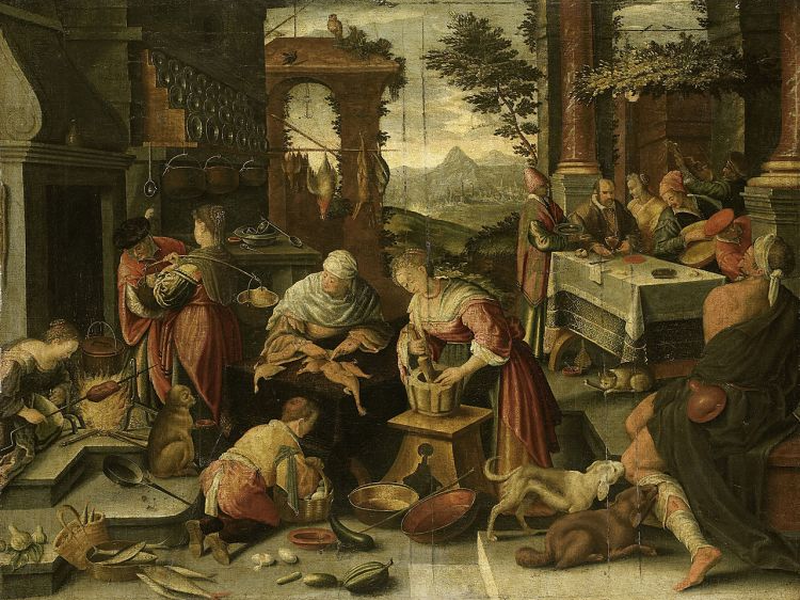
Lazarus and the Rich Man

The parable of Lazarus and the nameless rich man is not an independent story. It is part of a long context that begins in Luke 15:1, where Jesus is eating with tax collectors and sinners and the scribes and Pharisees grumble. In response to their hardheartedness, Jesus tells a three-part…

by Ralph Allan SmithJuly 4, 2019
aaron-burden-uynrnfdkjwg-unsplash
Luke

Everybody has Dropsy - Luke 14:1-24

The Bible is written so that even when a reader cannot pick up on what might be deeper or more detailed aspects of a text, there is virtually always a message to be heard. In the ancient world, where the “reader” of Scripture would likely be a church official facing…

by Ralph Allan SmithJuly 2, 2019
communion
Biblical Theology

Fruit Trees and Grain Plants

The distinction between garden (or vineyard) and field begins in Genesis 2. This relates to the ordering of the formless world. Plants of the field are contrasted with the garden planted by God in Genesis 2:5&8. Later on, under the Old Covenant the Israelites will be required to keep their…

by James B. JordanJune 27, 2019

Showing page 77 of 309

See all

Showing page 6 of 43

See all
History

Highlights of Mauss, Gift

1) Methodologically, Mauss is particularly interested in investigating what he calls the “total social fact,” a social reality that gives expression to all sorts of institutions simultaneously. Gift-exchange events such as the potlatch are “religious, juridical, and moral” and “relate to both politics and the family”; they are “economic” events…

April 13, 2006
Literature

Waugh and Clausewitz

There is a wonderful scene in Evelyn Waugh’s Unconditional Surrender where the English Gen. Ritchie-Hooke attacks a German garrison in broad daylight, virtually alone. The Germans are left scratching their heads: “The single-handed attack on a fortified position by a British major-general, attended in one account by a small boy,…

April 12, 2006
Philosophy

Words and Pictures

In The Republic 588d, Plato writes, “words are a more plastic material than wax.” We can construct any manner of phantasmagorical creature in words, but think of how inept any pictorial depiction of Revelation appears, or how bizarre a portrait based on the Song of Songs would be. (Jonathan McIntosh…

April 12, 2006

TNR on Neuhaus

A couple of weeks back, TNR published a lengthy review of Richard Neuhaus’ latest book that expanded into a warning about the danger that Neuhaus and his fellow theocons pose to American democracy. John Wilson has a lively rebuttal to the TNR piece in the current issue of Books &…

April 12, 2006

Mutual Coinherence

John Webster (in an essay in Volf and Welker, God’s Life in Trinity ) prefers the term “fellowship” to “communion” in describing the way creatures participate in the perfect life of God: “God communicates his absolute life. This communication does not mean that creatures participate in the life that is…

April 12, 2006
History

Cultural Anthropology and the Gift

INTRODUCTION If “gift” has become a major category of recent thought, it is largely because of the influence of anthropology. Marcel Mauss’ The Gift: The Form and Reason for Exchange in Archaic Societies is the single most important work in this regard, and we’ll spend some time examining Mauss’ work…

April 11, 2006

Showing page 1860 of 2212

Browse by Category

In Medias Res

Your weekly digest for all things Theopolis.

Donate

Theopolis is nearly 100% donor-supported. Consider joining us on our mission.