Theopolis Logo

Writing

Explore our collection of theological essays, biblical studies, and reflections on faith and culture.

See all
elijah-1200x630-min
Biblical Horizons

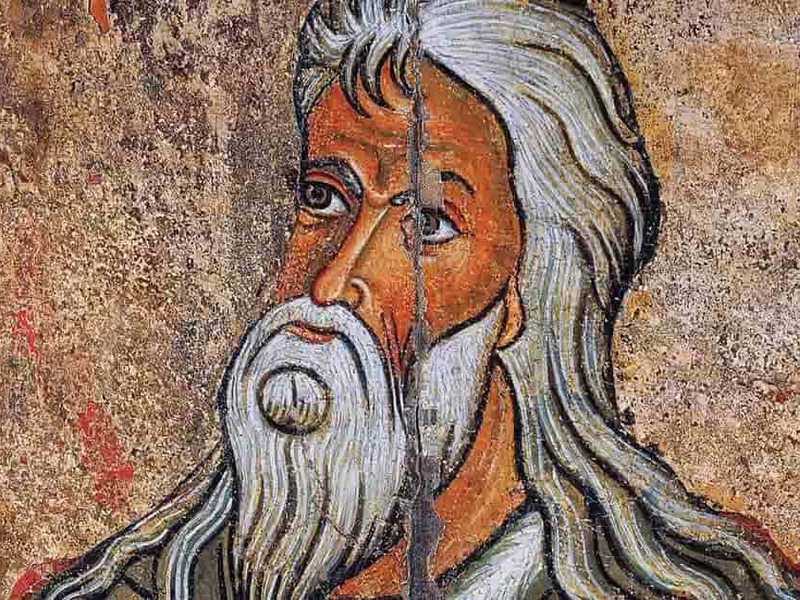
Elijah’s Exodus

1 Kings 17, which abruptly introduces Elijah into the history of the northern kingdom, is a carefully constructed literary unit. In its basic structure, it follows a clear exodus-return pattern. Like Jacob and his sons, Elijah was driven out of the land by a famine (vv. 1-4). In exile, Elijah…

by Peter LeithartJune 17, 1992

ales-krivec-4mibe6zg5r0-unsplash
Biblical Studies

All Things New

Now the Pharisees, who were lovers of money, were listening to all these things and they were scoffing at Him. And He said to them, "You are those who justify yourselves in the sight of men, but God knows your hearts; for that which is highly esteemed among men is…

by Mark HorneJune 6, 1992
aaron-burden-h8s0pf2rcqs-unsplash
Biblical Chronology

Chronologies and Kings, Part 11: The Knots of 2 Kings 11-14

In the year 3119, Ahaziah of Judah and Jehoram of Israel were both slain by Jehu as he carried out his God-appointed task of eliminating the seed and house of Ahab (2 Kings 9:13-33). Since the kings of Israel are usually counted as beginning their reign in the same year…

by James B. JordanMay 24, 1992
trnava-university-beeyeib-am8-unsplash
Biblical Studies

Gleanings from Robert Alter’s "Art of Biblical Narrative"

One of the most important developments in Biblical studies in recent years has been a movement of scholars devoted to studying the literary techniques of the Biblical writers. Tremper Longman, III of Westminster Theological Seminary has treated this movement from a Reformed perspective in his Literary Approaches to Biblical Interpretation…

by Peter LeithartMay 17, 1992
ian-schneider-iqbc4vu4ypq-unsplash
Biblical Horizons

Tentmaking

And because [Paul] was of the same trade, he stayed with [Aquila and Priscilla] and they were working; for by trade they were tentmakers (Acts 18:3). The fact that Paul was by trade a tentmaker has usually been taken as the springboard for a discussion of whether pastors should have…

by James B. JordanApril 24, 1992
screen-shot-2022-05-12-at-12-07-23-pm
Biblical Studies

Chronologies and Kings, Part 10: Jehoram of Judah

I pointed out in Chronologies and Kings Part 9 that the years of Judah’s kings are given in chronological fashion. "When we read of a Judahite king’s reign as lasting 4 years, it means that 4 years of the chronology have been given to him, and there is no chronological…

by James B. JordanApril 24, 1992

Showing page 290 of 309

See all

Showing page 6 of 43

See all
Theology

Grace and nature

According to Fergus Kerr, it was Bonaventure, not Thomas, who first employed the axiom “grace does not destroy nature, but perfects it,” in his commentary on Peter Lombard’s Sentences.

March 31, 2006
Politics

Neutral public space

Markus wants to distinguish between the fact that people who act in the public realm always act with ultimate ends in view, and that their actions are either moral or immoral from the notion that there is a neutral public space. The public sphere, he claims, shouldn’t be thought of…

March 30, 2006
History

Constantinianism and Protest

RA Markus (Christianity and the Secular) argues that as the church celebrated the triumph of Christianity in the fourth century, they also wanted to maintain their continuity with the church that gave them birth - the persecuted church of the martyrs: “The great need felt by Christians of the post-Constantinian…

March 30, 2006
Politics

Two Modes of Secularism

Charles Taylor has suggested that secularism was an “exit strategy” from religious conflict. There were two exit strategies. In the summary by RA Markus, “The first, ‘the common ground strategy,’ assumes a certain range of beliefs shared by all Christians (or all theists) and minimises or eliminates confessional differences that…

March 30, 2006
Politics

Locke on religion

John Locke drew up the basic contours of the modern conception of religion as internal and private in his “Letter Concerning Toleration.” He made a sharp distinction between religious and civil realms: “The end of a religious society, as has already been said, is the public worship of God, and,…

March 30, 2006
Theology

Aquinas on Gratitude

Comments primarily on Aquinas on Gratitude/Ingratitude (primarily ST, II-II, qs 106-7). Aquinas describes gratitude as a virtue “annexed” to justice, and so to understand his discussion of gratitude, we must get some handle on what he means by justice. In ST II-II, q. 58, he describes justice as a virtue.…

March 30, 2006

Showing page 1864 of 2212

Browse by Category

In Medias Res

Your weekly digest for all things Theopolis.

Donate

Theopolis is nearly 100% donor-supported. Consider joining us on our mission.