
Theopolis Logo

Writing

Explore our collection of theological essays, biblical studies, and reflections on faith and culture.

See all
giammarco-zeh-ljawhtg-unsplash
Biblical Horizons

OPEN BOOK: Views and Reviews

Isaac E. Mozeson, The Word: The Dictionary that Reveals the Hebrew Sources of English (Northvale, NJ: Jacob Aaronson Inc., 1995), 310 pp. Reviewed by James B. Jordan. Once there was only one language in the world, the language God spoke to Adam. At the Tower of Babel, there came to…

by James B. JordanJune 28, 1996
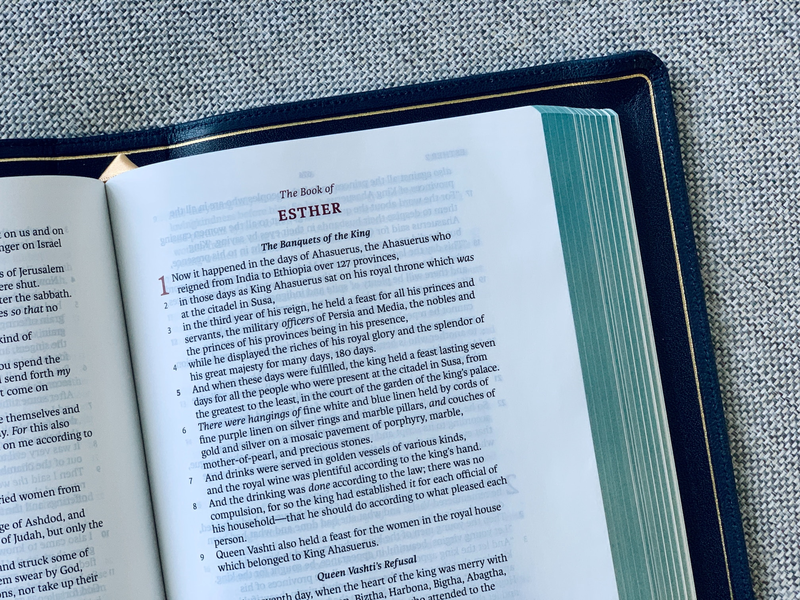
tim-wildsmith-j6jv-mkdzqs-unsplash
Esther

Esther: Historical & Chronological Comments (IV)

2. The Setting of the Book of Esther A. Xerxes (continued from previous issue) Ezra 6:14 says that the Jews finished building "according to the command of the God of Israel and the decree of Cyrus and Darius and Artaxerxes king of Persia." The problem with this verse is that…

by James B. JordanJune 28, 1996

ales-krivec-4mibe6zg5r0-unsplash
Acts

Jesus and Amalek

This essay goes with our previous study of the Amalek pattern back in Biblical Horizons No. 2. Since many do not have this essay, entitled "The Battle of Gog and Magog," let me cite the relevant paragraphs: Note in Genesis 12-15 that Abram moves into the land after escaping Pharaoh…

by James B. JordanJune 28, 1996

aaron-burden-1ebsmyrau-s-unsplash
Proverbs

The Strange Woman

Proverbs 7:6-23 is one of several passages early in the Proverbs in which Solomon warns his son about the wiles and dangers of the "strange woman." It is certainly quite proper to take these as straightforward warnings against sexual sins, and these are certainly warnings that need to be impressed…

by Peter LeithartJune 27, 1996
jan-kahanek-g3o5ztrk2e4-unsplash
Biblical Studies

Some Observations

1. In Luke 4:20 we read that after Jesus finished reading from Isaiah, "the eyes of all in the synagogue were fixed upon Him." This is usually taken in a psychological sense: They were amazed at Jesus somehow. I suggest that, as always, a merely psychological reading is a modern…

by James B. JordanMay 28, 1996
tim-wildsmith-j6jv-mkdzqs-unsplash
Esther

Esther: Historical & Chronological Comments (III)

2. The Setting of the Book of Esther Up to now we have assumed what we must prove, that the king in Esther is Darius the Great. While Biblical chronologists have usually taken this position, commentators on the book of Esther have often taken others as the king. One view,…

by James B. JordanMay 28, 1996

Showing page 265 of 309

See all

Showing page 6 of 43

See all
Philosophy

Episteme

Georges Canguilhem gives this illuminating description of Foucault’s episteme: “In order to perceive the episteme, it was necessary to exit from a given science and from the history of a given science; it was necessary to defy the specialization of specialists, and to try to become a specialist not of…

February 27, 2006

Sermon Outline, First Sunday of Lent

INTRODUCTION As the history of Israel begins to wind to a close, history begins to repeat itself. After the reign of Solomon, the united kingdom divided in two, Jeroboam established a separate kingdom, Rehoboam planned an attack but refrained because of a prophet, and Shishak of Egypt plundered the temple.…

February 27, 2006

Mortification

Jehoash, pounding on the ground only three times, lacks the zeal to see the Lord’s wars through to their conclusion. He’s content with three victories over Aram, and is not willing to pound them until they are pulverized. He’s willing to leave the balance of power comparatively even. He doesn’t…

February 26, 2006

Sapiential hermeneutics

Elisha’s anger toward Jehoash seems unfair (2 Kings 13). He tells him to shoot arrows, and then pound them on the ground. How was Jehoash to know that pounding on the ground symbolized victory over Aram? Well, for one thing, Elisha told him that the arrow is the arrow of…

February 26, 2006
Uncategorized

Double Joash

Joash of Judah is called “Jehoash” throughout much of his reign, but his name returns to Joash at the end of the account (12:19). Jehoash contains the name of Yahweh, and means “fire of Yah,” the fire of Yah’s wrath but also Yah’s fire of cleansing. Jehoash of Judah is…

February 26, 2006

Eucharistic meditation

2 Kings 13:23: But Yahweh was gracious to them and had compassion on them and turned to them because of His covenant with Abraham, Isaac, and Jacob, and would not destroy them or cast them from His presence until now. As we say in the sermon this morning, this is…

February 26, 2006

Showing page 1875 of 2212

Browse by Category

In Medias Res

Your weekly digest for all things Theopolis.

Donate

Theopolis is nearly 100% donor-supported. Consider joining us on our mission.