Theopolis Logo

Writing

Explore our collection of theological essays, biblical studies, and reflections on faith and culture.

See all
andriy-nestruiev-gdbrwwh6doc-unsplash
Biblical Studies

Funerals and Flutes

Matthew 8-9 records three clusters of miracles, interspersed with snatches of Jesus’ teaching about various aspects of discipleship. Just as the Sermon on the Mount displays the authority of Jesus’ Word in teaching, these chapters display the authority of Jesus’ Word over sickness, uncleanness, the creation, demons, and death. In…

by Peter LeithartApril 17, 1992

michal-parzuchowski-w9uljjwg2fa-unsplash
Baptism

Daddy, Why Was I Excommunicated?

Since the early 1980s, several of the conservative Reformed Churches have debated and wrestled with the issue of paedocommunion (infant communion). The PCA and the OPC assigned study committees to examine the question, both of which produced useful reports both in support of and against the position. Though the debate…

by Peter LeithartApril 13, 1992
skyler-gerald-akljfvj5ym4-unsplash
Biblical Chronology

Chronologies and Kings, Part 9: Jehu, Hazael, and Assyria

(This issue of Biblical Chronology concludes a discussion of the Biblical and Assyrian chronologies, begun in previous posts. Click on the category link of "Biblical Chronology" above to see previous issues. Did Shalmaneser Know Jehu? Allis writes: "The Black Obelisk of Shalmaneser contains, in addition to brief accounts of the…

by James B. JordanMarch 23, 1992
denise-jans-dpemksg59la-unsplash
American Culture

Arts and Play, Part 4

Movies Movies as an art form have a powerful impact because they take place in a dark room, on a large screen, with no distractions, and because they entail many of the arts: music, acting, choreography, design and color, etc. A movie can be an overwhelming experience for a young…

by James B. JordanMarch 23, 1992
sincerely-media-bhaswrjttzw-unsplash-2
Leviticus

The Ecology of the Tribute Offering

The Hebrew word translated as "grain offering" or "cereal offering" is minchah . Like the translation of `olah as "burnt offering," the translation of minchah as "grain offering" is somewhat deceiving, since minchah does not refer to grain or cereal. In liturgical contexts outside of Leviticus, in fact, the word…

by Peter LeithartMarch 13, 1992
sincerely-media-bhaswrjttzw-unsplash-2
Ascension

Skinned and Cut

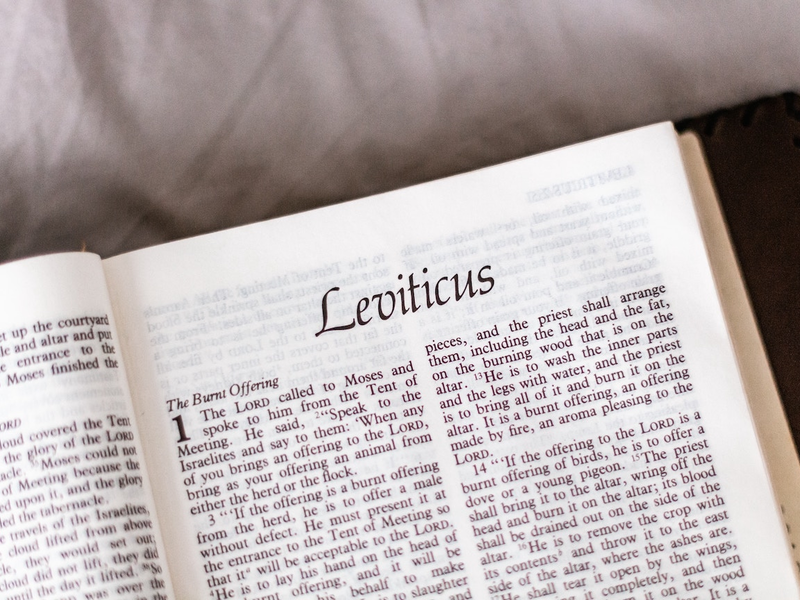
"He shall then skin the burnt offering and cut it into its pieces" (Leviticus 1:6). The normal word ( `olah ) that is translated as "burnt offering" and "whole burnt offering" has nothing to do with either burning or wholeness. It is the noun form of a verb meaning "to…

by Peter LeithartMarch 13, 1992

Showing page 291 of 309

See all

Showing page 6 of 43

See all

General Hermeneutics

What’s needed is not a general hermeneutics developed from some philosophy of language or metaphysics. Rather, what’s needed is a general hermeneutics developed from the premise that NT readings of the OT do not represent some bizarre exception to the normal way of reading but provide a model for all…

January 9, 2006

Eucharistic meditation, First Sunday After Epiphany

Ecclesiastes 3:14: I know that everything God does will remain forever; there is nothing to add to it and there is nothing to take from it, for God has so worked that men should fear Him. We saw in the sermon this morning that God has designed the world so…

January 8, 2006

God does everything fitting

God is the lead partner in the dance of life; we’re called to follow Him gracefully. But we don’t know whether it’s a waltz or the Charleston, and we don’t know what the next step will be. God is singing the melody that we are supposed to harmonize; but we…

January 8, 2006

Exhortation, First Sunday after Epiphany

God’s people are a missionary people, and this is not true only of the New Testament church. God called Abraham to bless the Gentiles through him, and one of Israel’s recurring sins was her failure to carry out this mission. Israel was supposed evoke praise from the Gentiles, but instead…

January 8, 2006

Justification by blame

Trollope makes a neat Girardian point in Barchester Towers: “Wise people, when they are in the wrong, always put themselves in the right by finding fault with the people against whom they have sinned.”

January 7, 2006
Philosophy

PostmodernismS

In Missional Church (1998; edited by Darrell Guder), Craig Van Gelder offers a helpful summary of the various meanings of postmodernism: 1) Economic: For Frederic Jameson and others, postmodernism is marked primarily by a shift to a globalized and consumer-oriented form of capitalism: “In the postmodern condition, all of life…

January 7, 2006

Showing page 1901 of 2212

Browse by Category

In Medias Res

Your weekly digest for all things Theopolis.

Donate

Theopolis is nearly 100% donor-supported. Consider joining us on our mission.