Theopolis Logo

Writing

Explore our collection of theological essays, biblical studies, and reflections on faith and culture.

See all
freysteinn-g-jonsson-2baa-syyptk-unsplash
American Religion

Protestantism's Lost Soul

D. G. Hart’s The Lost Soul of American Protestantism vividly clarifies the differences between evangelical and Confessional Protestantism. In part the book is a manifesto for historians of American religion. Hart argues that historians of American Protestantism have operated with a simplistic binary contrast of evangelical/conservative v. liberal/progressive. At best,…

by Peter LeithartAugust 18, 2015
dostoyevsky
Books

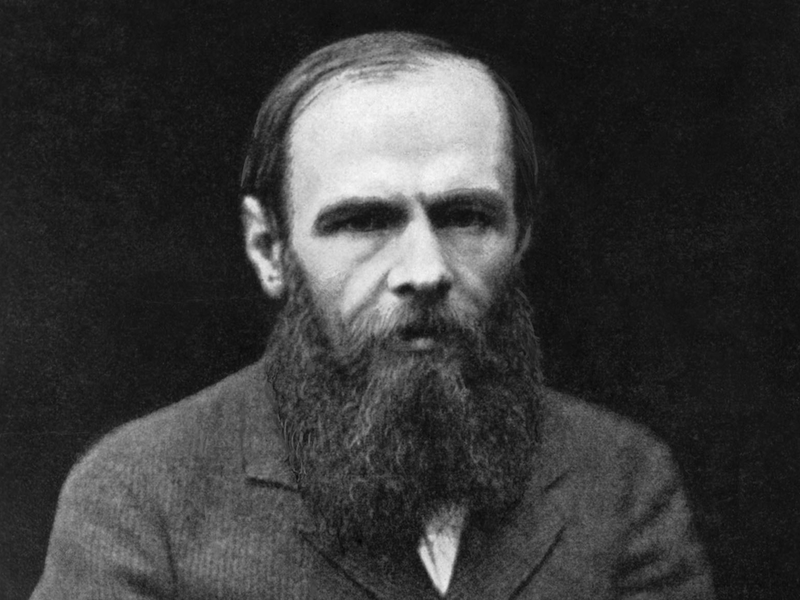
The Idiot and the Limits of Compassion

Dostoyevsky’s novel, The Idiot , like his other major works, is a complex evaluation of the human condition—a juxtaposition of the innate goodness and innate evil that resides within every human heart. There is much one can say about The Idiot . I am no specialist of Russian literature, or…

by Gerald HiestandAugust 13, 2015
same-sex-celebrations-2
Homosexuality

If There is “Natural Law” How Can People Believe in Same-Sex Marriage?

At risk of violating some secret handshake agreement on some important nuance to “natural law,” I will sum up what I understand in my own words. As far as I can tell natural law is supposed to be an area of knowledge that all people should be able to agree…

by Mark HorneAugust 11, 2015
falling-star
Biblical Studies

Cosmic Language, 2

The first installment of this article may be found here . The Image of Man This brings us to a substitutionary atonement which we do understand, the fulfilment of the cruciform Tabernacle in the cross of Christ. Although Jesus’ execution was Physical and Social, it was primarily Personal . Beginning…

by Mike BullAugust 6, 2015
branagh-macbeth
Genesis

Every Noise Appalls

The first two essays in this series drew attention to the structure of the first part of Macbeth and to the way Shakespeare incorporates the Garden of Eden into his story. Macbeth , we saw, is a temptation story in which, compared to the Biblical story, the temptation itself is…

by Ralph Allan SmithAugust 4, 2015
new-jerusalem
Revelation

The Warrior and the City: A Wedding Homily

Revelation 19:6-9 Then I heard something like the voice of a great multitude and like the sound of many waters and like the sound of mighty peals of thunder, saying, “Hallelujah! For theLord our God, the Almighty, reigns. Let us rejoice and be glad and give the glory to Him,…

by Peter LeithartAugust 3, 2015

Showing page 146 of 309

See all

Showing page 6 of 43

See all

Times

Choon-Leong Seow has some helpful comments about the “time for this, time for that” poem in Ecclesiastes 3. He points out that the thrust of the section is about God’s control of times and portions. As evidence, he notes that the word “season” us normally used “of predetermined or appointed…

January 7, 2006
Philosophy

Objectivity and incarnation

In his early work on Husserl’s treatise on the origins of geometry, Derrida highlights the critical insight that the objectivity and universality of geometric axioms depends, paradoxically, on their embodiment in writing. On the one hand, geometry is “there for ‘everyone.’” Yet, “how does geometrical ideality (just like that of…

January 7, 2006
Philosophy

The Hebraism of Postmodernism

Postmodernism, as I’ve indicated in previous posts, is many things, some of which are quite inimical to Christian faith. But in important respects, postmodernism - especially the thought of Derrida - is a Hebraic protest against Hellenized philosophy. In his fine recent book on Derrida, James KA Smith suggests that…

January 7, 2006
History

Paradox of Community

Bauman suggests that postmodernity, which is the “age of contingency fur sich,” is also the age of community. Yet, the communities that are possible within postmodern culture are inherently unstable; they are “clouds of communities”: “Such communities will never be anything like Tonnies’s cosy and unreflective (cosy because unreflective) homes…

January 6, 2006
Philosophy

Skepticism

The arguments in favor of skepticism were summarized by Aenesidemus in the first century B.C. in his Pyrrhonian Principles . Aenesidemus brought together the arguments under “ten modes” or “ten tropes,” helpfully summarized at http://plato.stanford.edu/entries/skepticism-ancient/#LPA as they were stated by Sextus Empricus. The ten modes are reproduced below. (Mates refers…

January 6, 2006

Quenching Spirit

Reflecting further on the pastoral applications of Solomon’s phrase “shepherding wind”: Every believer is born of the Spirit, and blows where he wills, and a pastor is in the business of shepherding wind. In this context, “quenching the Spirit” might refer to poor shepherding that tries to suppress the wind.…

January 6, 2006

Showing page 1902 of 2212

Browse by Category

In Medias Res

Your weekly digest for all things Theopolis.

Donate

Theopolis is nearly 100% donor-supported. Consider joining us on our mission.