Theopolis Logo

Writing

Explore our collection of theological essays, biblical studies, and reflections on faith and culture.

See all
trnava-university-beeyeib-am8-unsplash
Biblical Horizons

Puritans v. Reformed Worship: (Part Two of a Book Chapter Review)

Continuing through The Worship of the English Puritans by Horton Davies: The author gives some of his own appraisals rather than immediately quoting Durel, even though that is how he began his chapter. In Davies’ opinion, while the Puritans would invoke their own interpretation of Scripture in order to condemn,…

by Mark HorneFebruary 9, 2008
kelly-sikkema-gpoh17dxqdm-unsplash
Ephesians

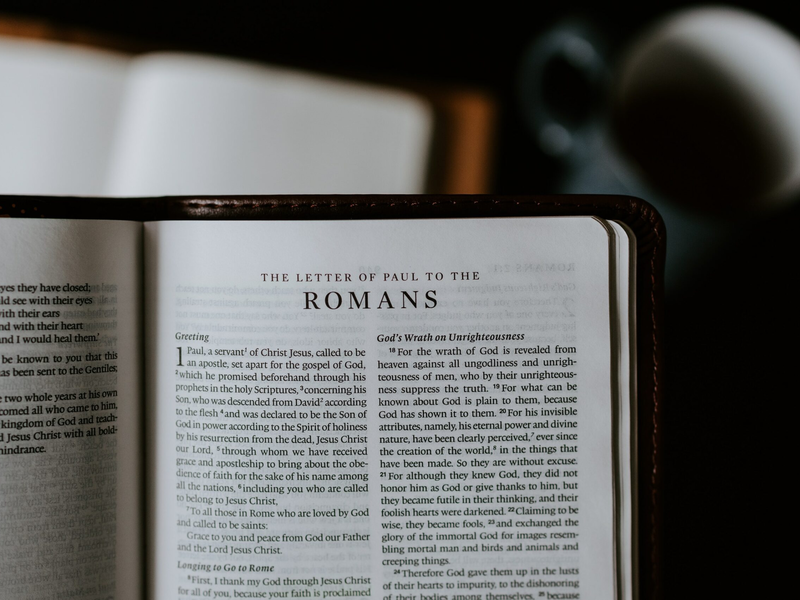
Luther Should Have Inserted “Alone” a Second Time in Romans

What follows are from a couple of posts on my blog. I hoped to do a series. If I do follow up, I will probably want to do it here on the BH blog rather than my own. Feedback welcome: It is no secret that some have been scathingly critical…

by Mark HorneFebruary 9, 2008

jim-jordan-teaching-2
Baptism

Jesus’ Baptism and ours

Jeremy Sexton wrote this in an earlier line of discussion: “Along those lines, I think what we most often miss in our theology of baptism (though Calvin didn’t miss this) is that Christian baptism — if it “is” anything that came before — is Jesus’ water baptism. In our baptism,…

by James B. JordanFebruary 8, 2008
sixteen-miles-out-d40gdcd_-he-unsplash
Numbers

Israel was not (all of) the Church

Jeff pointed out that baptism is not Christian circumcision . Looking at the comments, I think it might be helpful to point out that Israel was not the Church . In the new creation, the idea of an “unbaptized Christian” is either very temporary or an anomaly. Those who came…

by Mark HorneFebruary 6, 2008
aaron-burden-h8s0pf2rcqs-unsplash
Parables

Parables, Part I

Once a upon a time, one Sunday morning, a pastor mounted his pulpit for the sermon and said the following: A troubled young man walked into a downtown high-rise building. As he approached the directory on the wall, he took out a small booklet and looked back and forth from…

by Jeff MeyersFebruary 5, 2008
sixteen-miles-out-al48tflf4e8-unsplash
Exodus

What is a Prophet? (Friendship and Justification)

If you are, say, leading a Bible study in Genesis, you might notice that right after the covenant is renewed and circumcision is established (ch 17) that we see Abraham eating and drinking with God (ch 18). After that meal, God makes a point of saying the he should share…

by Mark HorneFebruary 3, 2008

Showing page 216 of 309

See all

Showing page 6 of 43

See all

Times

Choon-Leong Seow has some helpful comments about the “time for this, time for that” poem in Ecclesiastes 3. He points out that the thrust of the section is about God’s control of times and portions. As evidence, he notes that the word “season” us normally used “of predetermined or appointed…

January 7, 2006
Philosophy

Objectivity and incarnation

In his early work on Husserl’s treatise on the origins of geometry, Derrida highlights the critical insight that the objectivity and universality of geometric axioms depends, paradoxically, on their embodiment in writing. On the one hand, geometry is “there for ‘everyone.’” Yet, “how does geometrical ideality (just like that of…

January 7, 2006
Philosophy

The Hebraism of Postmodernism

Postmodernism, as I’ve indicated in previous posts, is many things, some of which are quite inimical to Christian faith. But in important respects, postmodernism - especially the thought of Derrida - is a Hebraic protest against Hellenized philosophy. In his fine recent book on Derrida, James KA Smith suggests that…

January 7, 2006
History

Paradox of Community

Bauman suggests that postmodernity, which is the “age of contingency fur sich,” is also the age of community. Yet, the communities that are possible within postmodern culture are inherently unstable; they are “clouds of communities”: “Such communities will never be anything like Tonnies’s cosy and unreflective (cosy because unreflective) homes…

January 6, 2006
Philosophy

Skepticism

The arguments in favor of skepticism were summarized by Aenesidemus in the first century B.C. in his Pyrrhonian Principles . Aenesidemus brought together the arguments under “ten modes” or “ten tropes,” helpfully summarized at http://plato.stanford.edu/entries/skepticism-ancient/#LPA as they were stated by Sextus Empricus. The ten modes are reproduced below. (Mates refers…

January 6, 2006

Quenching Spirit

Reflecting further on the pastoral applications of Solomon’s phrase “shepherding wind”: Every believer is born of the Spirit, and blows where he wills, and a pastor is in the business of shepherding wind. In this context, “quenching the Spirit” might refer to poor shepherding that tries to suppress the wind.…

January 6, 2006

Showing page 1902 of 2212

Browse by Category

In Medias Res

Your weekly digest for all things Theopolis.

Donate

Theopolis is nearly 100% donor-supported. Consider joining us on our mission.