Theopolis Logo

Writing

Explore our collection of theological essays, biblical studies, and reflections on faith and culture.

See all
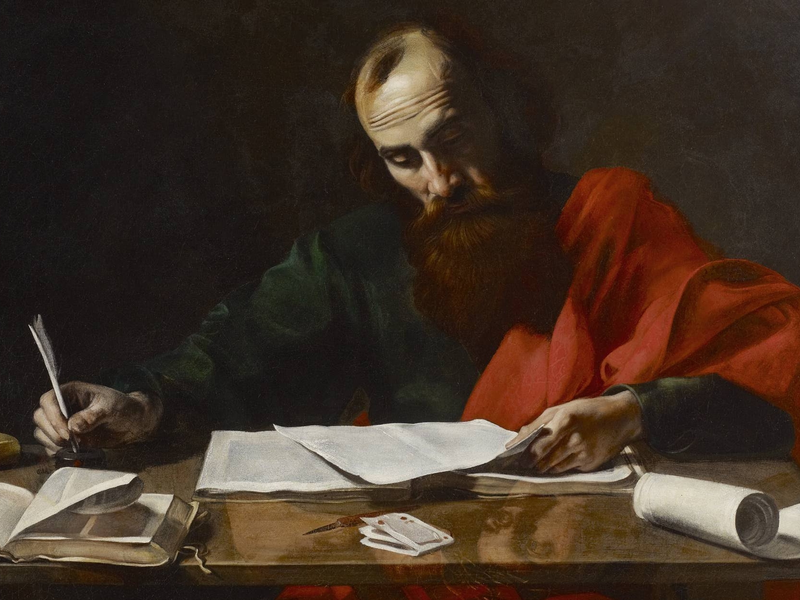
13071-probablyvalentindeboulogne-saintpaulwritinghi-1
Apologetics

Why Did Saul of Tarsus Identify Jesus of Nazareth with the God of Israel?

The god of Israel was not just any god. Two thousand years of Christian history, with it’s besetting philosophical temptations, and full-blown deist and transcendentalist and universalist problems, have obscured the fact that, in itself, the identity of the true god (or gods) cannot be predetermined, any more than the…

by Mark HorneNovember 15, 1998

ivan-aleksic-16yxcjsoaek-unsplash
Biblical Horizons

Crisis Time: Patriarchal Prologue, Part 3

Jacob and Solomon God gave wealth and possessions to Jacob, and then threatened to take them all away at Peniel. Jacob wrestled with God, and through prayer Jacob saw through the crisis by faith and was made victor (Hosea 12:4). The Kingdom period in Israel concerns the same themes. We…

by James B. JordanNovember 4, 1998
Exodus

The Third Word

In our study of the historical impact and unfolding of the Ten Words of God, we now arrive at the Third Word. The Third Word prohibits hypocrisy, and when we realize this, we can see right away that disobeying the Third Word is closely tied to the situation of Israel…

by James B. JordanNovember 4, 1998
kiwihug-l4gw27xzn1i-unsplash
Biblical Horizons

Crisis Time: Patriarchal Prologue, Part 2

Abraham and Joshua In our previous two essays, we considered aspects of the lives of Abraham and Jacob, as these display how God works with men in history. These two men carry in themselves all the future of Israel, so to speak, and their lives at the individual level correspond…

by James B. JordanOctober 4, 1998
maxime-gilbert-x-4nyxvz4r0-unsplash
Biblical Horizons

The Case Against Western Civilization, Part 7

Part 5: Laying New Foundations in a Dying World (continued) Physical Training Though it is seldom recognized any more, the fact is that no liberal arts and no science is possible apart from peace, and peace is only possible if there is a strong military presence that protects a nation.…

by James B. JordanOctober 4, 1998
screenshot-2023-09-11-at-11-34-45-am
Biblical Horizons

Crisis Time: Patriarchal Prologue, Part 1

Last month, in our essay " Patriarchal Dominion ," we observed the flow from Abraham to Jacob to Joseph. Our concern here is to advance our understanding of that narrative flow. I should mention that I am assuming much that is found in my book Primeval Saints: Studies in the…

by James B. JordanSeptember 4, 1998

Showing page 247 of 309

See all

Showing page 6 of 43

See all

Baptism and personhood

In his recently re-released Bioethics: A Primer for Christians , Gilbert Meilaender discusses baptism to formulate a Christian understanding of the person. Baptism, he points out, is a communal act but also individualizing: “the first thing to note about baptism is that it is a deeply individualizing act. Our parents…

December 21, 2005
Art

Allegory with Venus and Cupid

In his book, Erotic Faith , Robert M. Polhemus offers an intriguing analysis of Bronzino’s Allegory with Venus and Cupid . The allegory suggests that “worship of Venus . . . blinds one to the menace of time and death.” Seeking sexual fulfillment means “betraying self, God, and humankind as…

December 21, 2005
Philosophy

Mirror and Lamp

In his classic study of romanticism and literary theory, The Mirror and the Lamp , MH Abrams points out the crucial change in images of the mind - from the mind as a “mirror” of outside reality to the mind as a “lamp” or a “fountain” that determines what it…

December 21, 2005
History

Consumption v. Culture

Hannah Arendt claimed that “An object is cultural depending on the duration of its permanence: its durable character is opposed to its functional aspect, that aspect which would make it disappear from the phenomenal world through use and wear and tear . . . . Culture finds itself under threat…

December 20, 2005
Literature

Shakespeare and the Law

At the climactic moment of reversal in the court scene in Merchant of Venice , Portia tells Shylock: “This bond doth give thee here no jot of blood.” “Jot” comes to English through the Greek iota , which is linked to the Hebrew YOD through Jesus’ usage in Matthew 5.…

December 20, 2005

Not quite haiku

spectral rime-frosted trees in early morning moonlight cast shadows on the pasture

December 18, 2005

Showing page 1910 of 2212

Browse by Category

In Medias Res

Your weekly digest for all things Theopolis.

Donate

Theopolis is nearly 100% donor-supported. Consider joining us on our mission.