Theopolis Logo

Writing

Explore our collection of theological essays, biblical studies, and reflections on faith and culture.

See all
tanner-mardis-xuxghzhibn4-unsplash-1-2
Biblical Studies

Tweets-turned-Notes on the Bible’s Chronology

Summary In what follows, I will consider the “year-stamps” employed in Scripture, i.e., statements of the form, “Such-and-such an event took place in the Xth year of Y.” In the process, I will suggest some ways in which the Biblical narrative might relate to events in the extra-Biblical world, though…

by James BejonJuly 16, 2019
durer-prodigal-son-2
Luke

Perspectives on the Prodigal, (Part 2)

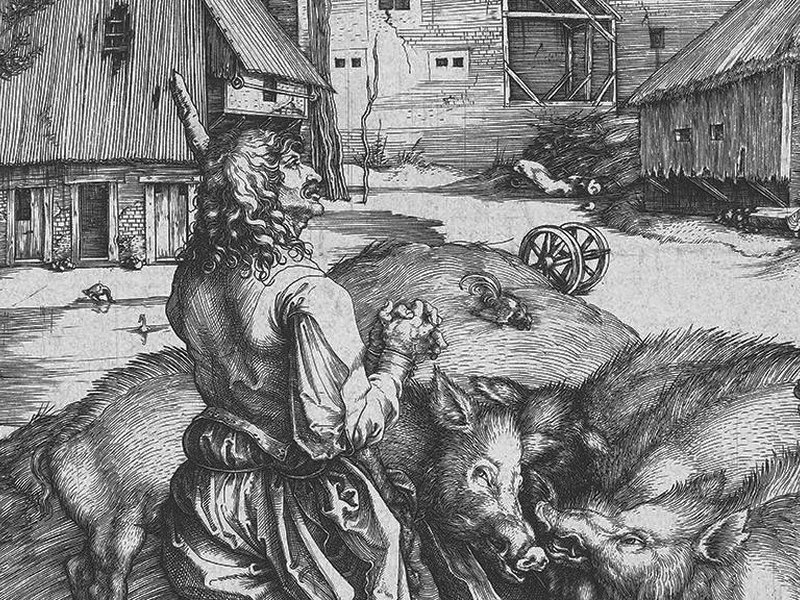
In the first essay on the parable of the Prodigal Son, I suggested that the problems commentators and others encounter in interpreting Jesus three-part parable are not accidental. These are not just problems in our ignorance of cultural background. They are intentional features of the stories —stories designed to poke…

by Ralph Allan SmithJuly 11, 2019
durer-prodigal-son-2
Luke

Perspectives on the Prodigal, (Part 1)

The story of the Prodigal Son is perhaps the most well-known story in the Bible. As others have observed, it may also be one of the most misunderstood. In two short essays, I will point out features of this story that are commonly neglected, aspects of Jesus’ parable that might…

by Ralph Allan SmithJuly 9, 2019
de-rijke-man-en-de-arme-lazarus-by-jacopo-da-ponte-16th-century
Luke

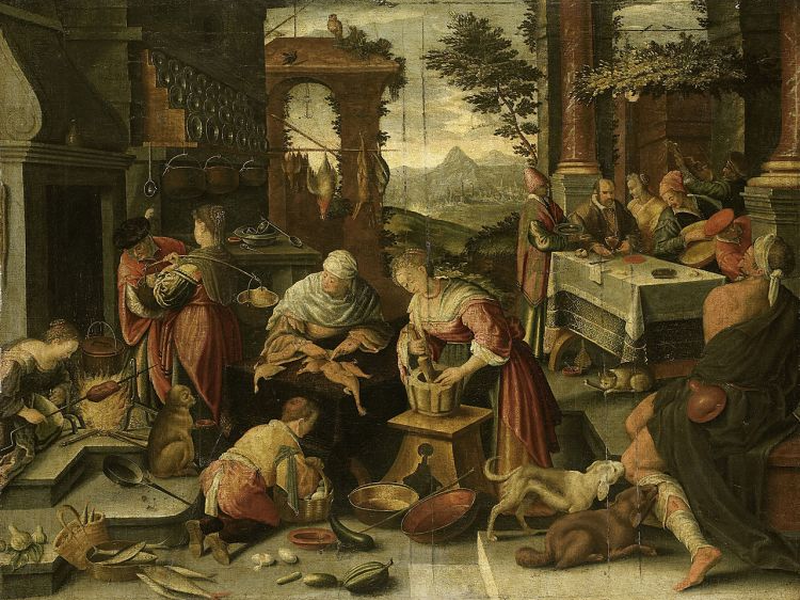
Lazarus and the Rich Man

The parable of Lazarus and the nameless rich man is not an independent story. It is part of a long context that begins in Luke 15:1, where Jesus is eating with tax collectors and sinners and the scribes and Pharisees grumble. In response to their hardheartedness, Jesus tells a three-part…

by Ralph Allan SmithJuly 4, 2019
aaron-burden-uynrnfdkjwg-unsplash
Luke

Everybody has Dropsy - Luke 14:1-24

The Bible is written so that even when a reader cannot pick up on what might be deeper or more detailed aspects of a text, there is virtually always a message to be heard. In the ancient world, where the “reader” of Scripture would likely be a church official facing…

by Ralph Allan SmithJuly 2, 2019
communion
Biblical Theology

Fruit Trees and Grain Plants

The distinction between garden (or vineyard) and field begins in Genesis 2. This relates to the ordering of the formless world. Plants of the field are contrasted with the garden planted by God in Genesis 2:5&8. Later on, under the Old Covenant the Israelites will be required to keep their…

by James B. JordanJune 27, 2019

Showing page 77 of 309

See all

Showing page 6 of 43

See all

Isaiah 61

A student suggests that Isaiah 61 is chiastically organized, and centers on verses 5-6, which promise that strangers will pasture the flocks of Israel and that Israel will consume the treasures of the nations. Overall, the passage announces the good news of return, the great Jubilee of Israel’s restoration to…

September 17, 2005
Biblical Studies

Accommodated revelation?

Accommodation is often trotted out as a way to account for the unscientific language of Scripture. We now know that the earth does not rise and set, but the ancient Hebrews did not know that, and so God accommodated Himself to their (low) level of scientific knowledge when He guided…

September 17, 2005

Samson

Perhaps it’s the JPS Tanakh translation, but it struck me that the Samson narratives manifest the broad comedy of a Babylonian myth or the legends compiled by Levi-Strauss. He goes about tearing lions like lambs, posing riddles, lighting foxes on fire, and so on and on. Only moralistic Christians could…

September 16, 2005

RPW and Leviticus 10

Leviticus 10 is often cited in support of the Reformed “Regulative Principle of Worship.” It does support that principle, but not if the principle is formulated, as it often is, as “whatever is not commanded is forbidden.” The sin of Nadab and Abihu was offering “strange” or “unauthorized” fire on…

September 15, 2005

Ritual and Chaos

Frank Gorman says that ritual in Bible is means of maintaining order of world against chaos: “ritual must function as a means of ‘manipulating’ the orders of creation. It is the means by which the categories of ‘order’ and ‘chaos’ can be negotiated. Ritual thus must be seen as the…

September 15, 2005
Literature

What Makes Poetry Possible

In his stimulating Clark Lectures (recently published as Grace and Necessity ), Rowan Williams suggests, following David Jones, that there are certain ontological conditions for the possibility of poetry: “the ontology, if we can use that forbidding word here, of a universe that is inextricably both material and significative, where…

September 14, 2005

Showing page 1945 of 2212

Browse by Category

In Medias Res

Your weekly digest for all things Theopolis.

Donate

Theopolis is nearly 100% donor-supported. Consider joining us on our mission.