Theopolis Logo

Writing

Explore our collection of theological essays, biblical studies, and reflections on faith and culture.

See all
31-03-0213
Hermeneutics

Apocalyptic Eyes

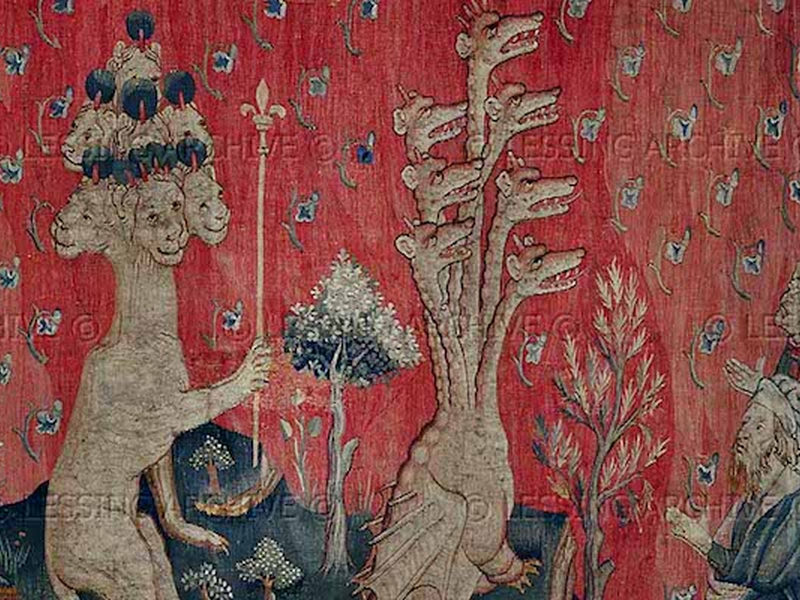
Flying scrolls. Red horses. Beasts coming out of the sea. Winged women. The list goes on. Apocalyptic literature in the Bible is like a cross between science fiction and Marvel comics. And the Bible has a fair bit of this sort of thing. Daniel sees visions in Babylon, Zechariah sees…

by Toby SumpterNovember 4, 2014

bhm-skyline-2
Theopolis News

New Name, New Look

Trinity House Institute has taken a new name, the Theopolis Institute. This striking new name expresses our unique vision and mission and captures the unified purpose behind all our specific programs and activities. We still have Bible, liturgy, and culture in our tagline. We still offer the same courses on…

by TheopolisNovember 4, 2014
istock_000012860926small
Atonement

Not Fearing the Devil

Adam Kotsko offers a socio-political variation on the Christus Victor atonement theory in his 2010 study, The Politics of Redemption: The Social Logic of Salvation . He does this by explaining "the devil" in terms of the Hegelian concept of "objective spirit," Geist . As Kotsko puts it, Geist "refers…

by Peter LeithartOctober 13, 2014
jez-timms-8muutamcwu4-unsplash
Leviticus

The Meaning of Sacrifice

Two factors keep Nahtali Meshel from discussing the meaning of sacrifice until late in his The "Grammar" of Sacrifice . The first has to do with the texts he draws from: "P says little about the meaning of its rituals" (174). The other has to do with the grammatical theory…

by Peter LeithartOctober 8, 2014
jez-timms-8muutamcwu4-unsplash
Leviticus

Praxemics

Chapter 5 of Naphtali Meshel's The "Grammar" of Sacrifice focuses on "praxemics," the physical actions of sacrificial ritual. Praxemes are constituted by six elements: an "atomact," an elementary physical act or gesture; an actor; an object that is acted up; a target for the action and often for the object…

by Peter LeithartOctober 6, 2014
markus-winkler-aid-xyrtlec-unsplash
Leviticus

Jugation and Hierarchy

Two chapters of Naphtali Meshel’s The “Grammar” of Sacrifice cover what he calls “jugation” and “hierarchies.” The first involves the addition of other materials to an animal offering. Jugates include wine, cereal, and oil that are added to the animals (zoemes) that are offered in sacrifice. Some jugates are coordinated…

by Peter LeithartOctober 1, 2014

Showing page 167 of 309

See all

Showing page 6 of 43

See all

Pigs and Beautiful Women

“A s a ring of gold in a swine's snout, so is a beautiful woman who lacks discretion” (Proverbs 11:22). During his courtship with his future wife, a friend of mine wrote a note and cited a Proverb at the end. He meant Proverbs 22:11. He put Proverbs 11:22. They…

March 10, 2017

Gold of Ophir

D avid and Solomon traded in gold from “Ophir.” Later Jehoshaphat attempted to revive the trade route, but failed when his ships sank. Ophir—now where might that be? Truth is, nobody knows. In Seafaring Lore and Legend , Peter Jeans summarizes some of the tantalizing possibilities: “The ancient ruins discovered…

March 10, 2017

Poetry and Performance

I n an old Paris Review interview with Robert Frost, the interviewer mentions a poet who writes from six to nine every morning. Frost responds with, “I don’t know what that would be like, myself,” and then adds about writing couplets: Very first one I wrote I was walking home…

March 10, 2017

Divine Laughter

S tephen Halliwell begins his Greek Laughter by calling attention to the difference between philosophical and poetic notions of divine laughter. Most Greeks had no doubt that “laughter (and smiles) had an important place in the divine realm; a deity incapable of laughter was the exception, not the rule.” Homer…

March 10, 2017

Why Do We Laugh?

R obert Provine ( Curious Behavior ) notes that we can't laugh on command, and that tells a lot about our laughter and ourselves. In his experiments, he found that it took longer for people to laugh on command than to say “ha, ha.” That “indicates that laughter is not…

March 10, 2017

House of Rest

D avid assembles the leaders of Israel for Solomon's coronation (1 Chronicles 28–29; cf. 29:22), and, even more importantly, to encourage them to contribute skill, energy, and material to the temple, King Yahweh's fortress. Judged by terminology used elsewhere in the Old Testament, his descriptions of the temple are eccentric.…

March 9, 2017

Showing page 198 of 2212

Browse by Category

In Medias Res

Your weekly digest for all things Theopolis.

Donate

Theopolis is nearly 100% donor-supported. Consider joining us on our mission.