Theopolis Logo

Writing

Explore our collection of theological essays, biblical studies, and reflections on faith and culture.

See all
5f72533d0afa437fcaa7e5cf_hero_history
Apologetics

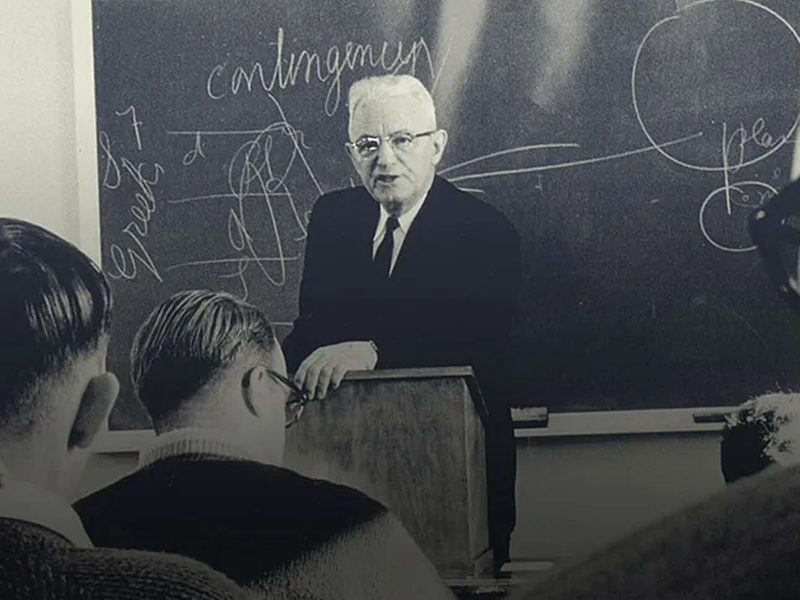
Presumptuous Presuppositions: The Apologetics of Cornelius Van Til

Whether one entirely agrees with him or not, no Christian interested in apologetics–the reasoned defense of the Faith–can afford to be uninterested in Cornelius Van Til, the late professor of Apologetics at Westminster Theological Seminary in Philadelphia. According to John Frame, Van Til “is perhaps the most important thinker since…

by Mark HorneJuly 15, 1997

trnava-university-beeyeib-am8-unsplash
Baptism

Richard Bacon’s “What Mean Ye By This Service? Paedocommunion in Light of the Passover” A Brief Response

Reverend Richard Bacon is the pastor of First Presbyterian Church of Rowlett, Texas. He has written a tract entitled “What Mean Ye By This Service? Paedocommunion in Light of Passover,” printed by Presbyterian Heritage Publications (P.O. Box 180922, Dallas, TX 75218). I am writing this brief response to set forth…

by Mark HorneJuly 6, 1997
aaron-burden-qjdzyt_k8xg-unsplash
Angels

Twelve Fundamental Avenues of Revelation, Part 5

As we move toward a consideration of Dynamic Cosmic Revelation, there is a further aspect of revelation through action that should be discussed here, and that is this: God is particularly revealed to us in times of crisis and distress. When things are going well, we forget God. When distress…

by James B. JordanJuly 3, 1997
jan-kahanek-g3o5ztrk2e4-unsplash
Biblical Chronology

John Sailhamer Weighs In, Part 4

We conclude our analysis of John Sailhamer’s book *Genesis Unbound: A Provocative New Look at the Creation Account* (Multnomah Books, 1996), which argues that Genesis 1:2ff. is not about the creation of the whole world, but about the preparation of the Land of Eden, which is also the Promised Land.…

by James B. JordanJuly 3, 1997
screenshot-2023-09-04-at-10-37-01-am
Biblical Horizons

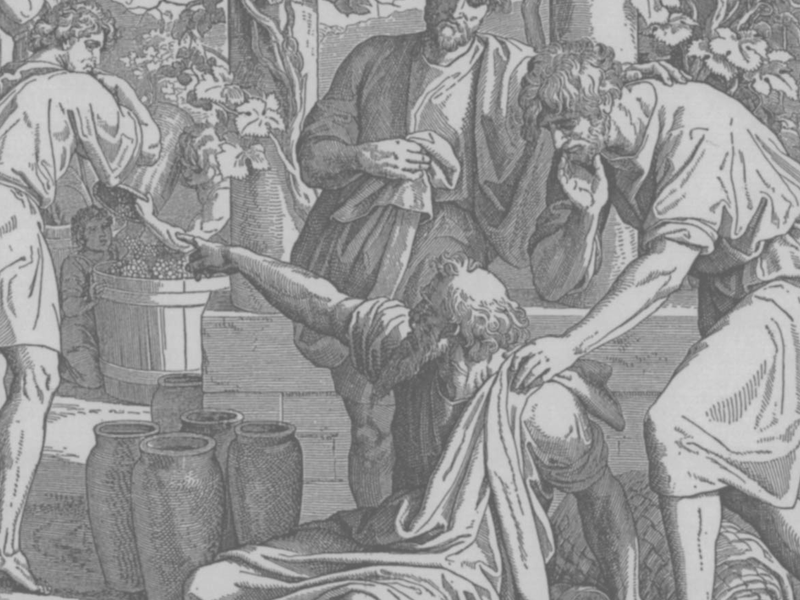
The Sin of Ham and the Curse of Canaan, Part 2 (An Exposition of Genesis 9:20-27)

Commentary A. Noah’s God-like Labor: 8:20 And Noah, a master of the ground, was the first, And he planted a vineyard. 21 And he drank from the wine, And became drunk, And lay uncovered inside his tent. It appears to me that there is a balance between "ground" and "tent"…

by James B. JordanJuly 3, 1997
e99a4713
How to Worship

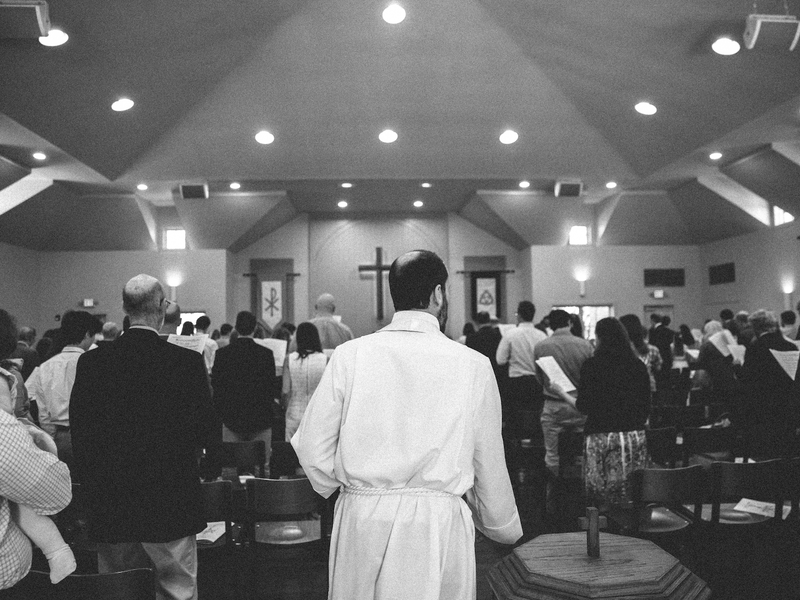
Why Does the Pastor Wear a Robe?

A Defense of the Use of the Ministerial Robe in Public Worship The purpose of this series of articles is to explain our biblical philosophy of worship and how we have sought to implement it here at Providence Reformed Presbyterian Church. We have thought through our worship services. We have…

by Jeff MeyersJune 20, 1997

Showing page 255 of 309

See all

Showing page 6 of 43

See all

New Face for the World

R owan Williams ( Sign and Sacrifice ) summarizes the Anselmian understanding of the atonement using the categories of sacrifice, obedience, and gift, all set within a Trinitarian frame. It's quite lovely. Citing Hebrews citing Psalm 40, Williams argues that the Old Testament sacrificial system existed to symbolize the true…

February 28, 2017

At the Parbar

D escribing the assignments of Levite gatekeepers, the Chronicler records that there were four at the “highway” at the western end of the temple, and two “at the Parbar,” which was also on the west (1 Chronicles 26:18). Scholars have proposed a variety of foreign etymologies for the term. From…

February 27, 2017
Architecture

How To Read Churches

D enis McNamara's How To Read Churches is an extraordinary book. Subtitled “a crash course in ecclesiastical architecture,” it covers building types, floor plans, sections of churches (nave, apse, choir), materials, windows, altars, ornaments in 256, 6 x 6-inch pages, each of which is stuffed with pictures and diagrams and…

February 24, 2017

Undemocratic Education

J ohn Milbank cites what he calls “Socrates's subversive realization” that “education can never be democratic” ( Being Reconciled , 182). This is in part because “the sheer singular uniqueness and contingency of wisdom is unable to subordinate itself to any majority,” partly because “if one is to learn, one…

February 24, 2017

Irrationality and Intellectual Flaws

T hrough a series of thought experiments, Richard Foley ( Intellectual Trust in Oneself and Others ) develops a concept of rationality as “a matter of making oneself invulnerable to intellectual self-criticism to the extent possible, of living up to one’s own deepest intellectual convictions and standards.” Rationality thus “requires…

February 24, 2017

Lockean Individualism

F ollowing Alvin Platinga, Richard Foley summarizes the principles of Locke's epistemology in three principles ( Intellectual Trust in Oneself and Others ): Evidence (the “obligation to base one's opinion on one's evidence,” the latter defined as “what one knows with certainty”); appraisal (the obligation “to appraise the probability of…

February 24, 2017

Showing page 202 of 2212

Browse by Category

In Medias Res

Your weekly digest for all things Theopolis.

Donate

Theopolis is nearly 100% donor-supported. Consider joining us on our mission.