Theopolis Logo

Writing

Explore our collection of theological essays, biblical studies, and reflections on faith and culture.

See all
tanner-mardis-xuxghzhibn4-unsplash-1-2
Biblical Studies

Tweets-turned-Notes on the Bible’s Chronology

Summary In what follows, I will consider the “year-stamps” employed in Scripture, i.e., statements of the form, “Such-and-such an event took place in the Xth year of Y.” In the process, I will suggest some ways in which the Biblical narrative might relate to events in the extra-Biblical world, though…

by James BejonJuly 16, 2019
durer-prodigal-son-2
Luke

Perspectives on the Prodigal, (Part 2)

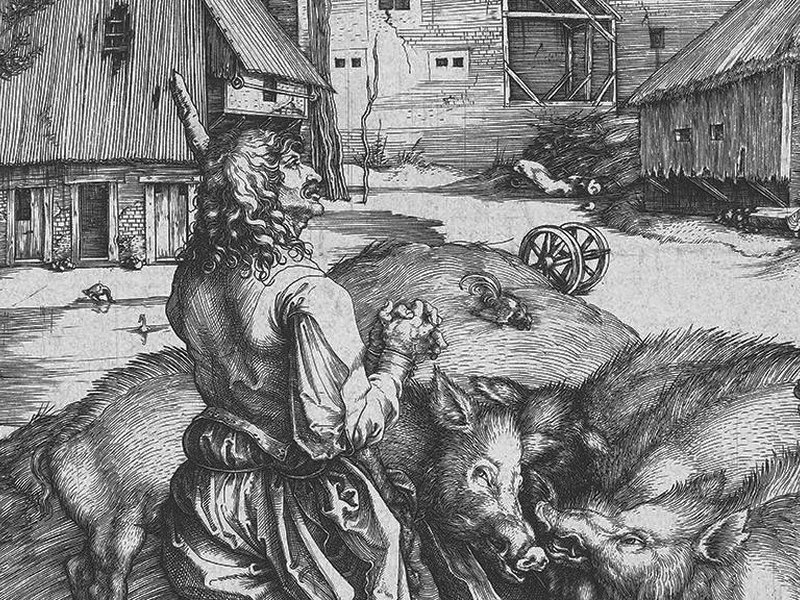
In the first essay on the parable of the Prodigal Son, I suggested that the problems commentators and others encounter in interpreting Jesus three-part parable are not accidental. These are not just problems in our ignorance of cultural background. They are intentional features of the stories —stories designed to poke…

by Ralph Allan SmithJuly 11, 2019
durer-prodigal-son-2
Luke

Perspectives on the Prodigal, (Part 1)

The story of the Prodigal Son is perhaps the most well-known story in the Bible. As others have observed, it may also be one of the most misunderstood. In two short essays, I will point out features of this story that are commonly neglected, aspects of Jesus’ parable that might…

by Ralph Allan SmithJuly 9, 2019
de-rijke-man-en-de-arme-lazarus-by-jacopo-da-ponte-16th-century
Luke

Lazarus and the Rich Man

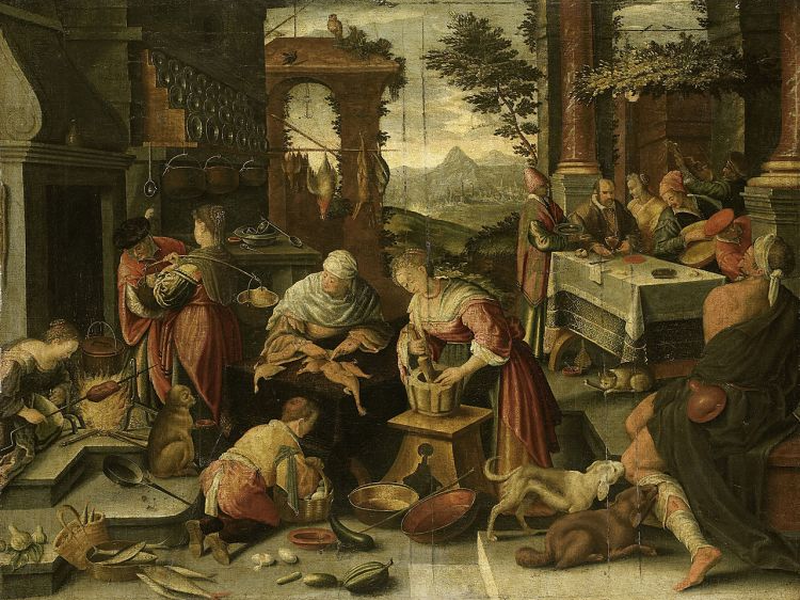
The parable of Lazarus and the nameless rich man is not an independent story. It is part of a long context that begins in Luke 15:1, where Jesus is eating with tax collectors and sinners and the scribes and Pharisees grumble. In response to their hardheartedness, Jesus tells a three-part…

by Ralph Allan SmithJuly 4, 2019
aaron-burden-uynrnfdkjwg-unsplash
Luke

Everybody has Dropsy - Luke 14:1-24

The Bible is written so that even when a reader cannot pick up on what might be deeper or more detailed aspects of a text, there is virtually always a message to be heard. In the ancient world, where the “reader” of Scripture would likely be a church official facing…

by Ralph Allan SmithJuly 2, 2019
communion
Biblical Theology

Fruit Trees and Grain Plants

The distinction between garden (or vineyard) and field begins in Genesis 2. This relates to the ordering of the formless world. Plants of the field are contrasted with the garden planted by God in Genesis 2:5&8. Later on, under the Old Covenant the Israelites will be required to keep their…

by James B. JordanJune 27, 2019

Showing page 77 of 309

See all

Showing page 6 of 43

See all

Near Miss at Marburg

I n a brief 1949 article in the Lutheran Quarterly , Roland Bainton observes that, far from being stubborn and intransigent at the 1529 Colloquy at Marburg, Luther and the Lutherans “took the initiative in proposing a formula of concord. They confessed that the discussion had opened their eyes and…

February 10, 2017

When Science Went Modern

W riting in the Hedgehog Review (Fall 2016), Lorraine Daston identifies 1890-1914 as the “moment when science went modern” (20). Going modern here involves an acceleration in the pace of discovery and invention: For the scientists, the realization that progress might have its dark side had been germinating since the…

February 10, 2017

McLaboratory

M cDonald's looks like a fast food restaurant, but it's a site of “embedded science,” writes Steven Shapin : “[McDonald's] sucks in huge amounts of scientific and technological expertise. Science is omnipresent in the corporation that owns or franchises this particular restaurant. Science is outsourced when McDonald’s draws on the…

February 10, 2017
Sexuality

A Great Mystery

I t is a great mystery. Adam is created from the ground, as are the animals. Unlike the animals, Adam becomes a living soul only when the Lord breathes into his nostrils. Adam is a product of ground and divine breath; he is a child of earth and heaven. Adam's…

February 9, 2017

God as Artist, Artist as God

I n Hand to Hand , a meditation on “listening to the work of art,” Jean-Louis Chretien traces the origins of the notion of God as artist and the artist as created. “How did the creative act, which for biblical Revelation properly belongs only to God, come to be thought…

February 9, 2017

Divine Double-Talk

D ay 3 of the creation week was unique, and a turning point in the creation week. When God first made the “earth” and heaven, the earth was tohu-v-bohu , formless and empty, and also dark. Over the course of the creation week, God corrected these imperfections of the original…

February 8, 2017

Showing page 208 of 2212

Browse by Category

In Medias Res

Your weekly digest for all things Theopolis.

Donate

Theopolis is nearly 100% donor-supported. Consider joining us on our mission.