Theopolis Logo

Writing

Explore our collection of theological essays, biblical studies, and reflections on faith and culture.

See all
elijah-1200x630-min
Biblical Horizons

Elijah’s Exodus

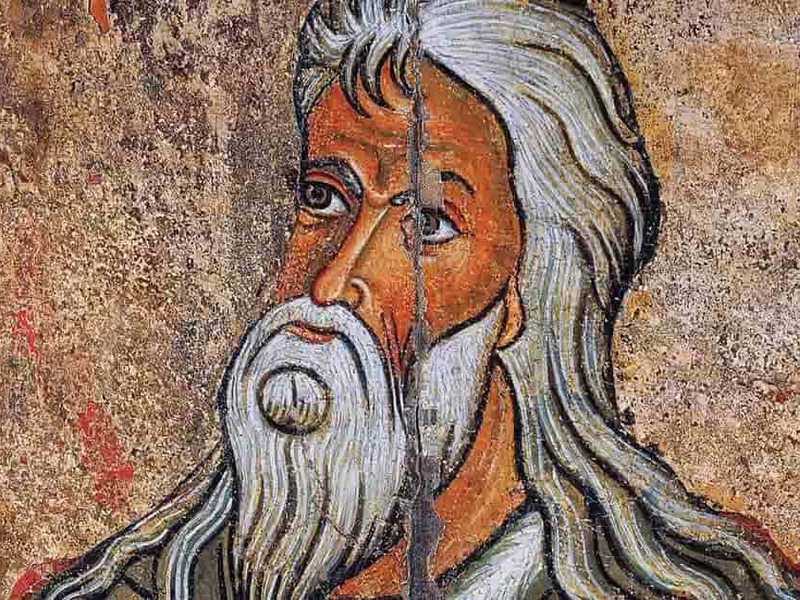
1 Kings 17, which abruptly introduces Elijah into the history of the northern kingdom, is a carefully constructed literary unit. In its basic structure, it follows a clear exodus-return pattern. Like Jacob and his sons, Elijah was driven out of the land by a famine (vv. 1-4). In exile, Elijah…

by Peter LeithartJune 17, 1992

ales-krivec-4mibe6zg5r0-unsplash
Biblical Studies

All Things New

Now the Pharisees, who were lovers of money, were listening to all these things and they were scoffing at Him. And He said to them, "You are those who justify yourselves in the sight of men, but God knows your hearts; for that which is highly esteemed among men is…

by Mark HorneJune 6, 1992
aaron-burden-h8s0pf2rcqs-unsplash
Biblical Chronology

Chronologies and Kings, Part 11: The Knots of 2 Kings 11-14

In the year 3119, Ahaziah of Judah and Jehoram of Israel were both slain by Jehu as he carried out his God-appointed task of eliminating the seed and house of Ahab (2 Kings 9:13-33). Since the kings of Israel are usually counted as beginning their reign in the same year…

by James B. JordanMay 24, 1992
trnava-university-beeyeib-am8-unsplash
Biblical Studies

Gleanings from Robert Alter’s "Art of Biblical Narrative"

One of the most important developments in Biblical studies in recent years has been a movement of scholars devoted to studying the literary techniques of the Biblical writers. Tremper Longman, III of Westminster Theological Seminary has treated this movement from a Reformed perspective in his Literary Approaches to Biblical Interpretation…

by Peter LeithartMay 17, 1992
ian-schneider-iqbc4vu4ypq-unsplash
Biblical Horizons

Tentmaking

And because [Paul] was of the same trade, he stayed with [Aquila and Priscilla] and they were working; for by trade they were tentmakers (Acts 18:3). The fact that Paul was by trade a tentmaker has usually been taken as the springboard for a discussion of whether pastors should have…

by James B. JordanApril 24, 1992
screen-shot-2022-05-12-at-12-07-23-pm
Biblical Studies

Chronologies and Kings, Part 10: Jehoram of Judah

I pointed out in Chronologies and Kings Part 9 that the years of Judah’s kings are given in chronological fashion. "When we read of a Judahite king’s reign as lasting 4 years, it means that 4 years of the chronology have been given to him, and there is no chronological…

by James B. JordanApril 24, 1992

Showing page 290 of 309

See all

Showing page 6 of 43

See all

Ward on Covenant of Works

Early in Ward’s book, he surveys mid sixteenth-century treatments of the effects of Adam’s sin, mainly to determine whether writers of that period conceived of God’s relationship with Adam as a covenantal one. His evidence suggests several important conclusions: 1) The early Protestant confessions do not describe Adam’s relationship to…

June 23, 2004
Theology

Kline on Covenant of Works

In his very useful study, God & Adam: Reformed Theology and the Creation Covenant , Rowland S. Ward has this to say about Meredith Kline’s views on the un-gracious character of the covenant of works: “Contrary to his position in 1968, Kline does not wish now to admit any concept…

June 22, 2004
Theology

More Bad Taste

I should clarify my final, hurried comments on Brown’s discussion of sin and bad taste. I suggested at the end of the last post that Brown’s initial mapping of the problem contributes to an unsatisfying conclusion regarding moral and aesthetic judgment. Brown argues that taste is community-specific, and thus subject…

June 22, 2004
Theology

Sin and Bad Taste

One of the challenges of a Christian aesthetics is sorting through the connections and distinctions between holiness and good taste on the one hand, and sin and bad taste on the other. In his 1989 book, Religious Aesthetics , Frank Burch Brown offers some thoughtful reflections on this question. Here…

June 22, 2004
Theology

Don Richardson and Contextualization

Don Richardson’s Peace Child is a classic of modern mission writing. In that book, Richardson tells of his experience among the Sawi people of New Guinea, and how he used their traditional custom of exchanging a “peace child” between warring tribes to explain the gospel to them. In his 1981…

June 22, 2004

True and False Arks

When the men of Babel organize to build a tower reaching to heaven, they decide to use “tar for mortar” (Gen 11:3; NASB). The Hebrew phrase repeats two different forms of the same root word (CHMR): The word for “tar” is CHEMAR and the word for “mortar” is CHOMER. They…

June 22, 2004

Showing page 2080 of 2212

Browse by Category

In Medias Res

Your weekly digest for all things Theopolis.

Donate

Theopolis is nearly 100% donor-supported. Consider joining us on our mission.