Theopolis Logo

Writing

Explore our collection of theological essays, biblical studies, and reflections on faith and culture.

See all
tanner-mardis-xuxghzhibn4-unsplash-1-2
Biblical Studies

Tweets-turned-Notes on the Bible’s Chronology

Summary In what follows, I will consider the “year-stamps” employed in Scripture, i.e., statements of the form, “Such-and-such an event took place in the Xth year of Y.” In the process, I will suggest some ways in which the Biblical narrative might relate to events in the extra-Biblical world, though…

by James BejonJuly 16, 2019
durer-prodigal-son-2
Luke

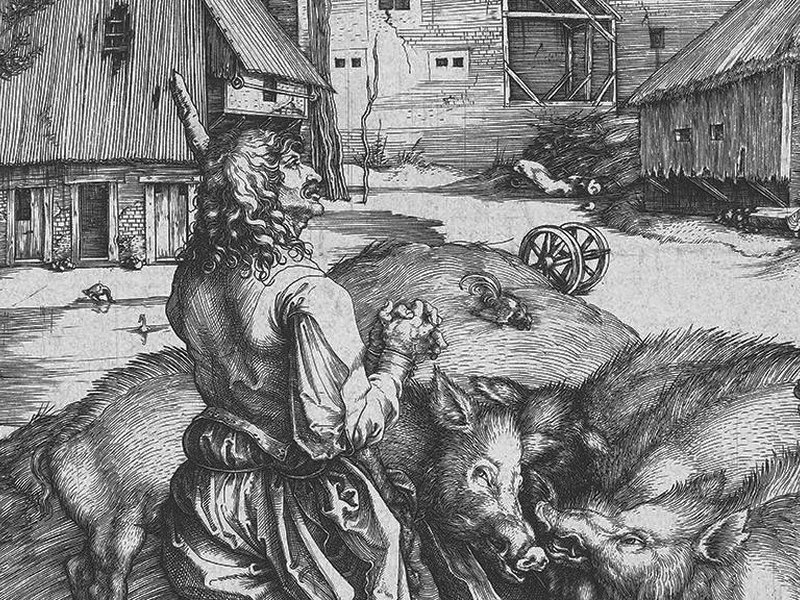
Perspectives on the Prodigal, (Part 2)

In the first essay on the parable of the Prodigal Son, I suggested that the problems commentators and others encounter in interpreting Jesus three-part parable are not accidental. These are not just problems in our ignorance of cultural background. They are intentional features of the stories —stories designed to poke…

by Ralph Allan SmithJuly 11, 2019
durer-prodigal-son-2
Luke

Perspectives on the Prodigal, (Part 1)

The story of the Prodigal Son is perhaps the most well-known story in the Bible. As others have observed, it may also be one of the most misunderstood. In two short essays, I will point out features of this story that are commonly neglected, aspects of Jesus’ parable that might…

by Ralph Allan SmithJuly 9, 2019
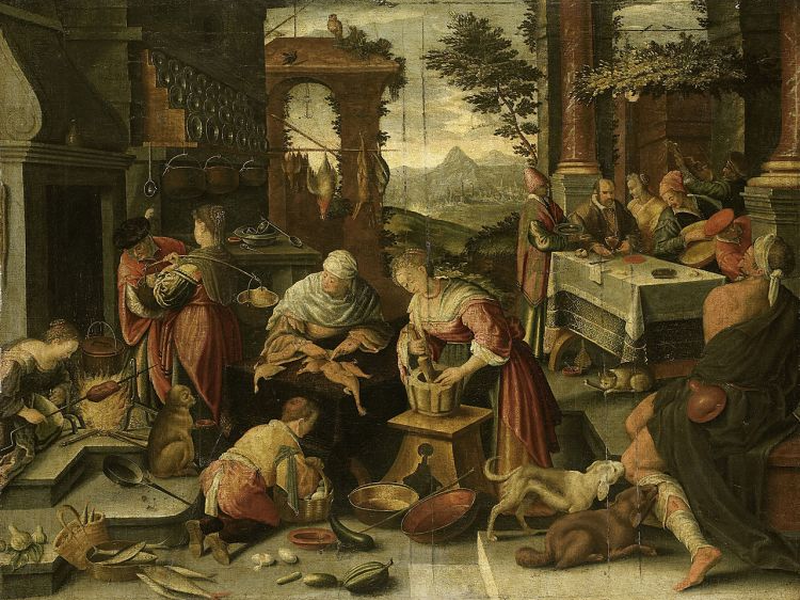
de-rijke-man-en-de-arme-lazarus-by-jacopo-da-ponte-16th-century
Luke

Lazarus and the Rich Man

The parable of Lazarus and the nameless rich man is not an independent story. It is part of a long context that begins in Luke 15:1, where Jesus is eating with tax collectors and sinners and the scribes and Pharisees grumble. In response to their hardheartedness, Jesus tells a three-part…

by Ralph Allan SmithJuly 4, 2019
aaron-burden-uynrnfdkjwg-unsplash
Luke

Everybody has Dropsy - Luke 14:1-24

The Bible is written so that even when a reader cannot pick up on what might be deeper or more detailed aspects of a text, there is virtually always a message to be heard. In the ancient world, where the “reader” of Scripture would likely be a church official facing…

by Ralph Allan SmithJuly 2, 2019
communion
Biblical Theology

Fruit Trees and Grain Plants

The distinction between garden (or vineyard) and field begins in Genesis 2. This relates to the ordering of the formless world. Plants of the field are contrasted with the garden planted by God in Genesis 2:5&8. Later on, under the Old Covenant the Israelites will be required to keep their…

by James B. JordanJune 27, 2019

Showing page 77 of 309

See all

Showing page 6 of 43

See all

“Nomos” in Greek Culture

There is further evidence concerning the meaning of nomos in Greek culture, coming from Martha Nussbaum’s Fragility of Goodness . In a discussion of Euripides’s Hecuba , Nussbaum points out that Polyxena, Hecuba’s daughter who is offered as a human sacrifice by the Greeks to appease the shade of Achilles,…

February 11, 2004

Sermon Outline, February 15

Sermon outline for Feb 15: In the Robbers’ Den, Luke 19:1-48 INTRODUCTION After a long journey, Jesus arrives in Jerusalem, and we learn that all along his goal has been the temple. He enters the city of the Great King as a king (19:37-38), and begins to drive out the…

February 11, 2004

Hays on 1 Kings 1-11

The JSOT also includes an article by Daniel Hays arguing that 1 Kings 1-11 portrays Solomon in a very negative light. It is not merely that Solomon falls in 1 Kings 11; there are hints throughout these chapters that Solomon has gone badly wrong. I don’t agree with everything in…

February 10, 2004
Art

Aesthetic Behaviour in Jewish Scriptures

F. Gerald Downing of Manchester has an intriguing paper on “Aesthetic Behavior in the Jewish Scriptures” in the December 2003 issue of the JSOT . Among the points he makes are these: 1) There has been remarkably little attention to Hebrew conceptions of beauty. This is due in part to…

February 10, 2004
Uncategorized

James on Messiah

Matt Jackson-McCabe argues in the current issue of JBL that the epistle of James presents a version of Messiahship different from much of the NT. Instead of a Messianic idea centering on the death and resurrection of the Messiah, James describes a “national restoration” in which the 12 tribes (dispersed…

February 10, 2004

Genealogies in Chronicles

Gary Knoppers argues in a JBL article that, contrary to accepted scholarship, the Chronicler shows the signs of influence of Greek historiography. I find this kind of article tedious and this kind of evidence unconvincing, but along the way Knoppers makes some useful comments about the organization of the Chronicler’s…

February 10, 2004

Showing page 2123 of 2212

Browse by Category

In Medias Res

Your weekly digest for all things Theopolis.

Donate

Theopolis is nearly 100% donor-supported. Consider joining us on our mission.