Theopolis Logo

Writing

Explore our collection of theological essays, biblical studies, and reflections on faith and culture.

See all
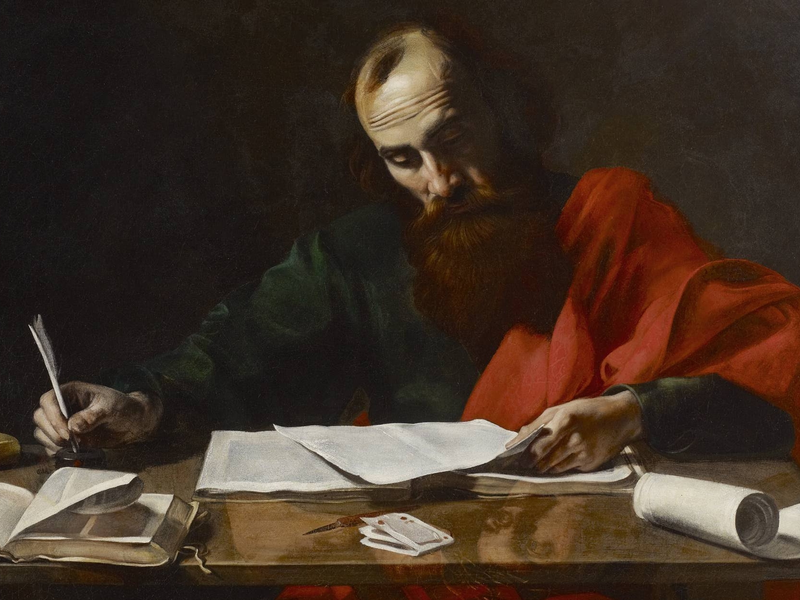
13071-probablyvalentindeboulogne-saintpaulwritinghi-1
1 Corinthians

The Great Exchange: Understanding Second Corinthians 5.21

He made Him who knew no sin to be sin on our behalf, that we might become the righteousness of God in Him. My argument is simple: What Paul means in writing the quotation above in context is the same as what he was telling the Ephesians when he wrote,…

by Mark HorneJune 7, 2004

ben-white-w8qqn1pmqh0-unsplash
Biblical Theology

What is Biblical Theology (Part 3) : The Art of Biblical Theology

THE ART OF BIBLICAL THEOLOGY IN PRACTICE: INTERTEXTUALITY AND TWO PAULINE CASE STUDIES The Art of Biblical Theology: Intertextuality Biblical Theology is really an art. Like other skills of this sort, it is not a matter of following rules (though there are certainly guidelines and techniques). Rather, it’s matter of…

by Rich LuskJune 6, 2004
malcolm-lightbody-tc2f02iq8le-unsplash
Biblical Theology

What is Biblical Theology: (Part 2) The Christotelic Spiral

Click HERE for Part 1 Reading Christotelically Jesus Christ is the heart of God’s plan for creation and history. There is no “hidden plan” or “hidden God” lurking behind Christ; rather, in and through Christ God has revealed himself and his intentions towards the world. In Christ, the Father has…

by Rich LuskJune 6, 2004
aaron-burden-qjdzyt_k8xg-unsplash
Biblical Studies

What is Biblical Theology? (Part 1)

STORY THEOLOGY AND A THEOLOGY OF STORY Defining Biblical Theology What is Biblical Theology? How does it compare to other ways of doing theology, such as Systematic Theology? Geerhardus Vos suggested that whereas Biblical Theology draws a line, Systematic Theology draws a circle. That is to say, Biblical Theology is…

by Rich LuskJune 6, 2004
screenshot-2023-09-21-at-3-59-23-pm
Hebrews

Living by His Faith: Some Rough Thoughts on the Faithfulness of Christ

The gospels strongly imply Jesus lived by faith in the promise of his heavenly Father. How else can his prayer life understood? How else could he have wrestled through the Gethsemane experience? How else could he have committed himself into his Father’s care at death? How could Jesus have presented…

by Rich LuskJune 6, 2004
sixteen-miles-out-al48tflf4e8-unsplash
John

John 3:16

John 3:16 is probably best-known, or at least, best-liked Bible passage in North America: “For God so loved the world, that he gave his only Son, that whoever believes in him should not perish but have eternal life.” This declaration of God’s love of the whole world is greatly comforting…

by Mark HorneJune 6, 2004

Showing page 223 of 309

See all

Showing page 6 of 43

See all

Day of Wrath (Romans 2)

What about taking “day of wrath” in Romans 2 as AD 70? Some arguments: 1) Dunn lists the verses that use similar phrases for “wrath and indignation” and “tribulation and distress,” and most of them are about historical judgments on Israel. There’s a cluster of uses in Deut 28:55ff, which…

November 7, 2003
Theology

Intellectualism and Voluntarism both arise

Intellectualism and voluntarism both arise from the same theological error: from the assumption that there is some realm that is independent and autonomous. This is most obvious with intellectualism: For intellectualists, things have indepdendent value that God recognizes and evaluates. Voluntarists are, however, making the same error. They assume that…

November 6, 2003

Studebaker on Pauw

Steve Studebaker writers in the Scottish Journal of Theology (56:3) about Edwards’s trinitarian theology, and includes an extended critique of Amy Plantinga Pauw’s treatment of Edwards’s incipient “social trinitarianism.” According to Studebaker, Pauw’s analysis only works if one assumes that the history of Trinitarian theology can be sketched out as…

November 5, 2003

The Olive Tree (Romans 11)

In the same issue of JSNT, Philip Esler examines ancient oleiculture to illumine Paul’s use of the olive tree image in Romans 11. When he describes branches being grafted into an olive tree, Paul refers to a common practice. But the normal practice is to graft cultivated olive branches onto…

November 5, 2003

Acts 20:20

Jerome Neyrey has an interesting article on Acts 20:20 in the current issue of JSNT. He examines the cultural background to Paul’s use of the phrase “in public and from house to house” by examining various expressions in Greek and Latin writers that correspond to modern “public” and “private.” These,…

November 5, 2003
Literature

Modernity

To what extent is modernity merely a recovery of the tragic? Tragedy, to my knowledge, simply didn’t exist in the medieval world. Drama revived late in the medieval period, but tragedy was reintroduced by the Renaissance. In Shakespeare, the tragic is set in a larger Christian comic setting, with profoundly…

November 5, 2003

Showing page 2170 of 2212

Browse by Category

In Medias Res

Your weekly digest for all things Theopolis.

Donate

Theopolis is nearly 100% donor-supported. Consider joining us on our mission.