Theopolis Logo

Writing

Explore our collection of theological essays, biblical studies, and reflections on faith and culture.

See all
andriy-nestruiev-gdbrwwh6doc-unsplash
Biblical Studies

Funerals and Flutes

Matthew 8-9 records three clusters of miracles, interspersed with snatches of Jesus’ teaching about various aspects of discipleship. Just as the Sermon on the Mount displays the authority of Jesus’ Word in teaching, these chapters display the authority of Jesus’ Word over sickness, uncleanness, the creation, demons, and death. In…

by Peter LeithartApril 17, 1992

michal-parzuchowski-w9uljjwg2fa-unsplash
Baptism

Daddy, Why Was I Excommunicated?

Since the early 1980s, several of the conservative Reformed Churches have debated and wrestled with the issue of paedocommunion (infant communion). The PCA and the OPC assigned study committees to examine the question, both of which produced useful reports both in support of and against the position. Though the debate…

by Peter LeithartApril 13, 1992
skyler-gerald-akljfvj5ym4-unsplash
Biblical Chronology

Chronologies and Kings, Part 9: Jehu, Hazael, and Assyria

(This issue of Biblical Chronology concludes a discussion of the Biblical and Assyrian chronologies, begun in previous posts. Click on the category link of "Biblical Chronology" above to see previous issues. Did Shalmaneser Know Jehu? Allis writes: "The Black Obelisk of Shalmaneser contains, in addition to brief accounts of the…

by James B. JordanMarch 23, 1992
denise-jans-dpemksg59la-unsplash
American Culture

Arts and Play, Part 4

Movies Movies as an art form have a powerful impact because they take place in a dark room, on a large screen, with no distractions, and because they entail many of the arts: music, acting, choreography, design and color, etc. A movie can be an overwhelming experience for a young…

by James B. JordanMarch 23, 1992
sincerely-media-bhaswrjttzw-unsplash-2
Leviticus

The Ecology of the Tribute Offering

The Hebrew word translated as "grain offering" or "cereal offering" is minchah . Like the translation of `olah as "burnt offering," the translation of minchah as "grain offering" is somewhat deceiving, since minchah does not refer to grain or cereal. In liturgical contexts outside of Leviticus, in fact, the word…

by Peter LeithartMarch 13, 1992
sincerely-media-bhaswrjttzw-unsplash-2
Ascension

Skinned and Cut

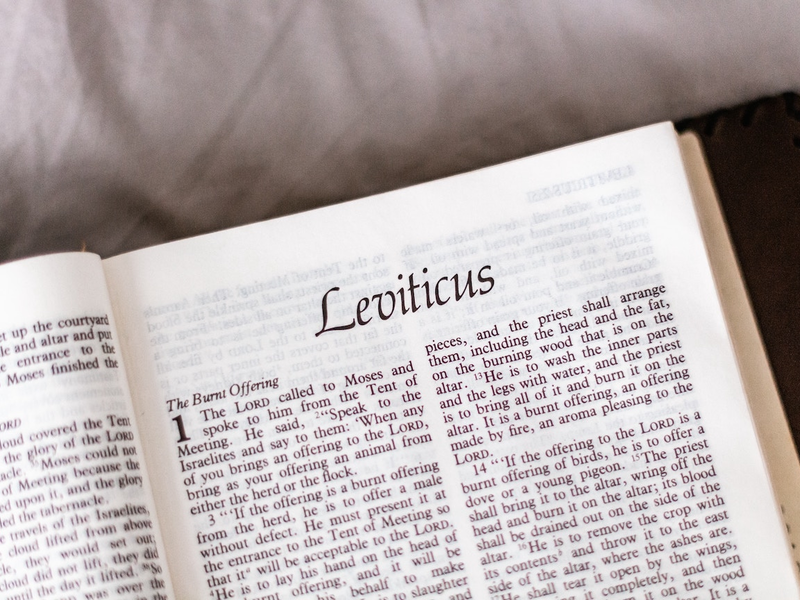
"He shall then skin the burnt offering and cut it into its pieces" (Leviticus 1:6). The normal word ( `olah ) that is translated as "burnt offering" and "whole burnt offering" has nothing to do with either burning or wholeness. It is the noun form of a verb meaning "to…

by Peter LeithartMarch 13, 1992

Showing page 291 of 309

See all

Showing page 6 of 43

See all
Philosophy

Postmodern Tragedy

Postmodern tragedy is also rooted in Freud: For Freud, the id desires but is blocked and opposed by the superego. The ego negotiates, and finds ways for the id to express itself without violating the standards of the superego. This is reasonable, submission to the reality principle. But it is…

October 30, 2003
American Religion

Just War

Christopher Lynch ends a review of several books on just war ( Weekly Standard , Nov 3), with the comment that “popular punditry’s now-routine use of the theory and the flood of recent books on the topic suggest that a change in the nation’s thinking has taken place.” Just in…

October 30, 2003
Philosophy

Worldview

Evangelicals these days are positively giddy about worldview. For many, developing a Christian worldview is the answer to all or most of the ills that plague the contemporary church. When I see a bandwagon, however, I tend to wonder why they are heading in that direction, and this contrarian bias…

October 30, 2003

Unitarianism

The internal contradictions of unitarianism: If God is finite, then there is a boundary, and he is hardly worthy of the name God. If he is infinite, then there is no boundary, but there is also no outside. But if there is no “outside,” where does this unitarian God “put”…

October 30, 2003
Philosophy

Plato and Fear

To what extent does Platonism arise out of fear of contaminants, of miasma, of impurity? On Derrida’s reading, Plato dreams of an uncontaminated origin and presence that can never be arrived at or achieved, and he sees every supplement as an unhappy contamination of the purity of the origin. That…

October 30, 2003

JSOT Articles

Several interesting articles in the current issue of JSOT : 1) Yairah Amit of Tel Aviv University writes on “Progression as a Rhetorical Device in Biblical Literature.” The concept is fairly simple: He’s pointing to places where, in narrative or speech, the biblical writers list a series of events or…

October 29, 2003

Showing page 2175 of 2212

Browse by Category

In Medias Res

Your weekly digest for all things Theopolis.

Donate

Theopolis is nearly 100% donor-supported. Consider joining us on our mission.