Theopolis Logo

Writing

Explore our collection of theological essays, biblical studies, and reflections on faith and culture.

See all
night-sky
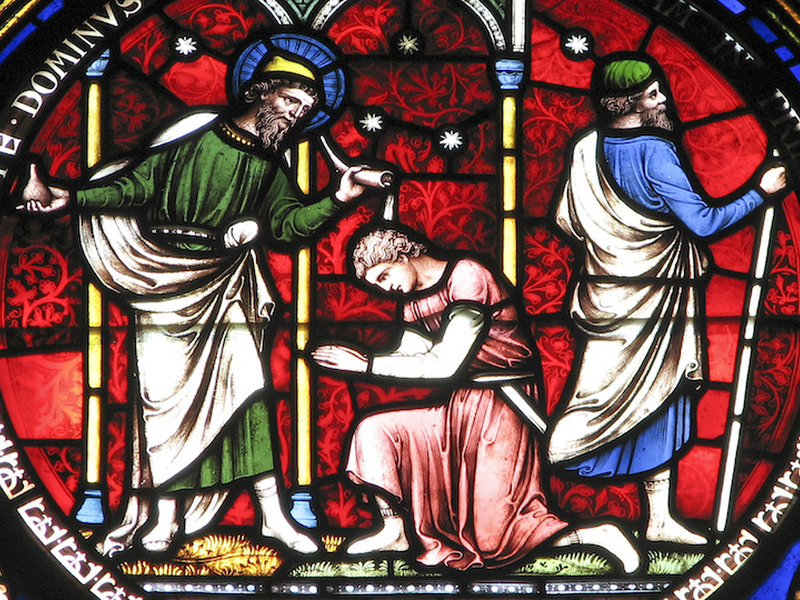
Astral imagery

The Lady and Her Jewels: An Epiphany Meditation

And a great portent appeared in heaven, a woman clothed with the sun, with the moon under her feet, and on her head a crown of twelve stars; she was with child and she cried out in her pangs of birth, in anguish for delivery (Revelation 12:1-2). Then Joshua spoke…

by Richard BledsoeJanuary 6, 2015
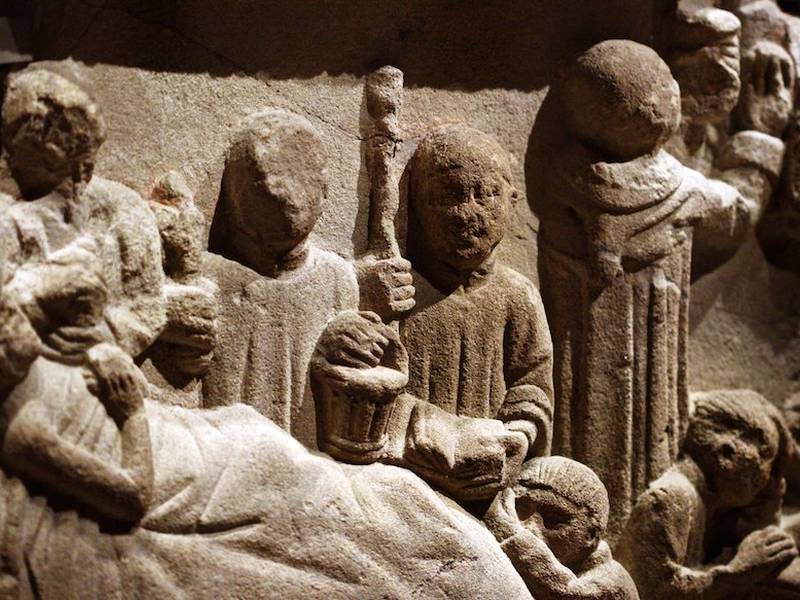
extreme-unction
Anointing

Fattening Our Suffering

In his post asking Ought we Anoint the Dying? Peter Leithart makes an excellent and important point about our suffering as members of Christ. However, he only parenthetically mentions that the verb in question in James 5 is not chrio but aleipho . By assuming that these words are interchangeable,…

by Robert MaddoxDecember 30, 2014
sacre-bleu-r__kixb0i5m-unsplash
James

Death as Frenemy

We spend a lot of time in the church talking about what it means to live like a Christian. But what does it mean to die like a Christian? If we are to follow Christ in life, what does it mean for us to follow him in death as well?…

by Rich LuskDecember 23, 2014
giammarco-zeh-ljawhtg-unsplash
Literature

Was Shakespeare A Christian?

How would one go about answering the question posed by my title? That depends on what the question means. Obviously, different definitions of the question would require different approaches to an answer. Right off hand, I can think of at least three possible — though not necessarily mutually exclusive —…

by Ralph Allan SmithDecember 23, 2014
day-2-ferguson-protests-nationwide
American Culture

Phobophobia

In recent weeks and months, we have seen events that are not the event. The drama around these events is not the events themselves, but the anxiety about the events, and then even the anxiety about the anxiety about the events. That is the real event. The events in Ferguson,…

by Richard BledsoeDecember 22, 2014
anointing-david
Anointing

Ought We Anoint the Dying?

Anointing the sick, including the dying, is one of the traditional seven sacraments of the Catholic Church. The Reformers denied that the rite qualified as a sacrament. Formally, this was because anointing did not have a direct authorization from Jesus; more theologically, it was not one of the marks that…

by Peter LeithartDecember 18, 2014

Showing page 163 of 309

See all

Showing page 6 of 43

See all
History

Enlightenment

Two very different evaluations of the Enlightenment appear in recent books. First from Robert Darnton, historian of the French Enlightenment, who, according to the reviewer in the October 6 TNR , devotes the first and most substantative essay in his recent book George Washington’s False Teeth to defending the Enlightenment.…

October 20, 2003
Biblical Studies

Promised Land and Heaven

There’s a breakdown in the traditional typology that links “promised land” with “heaven.” Though the promised land is eschatologically a new heavens and new earth, the typology is more exactly fulfilled in the church’s fulfillment of the great commission on earth. After all, we don’t embark on a “conquest” of…

October 18, 2003
Biblical Studies

Moses the Matchmaker

Moses is the matchmaker who brings the bride to a trysting place with her lover, Yahweh. He is the “friend of the bridegroom” who, like John the Baptist, prepares the bride for her husband. As such, Moses and John are models for all Christian ministry, which is also all about…

October 18, 2003
Biblical Studies

Horned Man

Something to check: Is Moses the first “horned man” in the Bible? He comes down from the mountain, having seen the glory of God, with “horns” on his head, rays of glory radiating out. This may be the source of the horned man image used elsewhere, in the Psalms for…

October 18, 2003

“From Faith” (Rom. 1:17)

Douglas A. Campbell argues forcefully for interpreting the phrase ek pisteos (from faith) in Romans 1:17 as a reference to the faithfulness of Christ in his obedience to death. This, in turn, suggests strongly that Paul’s later use of pistis Christou (faith of Christ) as Christ’s own faithfulness rather than…

October 18, 2003

“From Faith” (Rom. 1:17)

Douglas A. Campbell argues forcefully for interpreting the phrase ek pisteos (from faith) in Romans 1:17 as a reference to the faithfulness of Christ in his obedience to death. This, in turn, suggests strongly that Paul’s later use of pistis Christou (faith of Christ) as Christ’s own faithfulness rather than…

October 18, 2003

Showing page 2181 of 2212

Browse by Category

In Medias Res

Your weekly digest for all things Theopolis.

Donate

Theopolis is nearly 100% donor-supported. Consider joining us on our mission.