Theopolis Logo

Writing

Explore our collection of theological essays, biblical studies, and reflections on faith and culture.

See all
sinitta-leunen-dvibhmzsy8e-unsplash
Epistemology

A Cheer for the Mystics

Mystical theologians are often unguarded, extreme, un-nuanced, pressing to the edges of heresy, sometimes beyond. Still, the mystics are worthy of study. Why? Many reasons. Unlike some late medieval and post-Reformation dogmaticians, mystical theologians are often instinctively and richly Trinitarian. Historical-critical approaches to Scripture left mystical theologians virtually untouched; mystics…

by Peter LeithartSeptember 2, 2013
portrait-of-william-shakespeare-1564-1616-ca-1865
Literature

Shadow and Substance in Shakespeare's Venice

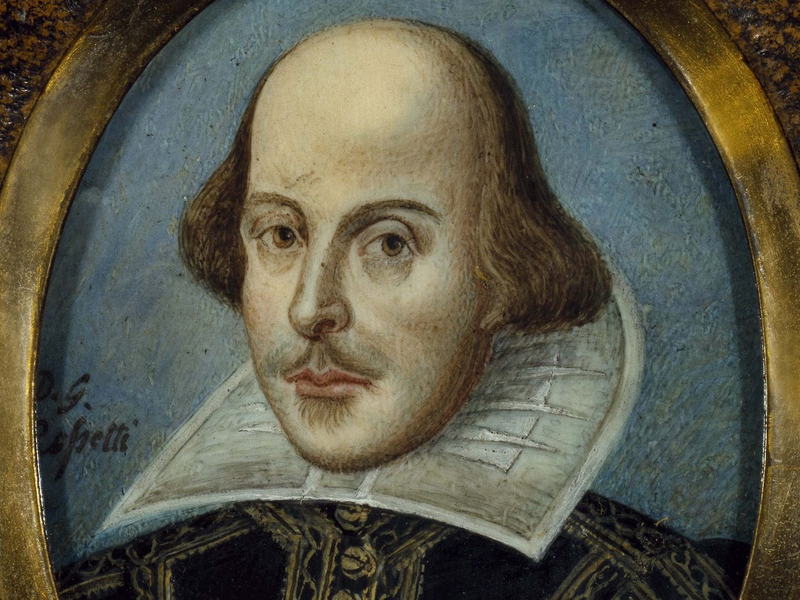
Portia of Belmont is a “lady richly left,” as Bassanio says of her in the first Act of The Merchant of Venice . Plus, she’s beautiful and wise. Suitors clamber to Belmont in hope. Her father knew it would be so, and in his will set up a fairy-tale test…

by Peter LeithartAugust 28, 2013
carlo-alberto-burato-smdx3gleu_m-unsplash
Liturgy

Liturgy Traps

[fve]http://vimeo.com/72195198[/fve]

by James B. JordanAugust 26, 2013
screen-shot-2022-05-12-at-12-07-23-pm
Deuteronomy

Victory Food

In the nature of the case, “the” Christian meditation on Deuteronomy 14:1-21 cannot be written. Meditation offers too many possibilities, opens too many doors. There is not one and only one correct set of associations for a Christian to consider when thinking of Deuteronomy 14:1-21. We could, for example, consider…

by Ralph Allan SmithAugust 21, 2013
aaron-burden-1ebsmyrau-s-unsplash
Romans

David's Sin and Israel's Salvation, Part I

Having retold the story of the cumulative sin of Israel leading to the great atonement on the cross, Paul then reemphasizes that, just as both Jew and Gentiles were locked into sin and judgment, now they are both justified by faith: Then what becomes of our boasting? It is excluded.…

by Mark HorneAugust 20, 2013
ben-white-w8qqn1pmqh0-unsplash
Deuteronomy

You are what you eat

Deuteronomy 14 is full of allusions to events of Israel’s history and other portions of Scripture. What would an Israelite learn by mediation on these allusions? The answer, I believe, is at least fourfold. Faith, Worship, War For the ancient Israelite first hearing Moses’ sermon, or perhaps hearing it read…

by Ralph Allan SmithAugust 15, 2013

Showing page 189 of 309

See all

Showing page 6 of 43

See all

Parthian Invasion?

S ome commentators on Revelation give the Parthian empire a major role in the book. The Parthian empire stretched from the Euphrates to Iran; the Silk Road passed through, making it crucial to trade routes from the Roman empire to the far east. Romans and Parthians fought several times during…

November 15, 2016

Structure in 1 Chronicles 17

D avid wants to build Yahweh a house, and Nathan the prophet approves (1 Chronicles 17:1-2). That night, the word of Yahweh comes to Nathan to correct him. When Nathan delivers the oracle, David is a new Abraham, to whom the “Word of the Lord came” to promise the land…

November 14, 2016

Hegel the Theologian

E nrique Dussel ( Underside of Modernity ) explains Hegel’s defection from Kant in theological terms. Inspired by Schiller's distinction of reason as “the vital faculty of synthesis” and understanding as the faculty that “determines its object, separates it, kills it,” Hegel described the kingdom of Jesus in terms of…

November 11, 2016
Reformational Catholicism

Confessionalization and Division

I have only two quick responses to Toby Sumpter's generous and thoughtful review of (a part of) The End of Protestantism . First, he expresses the wish that I would have called the book The End of Denominationalism or somesuch, hinting that I chose the title because of its rhetorical…

November 11, 2016

Jezebel and Babylon

P aul Duff ( Who Rides the Beast? 90) calls attention to five parallels between the prophetess Jezebel of Thyatira (Revelation 2) and the harlot city Babylon (Revelation 17-18). “First, Ahab's wife was a queen—of the kingdom of Israel in the ninth century BCE; the regal bearing of ‘Babylon' in…

November 11, 2016

Dooyeweerdian Impasse

I n an essay on radical Augustinian social critique in his Religion, Truth, and Social Transformation , Lambert Zuidervaart summarizes the social vision of Herman Dooyeweerd with two themes: spiritual antithesis and structural differentiation. The antithesis is, for Dooyeweerd, “universal, comprehensive, and deeply spiritual,” running “right through the Christian life…

November 11, 2016

Showing page 232 of 2212

Browse by Category

In Medias Res

Your weekly digest for all things Theopolis.

Donate

Theopolis is nearly 100% donor-supported. Consider joining us on our mission.