Theopolis Logo

Writing

Explore our collection of theological essays, biblical studies, and reflections on faith and culture.

See all
tanner-mardis-xuxghzhibn4-unsplash-1-2
Biblical Studies

Tweets-turned-Notes on the Bible’s Chronology

Summary In what follows, I will consider the “year-stamps” employed in Scripture, i.e., statements of the form, “Such-and-such an event took place in the Xth year of Y.” In the process, I will suggest some ways in which the Biblical narrative might relate to events in the extra-Biblical world, though…

by James BejonJuly 16, 2019
durer-prodigal-son-2
Luke

Perspectives on the Prodigal, (Part 2)

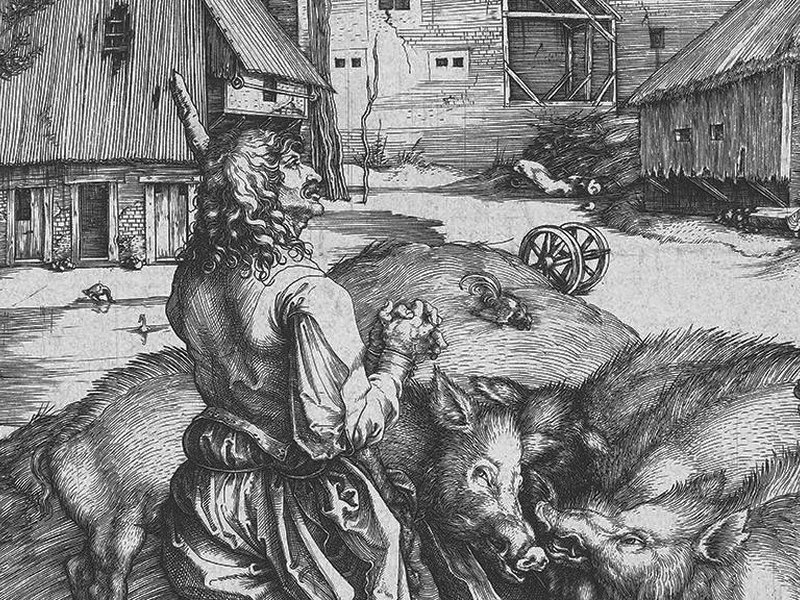
In the first essay on the parable of the Prodigal Son, I suggested that the problems commentators and others encounter in interpreting Jesus three-part parable are not accidental. These are not just problems in our ignorance of cultural background. They are intentional features of the stories —stories designed to poke…

by Ralph Allan SmithJuly 11, 2019
durer-prodigal-son-2
Luke

Perspectives on the Prodigal, (Part 1)

The story of the Prodigal Son is perhaps the most well-known story in the Bible. As others have observed, it may also be one of the most misunderstood. In two short essays, I will point out features of this story that are commonly neglected, aspects of Jesus’ parable that might…

by Ralph Allan SmithJuly 9, 2019
de-rijke-man-en-de-arme-lazarus-by-jacopo-da-ponte-16th-century
Luke

Lazarus and the Rich Man

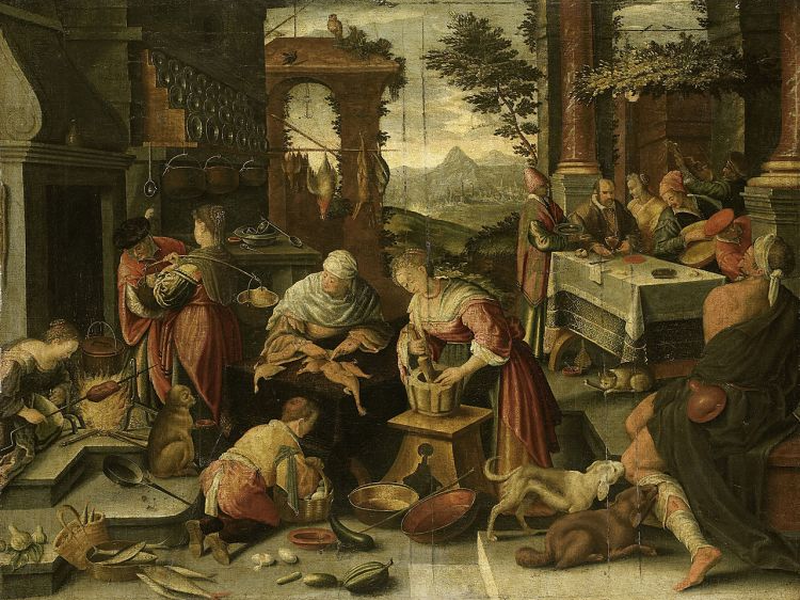
The parable of Lazarus and the nameless rich man is not an independent story. It is part of a long context that begins in Luke 15:1, where Jesus is eating with tax collectors and sinners and the scribes and Pharisees grumble. In response to their hardheartedness, Jesus tells a three-part…

by Ralph Allan SmithJuly 4, 2019
aaron-burden-uynrnfdkjwg-unsplash
Luke

Everybody has Dropsy - Luke 14:1-24

The Bible is written so that even when a reader cannot pick up on what might be deeper or more detailed aspects of a text, there is virtually always a message to be heard. In the ancient world, where the “reader” of Scripture would likely be a church official facing…

by Ralph Allan SmithJuly 2, 2019
communion
Biblical Theology

Fruit Trees and Grain Plants

The distinction between garden (or vineyard) and field begins in Genesis 2. This relates to the ordering of the formless world. Plants of the field are contrasted with the garden planted by God in Genesis 2:5&8. Later on, under the Old Covenant the Israelites will be required to keep their…

by James B. JordanJune 27, 2019

Showing page 77 of 309

See all

Showing page 6 of 43

See all

Warrior Bride

C hronicles envisions Israel as a “host” ( tzaba ). David leads Israel’s hosts. The princes of Israel military commanders. When “all Israel” gathers, they are represented by elders and army captains, and even the Levitical singers are established by David and the commanders of the host (1 Chronicles 25:1).…

October 20, 2016
Reformational Catholicism

On Flying Together

M y End of Protestantism (the book) deals with a number of the questions Doug Wilson raises in his rejoinder . I’m sure Doug will have more to say if he reads the book, and I’ll try to respond then. Here I limit myself to a few notes. I state…

October 19, 2016

Two Kingdoms, Three Estates, One Spirit

B ernd Wannenwetsch ( Political Worship , 63–65) denies that in Luther’s theology politics and economics “count as being a preserve of the law .” The usus politicus of the law doesn’t mark “a particular preserve not touched by the gospel.” He needs to emphasize this because “an unduly abridged…

October 18, 2016

Ritual and Liberalism

J ohn Milbank and Adrian Pabst ( The Politics of Virtue , 269) argue that secular critiques of liberalism cannot hit home because “they are incapable of making the key argument that various different faith traditions are able to make—that nature is neither external to humanity, nor should humans ever…

October 18, 2016

In the Temple

J ohn is caught up by the Spirit into heaven and sees a throne, cherubim, a sea, seven torches burning. I daresay he knew exactly where he was: In the heavenly temple, specifically in the heavenly archetype of the most holy place, the throne-room of the sanctuary. I daresay many…

October 17, 2016

Economics for the Irrational

A ccording to Mathew Crawford ( The World Beyond Your Head ), economics once held “that we are rational beings who gather all the information pertinent to our situation, calculate the best means to given ends, and then go about optimizing our choices accordingly. The assumption was that we are…

October 14, 2016

Showing page 242 of 2212

Browse by Category

In Medias Res

Your weekly digest for all things Theopolis.

Donate

Theopolis is nearly 100% donor-supported. Consider joining us on our mission.