Theopolis Logo

Writing

Explore our collection of theological essays, biblical studies, and reflections on faith and culture.

See all
cloister

Gatekeepers

1 Chronicles 9:1 seems to bring the genealogies of 1 Chronicles to an end. The Chronicler has recorded the genealogy of the human race from Adam, focusing on the descendants of Abraham through Jacob. Summing it all up, he says, “So all Israel was enrolled by genealogies; and behold, they…

by Peter LeithartJune 21, 2016
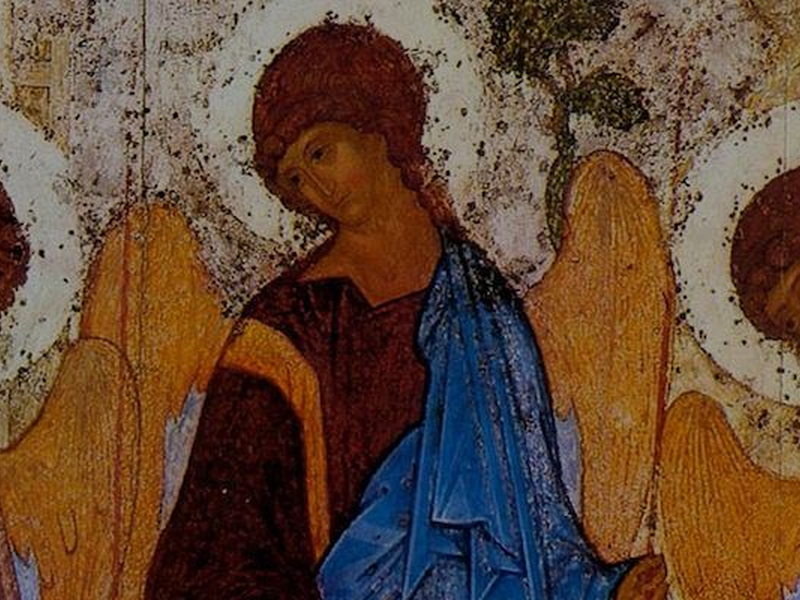
trinity-1-2
Trinity

Are the Divine Persons Persons?

The “personalist” understanding of the Trinity, articulated most influentially in the work of John Zizioulas, has fallen on hard times. Recent scholars have attacked Zizioulas’s idea that Cappadocian Trinitarianism represented an ontological revolution, hammering on the distinction between divine and human personhood. Michel Barnes’s conclusion is the most drastic of…

by Peter LeithartJune 16, 2016
img_4660-2
Architecture

On Biblical Theology

Biblical Theology is often defined as the historical unfolding of God’s revelation, or of God’s revelation and of the history of his covenantal redemption and transformation of humanity and the world. In practice, Biblical Theology is usually broader than this, and also includes the study of literary structure and of…

by James B. JordanJune 14, 2016
laughing_statue_by_xxbobbiie-d5f0meh-2
Humor

Wise Laughter

We are made to be happy. Created to enter into the eternal joy of God, our whole being inclines to that end, but the fallen world has put forth barriers and by our own sin we bar ourselves from that endless delight, and death blinds us to that reality. Yet…

by Remy WilkinsJune 7, 2016
img_7664
Liturgy

Why Theopolis? Take Two

At the end of Revelation, John sees the heavenly city descending to earth. The city shines with the brilliance of God's glory, which lightens the nations, so that kings bring their glory to the city. This is not a vision of the final new heaven and new earth. It's a…

by Peter LeithartJune 2, 2016
trinity-1-2
Attributes of God

How Can We Talk About God?

“No one has ever seen God,” writes John (John 1:18). If this is the case, then how can we speak about God? Some people say we actually cannot. Or at least we cannot speak about God positively, i.e. who He is. We can only say who or what God is…

by Bogumil JarmulakMay 31, 2016

Showing page 130 of 309

See all

Showing page 6 of 43

See all

Simon, Son of John

A fter sharing a breakfast of fish at the shore of Tiberius with his disciples, Jesus speaks directly to Peter (John 21). Peter had denied Jesus three times; now Jesus confirms his love three times. Peter denied Jesus at a charcoal fire in the high priest's court; now he's restored…

May 30, 2016

Choosing Apocalyptics

I n the closing chapter of Heaven on Earth , Richard Landes considers the import of the two major apocalyptic threats of the early twenty-first century—anthropogenic global warming (AGW) and global jihad warming (GJW). Both seem to portend TEOTWAWKI, the end of the world as we know it. What we…

May 27, 2016

DysUtopian Literature

I n his study of The Dystopian Impulse in Modern Literature , Keith Booker observes that “much of the history of recent utopian thought can be read as a gradual shift from utopian to dystopian emphases, while utopian thought itself has come more and more to be seen as escapist…

May 27, 2016

God-Fearers

W e are apt to think of a deeply religious person as a ‘true believer,' writes Howard Wettstein in The Significance of Religious Experience . In the Hebrew Bible, though, “there is no expression . . . that corresponds to our term, ‘believer.' The phrase that comes closest is ‘…

May 27, 2016

Varieties of Apocalypse

R ichard Landes's Heaven on Earth is a study of millennial apocalyptic movements, that is, movements that share a belief in “ a millennial vision of the world transformed, and an apocalyptic belief in that transformation’s imminence ” (22). Though the movement he explores share a belief in the transformation…

May 26, 2016

Millennial Modernity

According to Richard Landes ( Heaven on Earth ), traditional societies are organized by a “prime divider,” a boundary between elites and commoners. He follows Ernest Gellner in called these “agro-literate” societies, since that phrase names two key technologies that mark the division. More generally, “Elites construct prime dividers along…

May 26, 2016

Showing page 285 of 2212

Browse by Category

In Medias Res

Your weekly digest for all things Theopolis.

Donate

Theopolis is nearly 100% donor-supported. Consider joining us on our mission.