Theopolis Logo

Writing

Explore our collection of theological essays, biblical studies, and reflections on faith and culture.

See all
giammarco-zeh-ljawhtg-unsplash
Biblical Horizons

OPEN BOOK: Views and Reviews

Isaac E. Mozeson, The Word: The Dictionary that Reveals the Hebrew Sources of English (Northvale, NJ: Jacob Aaronson Inc., 1995), 310 pp. Reviewed by James B. Jordan. Once there was only one language in the world, the language God spoke to Adam. At the Tower of Babel, there came to…

by James B. JordanJune 28, 1996
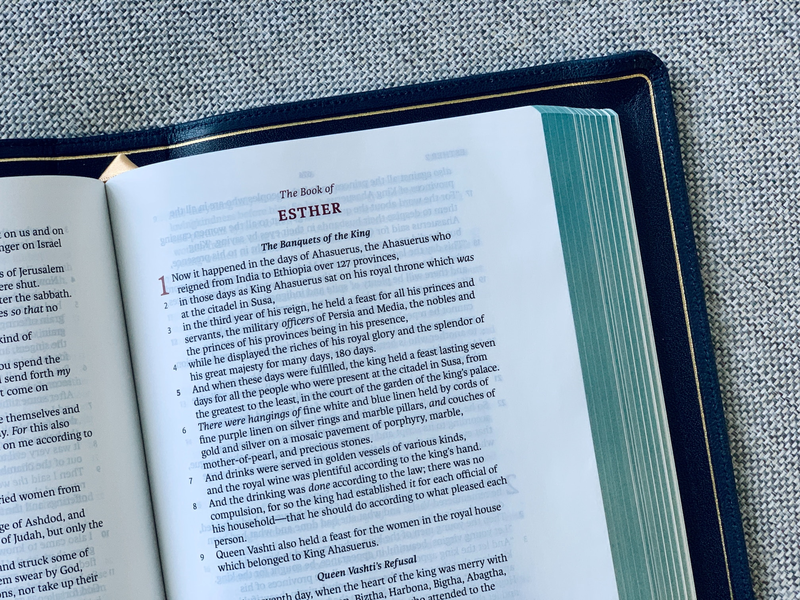
tim-wildsmith-j6jv-mkdzqs-unsplash
Esther

Esther: Historical & Chronological Comments (IV)

2. The Setting of the Book of Esther A. Xerxes (continued from previous issue) Ezra 6:14 says that the Jews finished building "according to the command of the God of Israel and the decree of Cyrus and Darius and Artaxerxes king of Persia." The problem with this verse is that…

by James B. JordanJune 28, 1996
ales-krivec-4mibe6zg5r0-unsplash
Acts

Jesus and Amalek

This essay goes with our previous study of the Amalek pattern back in Biblical Horizons No. 2. Since many do not have this essay, entitled "The Battle of Gog and Magog," let me cite the relevant paragraphs: Note in Genesis 12-15 that Abram moves into the land after escaping Pharaoh…

by James B. JordanJune 28, 1996

aaron-burden-1ebsmyrau-s-unsplash
Proverbs

The Strange Woman

Proverbs 7:6-23 is one of several passages early in the Proverbs in which Solomon warns his son about the wiles and dangers of the "strange woman." It is certainly quite proper to take these as straightforward warnings against sexual sins, and these are certainly warnings that need to be impressed…

by Peter LeithartJune 27, 1996
jan-kahanek-g3o5ztrk2e4-unsplash
Biblical Studies

Some Observations

1. In Luke 4:20 we read that after Jesus finished reading from Isaiah, "the eyes of all in the synagogue were fixed upon Him." This is usually taken in a psychological sense: They were amazed at Jesus somehow. I suggest that, as always, a merely psychological reading is a modern…

by James B. JordanMay 28, 1996
tim-wildsmith-j6jv-mkdzqs-unsplash
Esther

Esther: Historical & Chronological Comments (III)

2. The Setting of the Book of Esther Up to now we have assumed what we must prove, that the king in Esther is Darius the Great. While Biblical chronologists have usually taken this position, commentators on the book of Esther have often taken others as the king. One view,…

by James B. JordanMay 28, 1996

Showing page 265 of 309

See all

Showing page 6 of 43

See all

Sacraments and the Secular Age

Charles Taylor's account of our Secular Age has many virtues. (The following relies on Jamie Smith's summary of Taylor in How (Not) To Be Secular ; page numbers are from Taylor.) Taylor rejects “subtraction” theories of secularization, the notion that secular life was lurking beneath the sacred surface of ritual,…

May 11, 2016

Science, Disenchantment, Meaning

Max Weber begins his lecture on “Science as a Vocation” by noting the “meaningless” of science, a product of the notion of scientific progress that guides scientific pursuits in the modern world. “E ach of us knows,” Weber writes, “that what he has accomplished will be antiquated in ten, twenty,…

May 11, 2016

Youth Ministry in a Secular Age

James KA Smith's You Are What You Love is an accessible, penetrating treatment of the liturgical understanding of human existence, of discipleship, and culture that Smith has been developing in a number of his recent books. In this book, he focuses on the specifics of Christian liturgy as a “technology…

May 10, 2016

Urban Art

Revelation 21-22 gives a vision of an adorned city. Kings bring treasures into the city, but the city isn't just a container for art objects. The city is an art object. The entire civic order is an artistic creation. If the city is an art object, then all of the…

May 10, 2016

Apologetics in a Secular Age

In his summary of Charles Taylor's A Secular Age , James KA Smith observes how apologetics accommodates to the social imaginary of the secular age. Apologetic responses to secularism have too often “conceded the game; that is, the responses to this diminishment of transcendence already accede to it in important…

May 9, 2016

Future First

The vision of the heavenly city at the end of Revelation contains a major oddity: The city descends twice . There are structural reasons for this. The first vision concludes one sequence in Revelation, and the second introduces a final vision. It is the same city, but the vision gives…

May 9, 2016

Showing page 291 of 2212

Browse by Category

In Medias Res

Your weekly digest for all things Theopolis.

Donate

Theopolis is nearly 100% donor-supported. Consider joining us on our mission.