Theopolis Logo

Writing

Explore our collection of theological essays, biblical studies, and reflections on faith and culture.

See all
last-supper
Luke

Table Talk

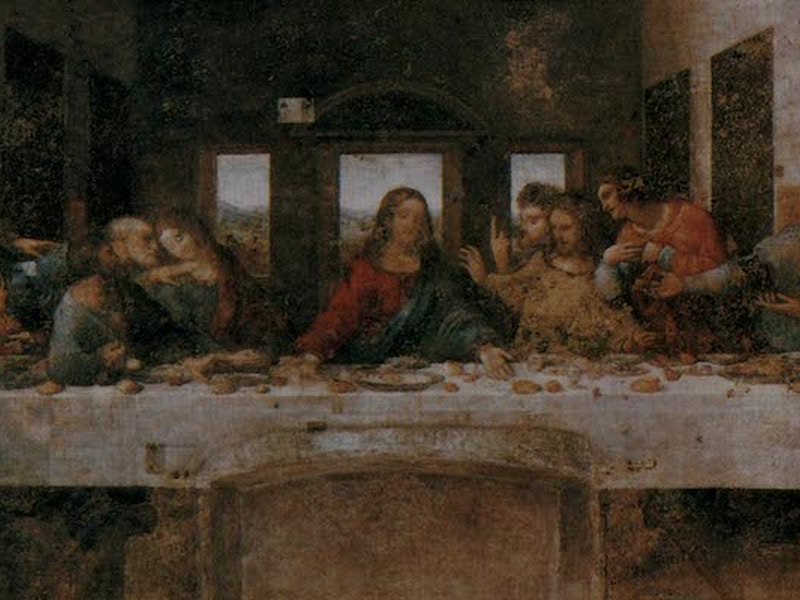
Along His journey to Jerusalem, Jesus stops frequently to have meals, three times with Pharisees (7:37-50; 11:37-54; 14:1-35). Meals were central to Jesus’ ministry. He comes “eating and drinking” (Luke 7:34). While His meals are not just for refreshment, they are opportunities for teaching the protocols of the kingdom. Meals…

by Peter LeithartApril 19, 2016

music-violin
Biblical Theology

A Musical Case for Typological Realism, (Part 4)

Time as a realm of participation can be difficult for us imaginatively to grasp. While music is a profoundly temporal art, exploring the medium of time like no other, most of our temporal experience seems decidedly unmusical in character, disjointed and unorchestrated. The form in which we naturally discover time…

by Alastair RobertsApril 14, 2016
John

Jesus' Burial Clothes

John devotes much attention to Jesus’ burial clothes. He tells us that Nicodemus brought about a hundred pounds of myrrh and aloes to spice Jesus body, and that He was bound in linen wrappings. We find out that His body and His head were wrapped separately. (John 19:39-40; 20:6-7). When…

by James B. JordanApril 12, 2016
clock
Biblical Theology

A Musical Case for Typological Realism, (Part 3)

Thinking about time in terms of music also helps us to appreciate its unity and inner relations. Henri Bergson observes our cultural habit of dividing time into discrete moments, and conceiving of these as if akin to objects in a spatial succession. [1] Against such a notion, Bergson argues for…

by Alastair RobertsApril 7, 2016
screen-shot-2016-03-31-at-9-32-11-am
Biblical Theology

A Musical Case for Typological Realism, (Part 2)

As we attend to these and other aspects of music’s temporality, Begbie suggests, we will find means by which to resist some of our habitual modern ways of conceptualizing time, most especially our tendency to conceive of time as if it were a homogeneous set of technologically quantifiable units laid…

by Alastair RobertsMarch 31, 2016
biblioteca-vasconcelos-crop
Biblical Theology

Systematic Typology (Part Three)

The Hidden Dimension In many fields of scientific study, the apparent complications and contradictions are dispelled once the internal logic is perceived. Biblical hermeneutics is no different, since the author of Creation is the Author of the Word. The Bible’s literary labyrinth radiates organically from an algorithm so simple it…

by Mike BullMarch 29, 2016

Showing page 133 of 309

See all

Showing page 6 of 43

See all

Justice and Faith in Acts

Paul's sermons in Acts 13 and 17 both employ language connected with the theme of justification that occupies so much attention in Romans and Galatians. Yet Paul uses the same concepts and terminology in ways that don't seem to fit his usage in the epistles. In Acts 13:38-39, he tells…

April 26, 2016

Protestant Individualism?

In her book on Common Prayer , Ramie Targoff claims that “What emerges in the aftermath of the Reformation is less a triumphant embrace of the individual's private and individual self than a concerted effort to shape the otherwise uncontrollable and unreliable internal sphere through common acts of devotion” (6).…

April 26, 2016

Sons of Levi

The genealogy of Levi is at the center of the genealogical section of 1 Chronicles. The genealogy begins with Adam and reaches ahead to the restoration from exile. In short, the genealogies survey all of human history, and, with the Levites at the center, it's as if the human race…

April 25, 2016

Atoning Alms

Early on in David Downs's study of Alms and atonement in early Christianity, he offers this striking quotation from Basil. He urges his hearers to keep the commandment to feed the hungry “as you would take hold of a fugitive, securing it from all sides with grasping hands and encircling…

April 25, 2016

Suffering Historiography

Theological investigations of Naziism are often dogged by “a subtle methodological difficulty,” writes Paul Hinlicky in Before Auschwitz (2): “the ‘retrospective fallacy,' sometimes also called ‘presentism.'” As Hinlicky explains, “Unlike the historical actors in church and society during the 1920s and 1930s in Germany, our inquiry benefits from certain knowledge…

April 25, 2016

Pagans and their Images

Paul's criticism of idols in his Athens speech repeats philosophical commonplaces about the nature of God and the difference between God and images, commonplaces as old as Plato and as contemporary as Seneca. But they were philosophical commonplaces. Lane Fox has pointed out that the philosophical skepticism about images was…

April 21, 2016

Showing page 296 of 2212

Browse by Category

In Medias Res

Your weekly digest for all things Theopolis.

Donate

Theopolis is nearly 100% donor-supported. Consider joining us on our mission.