Theopolis Logo

Writing

Explore our collection of theological essays, biblical studies, and reflections on faith and culture.

See all
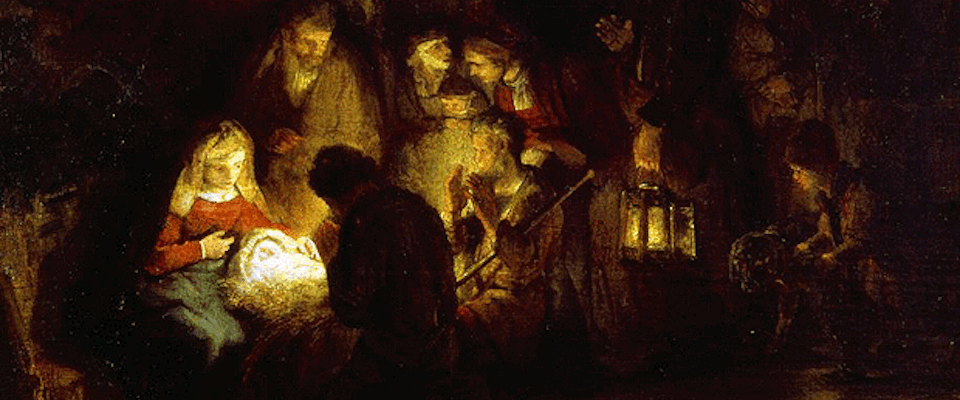
nativity-2
Advent

Joyful Humility

Christmas is a joyful season, but for many it turns into something else. Instead of joy, it is full of disappointment and unhappiness. Instead of an occasion for family fellowship, it becomes an opportunity for opening old wounds, reigniting old arguments, giving new life to rancor that should have died…

by Peter LeithartDecember 19, 2016

sagradafamilia-crop
Biblical Theology

Systematic Typology (Part Five)

The Temple of Time The “covenant-literary matrix” of the Bible is not a pattern imposed upon the text, but the internal logic of its arrangement. This fundamental structure, functioning at multiple levels simultaneously, is a ceaseless reiteration of God’s primary theme. It is an algorithm forged in the furnace of…

by Mike BullDecember 16, 2016
img_1456
Hermeneutics

Exodus in 1 Kings

In the four hundred and eightieth year after the Exodus, Solomon began to build the temple of the Lord in Jerusalem. [1] That the author of Kings should date the start of the building of the temple from the Exodus is noteworthy. In Exodus 15:17, in Moses’ song following the…

by Alastair RobertsDecember 8, 2016
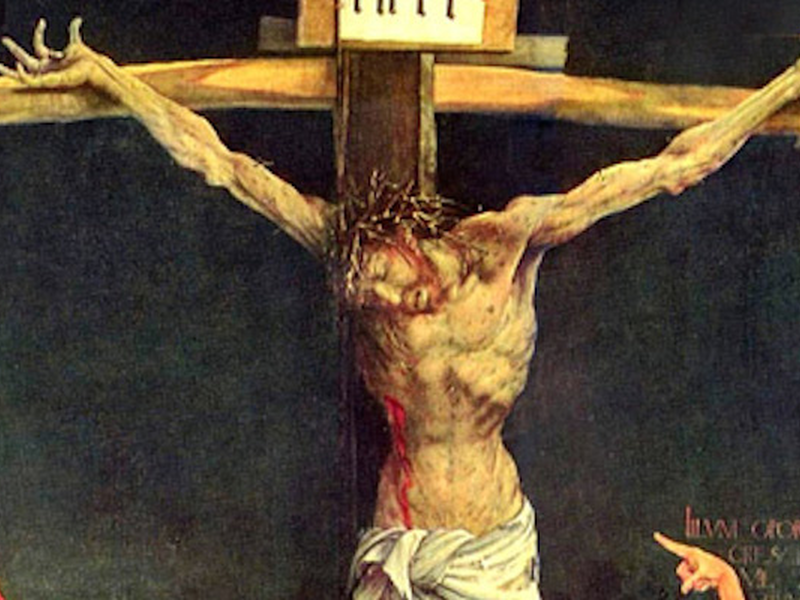
cross-grunwald
Cross

How Mist Gains Weight

Philip Schaff, a German Reformed theologian, states in The Principle of Protestantism that the material principle of Protestantism is “the doctrine of the justification of the sinner before God by the merit of Christ alone through faith.” This is the core message of the Church which leads “to the abandonment…

by Bogumil JarmulakDecember 6, 2016
mountain-top
Biblical Theology

Jesus and Godel's Theorem

“Religion” is an attempt to create or build a tower with a top, or to build a temple that is self-contained. The story of The Tower of Babel in Genesis 11 is the story of mankind’s attempt to create a world that is self-contained and does not need God. All…

by Richard BledsoeDecember 1, 2016
four-evangelists
Matthew

Dating Matthew, (Part 2)

In the first essay in this series, I presented a case for dating Matthew before AD 70, contrary to the present scholarly consensus. In this essay, I intend to present cultural, personal, ecclesiological, and theological arguments for a very early date for Matthew. [1] The cultural argument concerns literacy in…

by Ralph Allan SmithNovember 29, 2016

Showing page 121 of 309

See all

Showing page 6 of 43

See all
Music

Romanticism and the Rhetoric of Music

Prior to the 18th century, writes Mark Evan Bonds, instrumental music was considered inferior to music that accompanied words ( Wordless Rhetoric ). According to the artistic theory developed by Johann Georg Sulzer, “instrumental music . . . can be pleasing and at times moving, but its ‘meaning' is relatively…

April 7, 2016

Areopagus in Acts

Paul's speech on the Areopagus is the second of three programmatic speeches in Acts. Robert Tannehill notes ( The Narrative Unity of Luke-Acts ) that they trace the progression of Paul's mission: “Careful planning is indicated by the fact that we have three different types of speeches addressed to three…

April 7, 2016

World Self-Revealed

In his now-classic Sources of the Self (143-4), Charles Taylor observes that Descartes is “in many ways profoundly Augustinian: the emphasis on radical reflexivity, the importance of the cogito, the central role of a proof of God's existence which starts from ‘within,' from features of my own ideas, instead of…

April 6, 2016

Pure Music

Mark Evan Bonds's Absolute Music is a study of 19th-century debates concerning the purity or absoluteness of music, the question of the possibility and/or propriety of segregating music from the rest of the world, music as a sheer aesthetic experience, an experience of pure beauty or simple form. It's a…

April 6, 2016

Pattern of Paul's Mission

Robert Tannehill points out in the second volume of his Narrative Unity of Luke-Acts that Acts 16-19 depicts a recurring “public accusation type-scene.” Prior to chapter 16, the public accusations against Paul and his associates are not highlighted. After chapter 16, they are. “In 16:20-21 Romans accuse the mission of…

April 6, 2016

Autonomy v. Independence

Matthew B. Crawford argues in The World Beyond Your Head that things discipline our attention and thus make genuine knowledge of the world possible: “ things that can serve as a kind of authority for us, by way of structuring our attention. The design of things—for example, cars and children’s…

April 5, 2016

Showing page 302 of 2212

Browse by Category

In Medias Res

Your weekly digest for all things Theopolis.

Donate

Theopolis is nearly 100% donor-supported. Consider joining us on our mission.