Theopolis Logo

Writing

Explore our collection of theological essays, biblical studies, and reflections on faith and culture.

See all
tanner-mardis-xuxghzhibn4-unsplash-1-2
Biblical Studies

Tweets-turned-Notes on the Bible’s Chronology

Summary In what follows, I will consider the “year-stamps” employed in Scripture, i.e., statements of the form, “Such-and-such an event took place in the Xth year of Y.” In the process, I will suggest some ways in which the Biblical narrative might relate to events in the extra-Biblical world, though…

by James BejonJuly 16, 2019
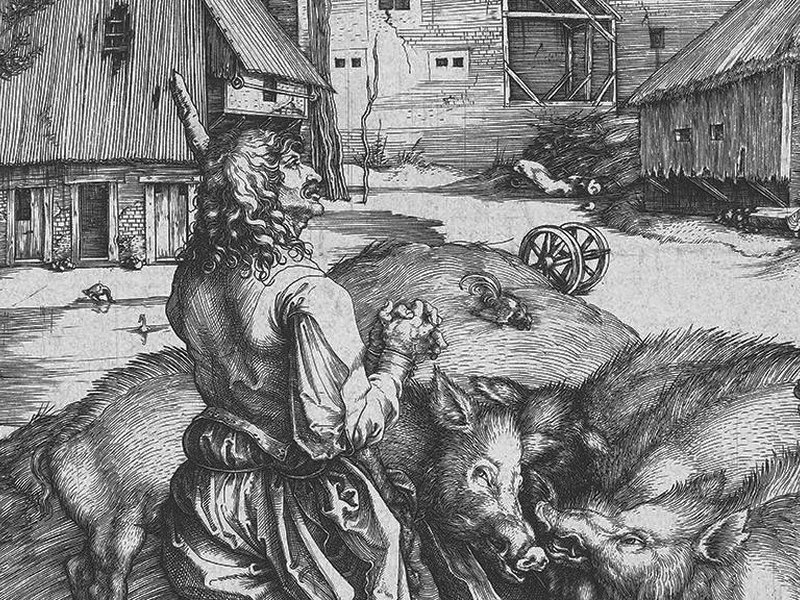
durer-prodigal-son-2
Luke

Perspectives on the Prodigal, (Part 2)

In the first essay on the parable of the Prodigal Son, I suggested that the problems commentators and others encounter in interpreting Jesus three-part parable are not accidental. These are not just problems in our ignorance of cultural background. They are intentional features of the stories —stories designed to poke…

by Ralph Allan SmithJuly 11, 2019
durer-prodigal-son-2
Luke

Perspectives on the Prodigal, (Part 1)

The story of the Prodigal Son is perhaps the most well-known story in the Bible. As others have observed, it may also be one of the most misunderstood. In two short essays, I will point out features of this story that are commonly neglected, aspects of Jesus’ parable that might…

by Ralph Allan SmithJuly 9, 2019
de-rijke-man-en-de-arme-lazarus-by-jacopo-da-ponte-16th-century
Luke

Lazarus and the Rich Man

The parable of Lazarus and the nameless rich man is not an independent story. It is part of a long context that begins in Luke 15:1, where Jesus is eating with tax collectors and sinners and the scribes and Pharisees grumble. In response to their hardheartedness, Jesus tells a three-part…

by Ralph Allan SmithJuly 4, 2019
aaron-burden-uynrnfdkjwg-unsplash
Luke

Everybody has Dropsy - Luke 14:1-24

The Bible is written so that even when a reader cannot pick up on what might be deeper or more detailed aspects of a text, there is virtually always a message to be heard. In the ancient world, where the “reader” of Scripture would likely be a church official facing…

by Ralph Allan SmithJuly 2, 2019
communion
Biblical Theology

Fruit Trees and Grain Plants

The distinction between garden (or vineyard) and field begins in Genesis 2. This relates to the ordering of the formless world. Plants of the field are contrasted with the garden planted by God in Genesis 2:5&8. Later on, under the Old Covenant the Israelites will be required to keep their…

by James B. JordanJune 27, 2019

Showing page 77 of 309

See all

Showing page 6 of 43

See all

Death and Resurrection in 1 Chronicles 2

1 Chronicles 2 begins with a list of the sons of Israel, organized not in birth order but by mother. It is chiastically arranged to place Rachel's sons at the center: A. 6 sons of Leah B. 1 son of Bihah, Rachel's maid (Dan) C. 2 sons of Rachel (Joseph,…

March 2, 2016

Rage Against the Machine

Camille Paglia nails the reason for the unlikely rise of Bernie-mania. It's a strike against the “soulless juggernaut”: “A vote for Bernie Sanders is a vote against the machine, the obscenely money-mad and soulless juggernaut that the Democratic Party has become. Perhaps there was a time, during the Hubert Humphrey…

March 2, 2016

Heroes and Hero Worship

In Heroes and Hero-Worship , Thomas Carlyle argues that hero-worship is the source of all religion, including Christianity, the form of all loyalty and faith, the foundation of human society. All ranks, he says, “are what we may call a Hero archy (Government of Heroes)—or a Hierarchy, for it is…

March 2, 2016

Wilderness Sins

In his typological reading of the exodus (1 Corinthians 10), Paul warns the Corinthians not to commit the sins that their fathers committed in the wilderness, specifically idolatry and sexual immorality. By these, and by their grumbling, the Israelites tested the Lord and provoked His anger. These are the same…

March 1, 2016

Three Forms of Tyranny

Tyranny is a constant in human history, argues Waller Newell in his forthcoming Tyrants . But the character of tyranny is not constant. Newell analyzes three forms of tyranny. The first is the “garden-variety” tyrant, most common in the ancient world: “These are basically men who dispose of an entire…

March 1, 2016

2-3-74

During February and March of 1974, science fiction writer Philip K. Dick experienced a series of mystical revelations. The source was an entity known as “Zebra,” which revealed that time had stopped back in the mid first-century and that all time since had been an illusion. Guided by Zebra, Dick…

March 1, 2016

Showing page 315 of 2212

Browse by Category

In Medias Res

Your weekly digest for all things Theopolis.

Donate

Theopolis is nearly 100% donor-supported. Consider joining us on our mission.