Theopolis Logo

Writing

Explore our collection of theological essays, biblical studies, and reflections on faith and culture.

See all
screen-shot-2023-02-24-at-1-48-41-pm
Biblical Chronology

Chronologies and Kings: Part 3

The chronology of the Kings of Judah and Israel can be divided into three periods with clearly defined boundaries. The first period begins with the death of Solomon and the accessions of Rehoboam in the south (Judah) and Jeroboam in the north (Israel). It ends with the deaths of Ahaziah…

by James B. JordanSeptember 22, 1991

johann-walter-bantz-clv9dfjlwac-unsplash-1-5
Art

Arts & Play, Part 1

Most modern people regard the arts as essentially decorative. They are hardly very important, as compared to business, politics, or religion. Yet, from a Biblical point of view, the arts lie close to the heart of human life. The universe that God created is itself an artistic masterpiece by the…

by James B. JordanSeptember 22, 1991
6273e95e0f5ac766258d8cf3_joshuasconquestoftheland-2
Exodus

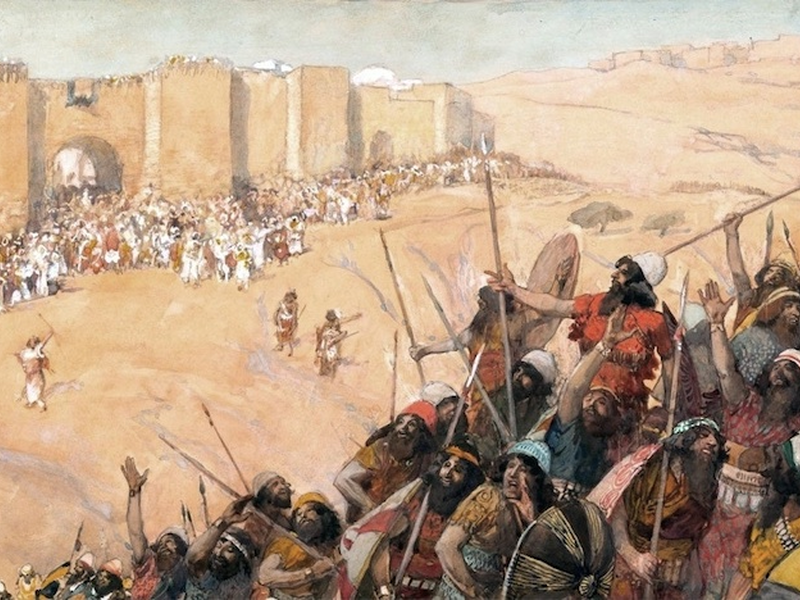
Chronologies and Kings, Part 2

Before we move into a detailed survey of the history and chronology of the kings of Israel and Judah, let us review the chronological information that leads from creation to the kingdom. This will be helpful both to new readers of these essays, and a reminder for those who have…

by James B. JordanAugust 22, 1991
screen-shot-2023-02-24-at-1-48-41-pm
Biblical Chronology

Chronologies and Kings, Part 1

We have completed our overall survey of Biblical chronology, and now turn to a detailed examination of the Biblical information regarding the chronology of Israel’s kings. The first piece of chronological information we have regarding Israel’s kings is very cryptic, and it serves as an guide to the interpretation of…

by James B. JordanJuly 22, 1991
screenshot-2023-08-09-at-2-13-32-pm
Biblical Horizons

Book Review - To Take Place: Toward Theory in Ritual

Jonathan Z. Smith, To Take Place: Toward Theory in Ritual (Chicago: University of Chicago Press, 1987). Reviewed by Peter J. Leithart. The philosophes of the 18th century often attacked Christendom using the tools of anthropology and comparative religion. Rousseau contrasted the idyllic equality of primitive, natural peoples with the bondage…

by Peter LeithartJuly 6, 1991
screenshot-2023-08-09-at-1-47-41-pm
Biblical Horizons

Book Review: The Rise of Magic in Early Medieval Europe

Valerie I. J. Flint, The Rise of Magic in Early Medieval Europe (Princeton University Press, 1991). Reviewed by Peter J. Leithart. Valerie I. J. Flint, Professor of History at the University of Auckland, New Zealand, is refreshingly candid about her reasons for undertaking a study of The Rise of Magic…

by Peter LeithartJuly 6, 1991

Showing page 295 of 309

See all

Showing page 6 of 43

See all

Love Stronger Than Death, 1

“Love is as strong as death, and jealousy as Sheol.” A fine sentiment, but what does it mean? Maybe it means that love is as inevitable as death. We’re all going to die; our last resting place in this creation is the grave. Perhaps Solomon says that love is inevitable…

October 26, 2015

Jesus, Joseph, and Nazirite Vows

In his contribution to Searching the Scriptures , Roger Aus examines Mark 14:25 (Jesus says, “I will never again drink the fruit of the vine until that day when I drink it new in the kingdom of God”). He takes its as a Nazirite vow to refrain from wine until…

October 26, 2015

Baptism and the New World

Stephen Turley ( The Ritualized Revelation of the Messianic Age ) doesn't think standard treatments of Paul's baptismal formula in Galatians 3 get the point. The standard options - ex opere operato and ex opere operantis - share the “common false assumption: they both place pistis and baptizein in a…

October 26, 2015

On Divine and Bestial Eternity

Early in Revelation, the Father is described as the one who “is and who was and who comes” (Revelation 1:4). 1:8 suggests that the Trinity might be described in the same way. The Trinity is not a God immune to time; the eternality of the Trinity is the eternality of…

October 23, 2015
Art

Ironies of Participation

Hal Foster's Bad New Days is an assessment of the past twenty-five years of European and American art. Foster organizes his treatment under five themes - Abject, Archival, Mimetic, Precarious, and Post-Critical? One will notice that “beauty” is absent. Today's avant garde makes Francis Bacon look tame. One of Foster's…

October 23, 2015

Quotidian Wonders

Psalm 136 is a dialogic Psalm in which the second line of each verse is the same: “For His lovingkindness is everlasting.” The God of lovingkindness is the God of gods and Lord of lords. He is the Creator of sun, moon, stars, sea, and sky. He delivered Israel from…

October 23, 2015

Showing page 359 of 2212

Browse by Category

In Medias Res

Your weekly digest for all things Theopolis.

Donate

Theopolis is nearly 100% donor-supported. Consider joining us on our mission.