Theopolis Logo

Writing

Explore our collection of theological essays, biblical studies, and reflections on faith and culture.

See all
max-kukurudziak-qbc3zmxw0g8-unsplash
History

Report from Ukraine

We lost Crimea. That is very clear. Putin proved he was not lying when he said he would place women and children ahead of his soldiers to storm Ukrainian military bases. Russian soldiers did exactly that with women (some who volunteered and some who were forced). Russia now occupies all…

by San SanychMarch 28, 2014

screenshot-2023-09-21-at-3-59-23-pm
Church Calendar

God Gone Silent

Sound is an indicator of life and energy. “Sound signals the present use of power, since sound must be in active production to exist at all.” Things don’t have to be alive to make themselves visible, and “a primitive hunter can see, feel, smell, and taste an elephant when the…

by Peter LeithartMarch 26, 2014
web-lead-image_final_dostoevsky
Books

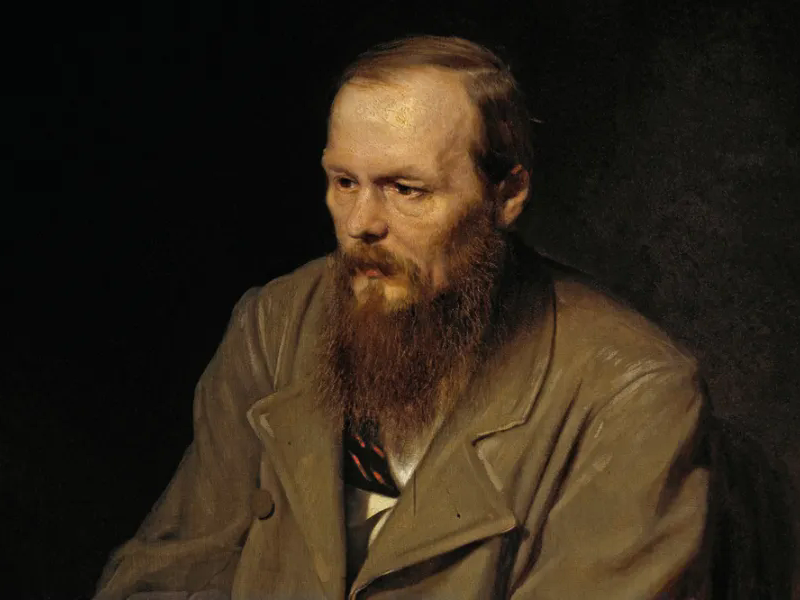
Dostoevsky the Liberal

In the most famous section of his best-known novel, Dostoevsky’s Ivan Karamazov brings forward his case against God. He opens with a horrific litany of outrages against children. Turkish soldiers make a baby laugh and then shoot a pistol into his face. A little girl is beaten, thrashed, kicked by…

by Peter LeithartMarch 24, 2014
kelly-sikkema-ggs0_g6wi-i-unsplash
Epistemology

Subsidiary-Focal Integration and Liturgy

​At the heart of Esther Lightcap Meek's splendid ​Little Manual for Knowing is a concept she picked up from Michael Polanyi, "subsidiary-focal integration." The concept begins from the insight that all our knowing, all our experience, is double. We focus on something, but we are capable of "indwelling" that focal…

by Peter LeithartMarch 19, 2014
engin-akyurt-uz9qpvbol0e-unsplash
Revelation

White Stone

Jesus promises the overcomers of Pergamum "hidden manna" and a "white stone." The hidden manna is often linked with the manna stashed away in the ark of the covenant. The white stone has proved more elusive. Exodus tells us that manna was white (Exodus 16:31) and like bdellium (Numbers 11:7),…

by Peter LeithartMarch 17, 2014
226961fgsdl
Leviticus

A Theology of Festivity

Leviticus 23 begins with a reference to “Yahweh’s appointed times” ( mo’ade-YHWH ). Mo’ed is the common term for the feasts of Israel. A few dimensions to this term. First, it means “appointed time” or “designated time.” It is a time set by Yahweh. Yahweh has claimed certain times as…

by Peter LeithartMarch 12, 2014

Showing page 177 of 309

See all

Showing page 6 of 43

See all

Belief in the Academy

In a spirited reply to Philip Davies' Whose Bible Is It Anyway? , Francis Watson takes aim at Davies “call for a strict separation between theological and academic modes of biblical interpretation” (3). Davies complains that believers study the Bible according to an insider approach (emic), while academic scholarship requires…

October 16, 2015
Jane Austen

Austen's Silent Characters

Jane Austen “did things with characerisation, with dialogue, with English sentences, that had never been done before,” writes John Mullan in What Matters in Jane Austen? (p. 2). That she wrote novels is not surprising. That she wrote in such utter isolation is more so. That she wrote with such…

October 15, 2015

Infant Faith

According to Kimberly Hope Belcher ( Efficacious Engagement , 77), “Augustine seems to have been the first commentator on baptism to seriously consider whether the rites of initiation he knew, which were used for both adults and children, applied equally well to both.” He concluded that they did apply, and…

October 15, 2015

Philosophical Luther

Brian Gregor's A Philosophical Anthropology of the Cross isn't “a specifically Lutheran anthropology,” but Gregor does think Luther “demands philosophical attention.” Luther influenced Kant, Hegel, Kierkegaard, and Heidegger, and these influenced Ricoeur and Bonhoeffer. Post-Heideggerian Lutheran theology also, of course, bears the marks of Luther's influence (8-9). Gregor's book is…

October 15, 2015

Helping Without Hurting

Steve Corbett and Brian Fikkert's Helping Without Hurting in Church Benevolence is a handbook to help churches give aid to low-income people. It explains how to create a policy and philosophy of benevolence, how to build the church's capacity, and offers training scenarios, questionnaires and lots of lists. It truly…

October 15, 2015

Unthought Axiomatics

Derrida is old hat these days, but he's still a thinker worth wrestling with, worthy of better than the dismissal he often gets from some writers. His deconstructive techniques can be put into the service of theology. In his crucial essay, “Plato's Pharmacy” he offers what he describes as a…

October 14, 2015

Showing page 363 of 2212

Browse by Category

In Medias Res

Your weekly digest for all things Theopolis.

Donate

Theopolis is nearly 100% donor-supported. Consider joining us on our mission.