Theopolis Logo

Writing

Explore our collection of theological essays, biblical studies, and reflections on faith and culture.

See all
e99a1994
Theopolis News

Water, Bread, and Wine

"The faithful use of sacraments, and indeed a fully sacramental view of creation, is vital to the life of the Church. Baptism and the Lord's Supper are rites that directly shape the community and the Body, because they were given by God for that express purpose. A deficient practice of…

by Brian MoatsMay 27, 2016

astronauts
Culture

Detached People Can Only Float

Weightlessness is fun. At the beginning of Gravity (2013) , we can see one astronaut dancing the Macarena and another one playing with his jetpack. They like it out there in the space. Apart from zero-gravity they can enjoy beautiful views, and even the silence is likable, although Matt Kowalski…

by Bogumil JarmulakMay 26, 2016
trump
American Culture

A Very Good Joke?

I recently went to a lunch that is more or less quarterly. About a dozen of us go. It is a lunch held in honor of a retired professor of religion and philosophy. I have been one of his acquaintances for more than 40 years. In his tenure as professor,…

by Richard BledsoeMay 24, 2016
img_0864
Theological Education

Why Theopolis?

Why Theopolis? Don't we already have seminaries and Bible colleges and other institutions for theological education? Why do we need another one? I get this question now and again. I ask myself this question even more often. What follows is a partial answer. Back in the 1990s, seminaries seemed to…

by Peter LeithartMay 19, 2016
portrait_of_martin_luther_as_an_augustinian_monk-800x500
Good Works

The Logic of Luther

I think the logic of the Lutheran Reformation can be summarized in one sentence, attributed to Luther himself: "God does not need your good works, but your neighbor does." The first half of that statement is justification by faith . God doesn't need our works to satisfy his justice or…

by Rich LuskMay 17, 2016
prince
Art

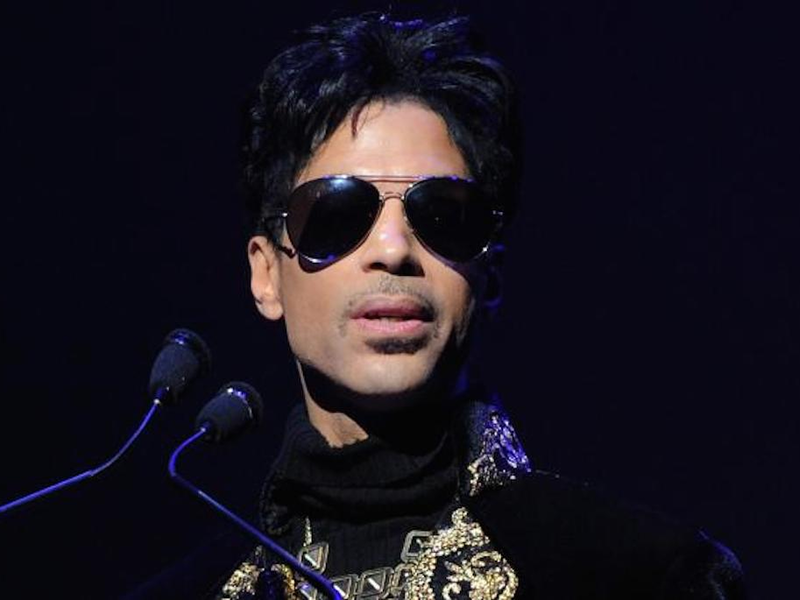
Appreciating the Camera Work in Pornography

If you are looking to start a fight with Christians, there is hardly a better subject to do so than the arts. Music, movies, paintings, and literature have provided no small battlegrounds for Christians to war. We are emotionally invested in the arts. A song, a book, or a film…

by Bill SmithMay 10, 2016

Showing page 131 of 309

See all

Showing page 6 of 43

See all

Monster to Music

In Rune 40 of the Finnish epic, Kalevala , the hero, Wainamoinen, is sailing with his friends to Pohjola, where he intends to recover the Sampo, a talisman of good luck and extraordinary, mysterious power. No one today quite knows what the Sampo was, but many of the episodes of…

April 28, 2015

Chaucer and the Greeks

Chaucer, like Shakespeare after him, set some of his poems in ancient Greece. The “Knight's Tale” takes place in Athens, ruled by the same “Duke” Theseus who rules Athens in Midsummer Nights Dream . Troilus and Cresyde is a Trojan love tragedy. Neither of these works, however, shows much deep…

April 28, 2015

Greece in the English Renaissance

According to C. S. Lewis ( English Literature in the Sixteenth Century , 27-28), English humanists were most interested in style, but the style was mostly Latin: “Greek was given abundance of ‘mouth honor,’ but only the minor Greek authors (Plutarch, Heliodrous, Chilles Tatius, the Anthology) were really relished. Greek…

April 28, 2015

Make Love and War: The Knight's Tale

Emily, the lady-love of Chaucer's “Knight's Tale,” the first of the Canterbury Tales, appears in a garden, and the poet describes her as if where were part of the garden. She is Eve in Eden. But this is no Edenic world. The men who see her are locked out of…

April 28, 2015

Universal Tragedy

Tragic stories are fall stories. Whether through moral wrong or through some inadvertent hamartia , the tragic hero falls from a high place. Others are engulfed in the tragedy to one extent or another, but not everyone. Those who watch can experience the catharsis of pity and fear by watching…

April 28, 2015

Invention of Allegory

C S. Lewis describes the formation of medieval allegorism in his classic Allegory of Love . He begins by distinguishing between an allegorical and a sacramental or symbolic turn of mind. Allegory begins, he says, with “an immaterial fact, such as the passions which you actually experience” and finds ways…

April 27, 2015

Showing page 434 of 2212

Browse by Category

In Medias Res

Your weekly digest for all things Theopolis.

Donate

Theopolis is nearly 100% donor-supported. Consider joining us on our mission.