Theopolis Logo

Writing

Explore our collection of theological essays, biblical studies, and reflections on faith and culture.

See all
hebrew-manuscript-2
Hermeneutics

The Complexity of Biblical Allusion

There is no question about the fact that the book of Deuteronomy is full of literary allusion. But there is a serious problem, even a paradox, of understanding how that allusion works. To begin with, if we assume that Deuteronomy was written by Moses — with some editorial emendations added…

by Ralph Allan SmithJanuary 23, 2018

bladerunner
Culture

The Artificial Resurrection

Genesis and Genetics in Blade Runner 2049 The power of science fiction, and what’s positive about it, is that you’re able to experience the worst-case scenario without actually having to live it. (Actor Ryan Gosling, who plays Officer “K”) (Warning: The following analysis contains spoilers for both Blade Runner films.)…

by Mike BullJanuary 18, 2018
sixteen-miles-out-d40gdcd_-he-unsplash
Biblical Studies

The Battle of Gog and Magog

The battle of Gog and Magog is found in Ezekiel 38-39. My purpose in this brief essay is to propound an explanation for this passage that I have not encountered in any of my commentaries, but that makes more sense to me than any other. I offer it here in…

by James B. JordanJanuary 16, 2018
resurrection

Deep Hope

I. Varlam Shalamov in Kolyma Tales describes his experience of the Gulag, where he spent more than a dozen of years. In a story titled The Life of Engineer Kipreev Shalamov reflects on the theme of hope in the life of a prisoner: “Hope always shackles the convict. Hope is…

by Bogumil JarmulakJanuary 11, 2018
abraham-defeats-kings-g-jollain-2
Biblical Theology

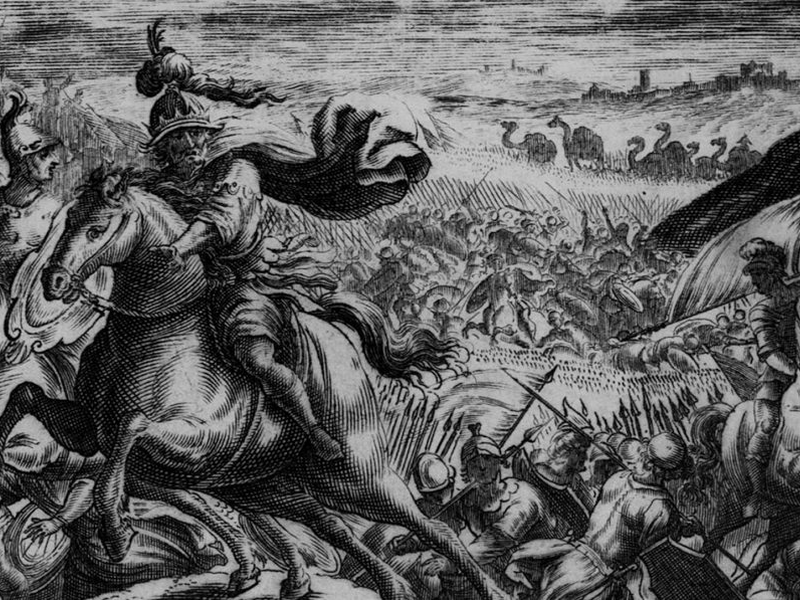
Abram’s 318 Men

Genesis 14:14 says that Abram mustered his trained men, “born in his house,” to rescue Lot, and gives their number as 318. It is clear that the precise number is provided for some reason, but what is it? S. Gevirtz notes that 318 is the sum of all the prime…

by James B. JordanJanuary 9, 2018
tanner-mardis-xuxghzhibn4-unsplash-1
Biblical Studies

The Flying Scroll

And he said to me, "What do you see?" And I answered, "I see a flying scroll; its length is twenty cubits and its width ten cubits" (Zechariah 5:2). Immediately following his vision of the outpouring of the Spirit upon the restoration community (4:1-14), Zechariah saw a flying scroll. The…

by Peter LeithartJanuary 4, 2018

Showing page 100 of 309

See all

Showing page 6 of 43

See all

Soldiers, Martyrs, Choristers

The numbering of the sealed in Revelation 7 alludes to the census events of the book of Numbers. There, Moses initially numbers men twenty years and older, mustering them as the troops that will conquer the land. (The second census, in Numbers 26, includes women and has a different focus.)…

November 26, 2014
Trinity

Are the Divine Persons Persons?

The “personalist” understanding of the Trinity, articulated most influentially in the work of John Zizioulas, has fallen on hard times. Recent scholars have attacked Zizioulas’s idea that Cappadocian Trinitarianism represented an ontological revolution, hammering again and again the distinction between divine and human personhood. Michel Barnes’s conclusion is the most…

November 26, 2014
Theology

Protestant Eyes

Protestant soteriology claims to deal with perennial patterns of behavior and belief: Striving for approval from God by our performance, self-righteousness, works-righteousness, pride in our achievements, etc. Let’s grant that these are perennial patterns of behavior, though they will likely take various forms in different cultural settings. That’s not just…

November 25, 2014

Paul and the Petty Tyrants

Theodore Jennings ( Transforming Atonement , 158) observes that “what is visible on the grand scale of imperial political history also lodges itself in the dynamics of quite small-scale communities, including those that may seem to be, and may think of themselves as, and may even in important respects actually…

November 25, 2014

The Grounds of Justification

Markus Barth ( Acquittal by Resurrection ) sharply raises the question of the justice of God’s verdict of justification. How can God pronounce the guilty innocent, the ungodly righteous? Barth raises the stakes by insisting that the justice should be evident to all: “If after the proclamation of a verdict,…

November 25, 2014

The Liturgical Formation of Culture

Over at the Theopolis Institute site , I offer some reflections on the liturgical formation of culture through a consideration of the biblical anatomy of human action.

November 25, 2014

Showing page 494 of 2212

Browse by Category

In Medias Res

Your weekly digest for all things Theopolis.

Donate

Theopolis is nearly 100% donor-supported. Consider joining us on our mission.