Theopolis Logo

Writing

Explore our collection of theological essays, biblical studies, and reflections on faith and culture.

See all
tanner-mardis-xuxghzhibn4-unsplash-1-2
Biblical Studies

Tweets-turned-Notes on the Bible’s Chronology

Summary In what follows, I will consider the “year-stamps” employed in Scripture, i.e., statements of the form, “Such-and-such an event took place in the Xth year of Y.” In the process, I will suggest some ways in which the Biblical narrative might relate to events in the extra-Biblical world, though…

by James BejonJuly 16, 2019

durer-prodigal-son-2
Luke

Perspectives on the Prodigal, (Part 2)

In the first essay on the parable of the Prodigal Son, I suggested that the problems commentators and others encounter in interpreting Jesus three-part parable are not accidental. These are not just problems in our ignorance of cultural background. They are intentional features of the stories —stories designed to poke…

by Ralph Allan SmithJuly 11, 2019
durer-prodigal-son-2
Luke

Perspectives on the Prodigal, (Part 1)

The story of the Prodigal Son is perhaps the most well-known story in the Bible. As others have observed, it may also be one of the most misunderstood. In two short essays, I will point out features of this story that are commonly neglected, aspects of Jesus’ parable that might…

by Ralph Allan SmithJuly 9, 2019
de-rijke-man-en-de-arme-lazarus-by-jacopo-da-ponte-16th-century
Luke

Lazarus and the Rich Man

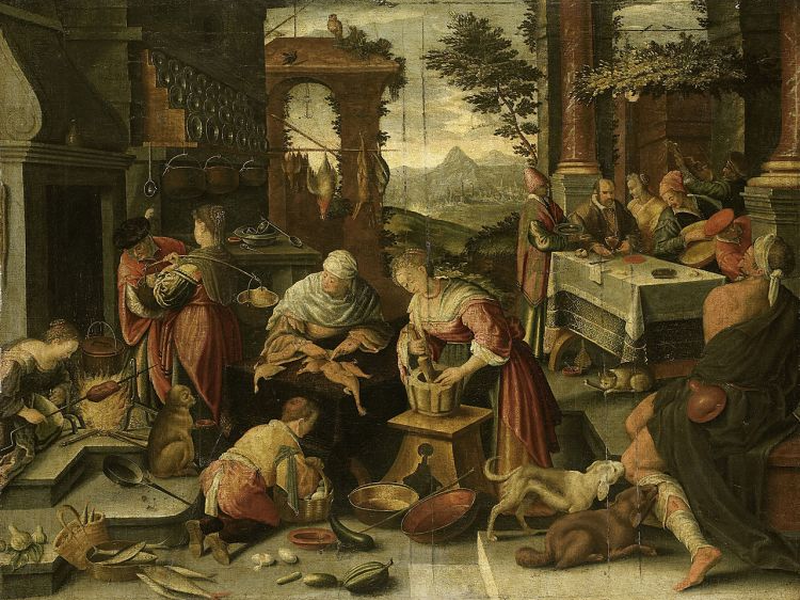
The parable of Lazarus and the nameless rich man is not an independent story. It is part of a long context that begins in Luke 15:1, where Jesus is eating with tax collectors and sinners and the scribes and Pharisees grumble. In response to their hardheartedness, Jesus tells a three-part…

by Ralph Allan SmithJuly 4, 2019
aaron-burden-uynrnfdkjwg-unsplash
Luke

Everybody has Dropsy - Luke 14:1-24

The Bible is written so that even when a reader cannot pick up on what might be deeper or more detailed aspects of a text, there is virtually always a message to be heard. In the ancient world, where the “reader” of Scripture would likely be a church official facing…

by Ralph Allan SmithJuly 2, 2019
communion
Biblical Theology

Fruit Trees and Grain Plants

The distinction between garden (or vineyard) and field begins in Genesis 2. This relates to the ordering of the formless world. Plants of the field are contrasted with the garden planted by God in Genesis 2:5&8. Later on, under the Old Covenant the Israelites will be required to keep their…

by James B. JordanJune 27, 2019

Showing page 77 of 309

See all

Showing page 6 of 43

See all

Climbing the Altar

When John first enters heaven, no altar is visible. He sees an altar for the first time when the fifth seal is broken, and at that point his attention is directed to the base of the altar, where the martyred saints have shed their blood (6:9). The next time we…

October 29, 2014

Promiscuous Disgust

Richard Beck points out in Unclean that disgust is “promiscuous”: It “has a degree of plasticity; it is molded to fit a given culture.” In this, disgust differs from other emotions: “The core triggers for happiness, fear, sadness, or anger appear to be fairly stable and consistent across cultures. But…

October 28, 2014
Body

The Offense of Excretion

Ernest Becker wrote: “Excreting is the curse that threatens madness because it shows man in his abject finitude, his physicalness, the likely unreality of his hopes and dreams. But even more immediately, it represents man’s utter bafflement at the sheer non-sense of creation: to fashion the sublime miracle of the…

October 28, 2014

Who Is Like the Beast?

The worship of the beast in Revelation 13 takes the form of an acclamation of His uniqueness. “Who is like the beast?” they cry. This has several layers of significance. This acclamation echoes the acclamation of Israel in the song of Moses: “Who is like You among the gods, O…

October 28, 2014

Blasphemy

The beast of Revelation 13 initiates a double attack against the saints: first blasphemy, then he “makes war” on them (vv. 6-7). The blasphemies are against God, but they are directed also at the name of God, His tabernacle, and those who dwell in heaven (v. 6). The dragon has…

October 28, 2014
Gratitude

Ingratitude and Justice

Polybius wrote, “when a man who has been helped when in danger by another does not show gratitude to his preserver, but even goes to the length of attempting to do him injury, it is clear that those who become aware of it will naturally be displeased and offended by…

October 28, 2014

Showing page 507 of 2212

Browse by Category

In Medias Res

Your weekly digest for all things Theopolis.

Donate

Theopolis is nearly 100% donor-supported. Consider joining us on our mission.